

Uzbekistan has authorized the import of nuts and citrus fruits from Georgia
Uzbekistan has allowed the import of hazelnuts, almonds, and citrus fruits from Georgia following a phytosanitary risk analysis, the Committee reported.
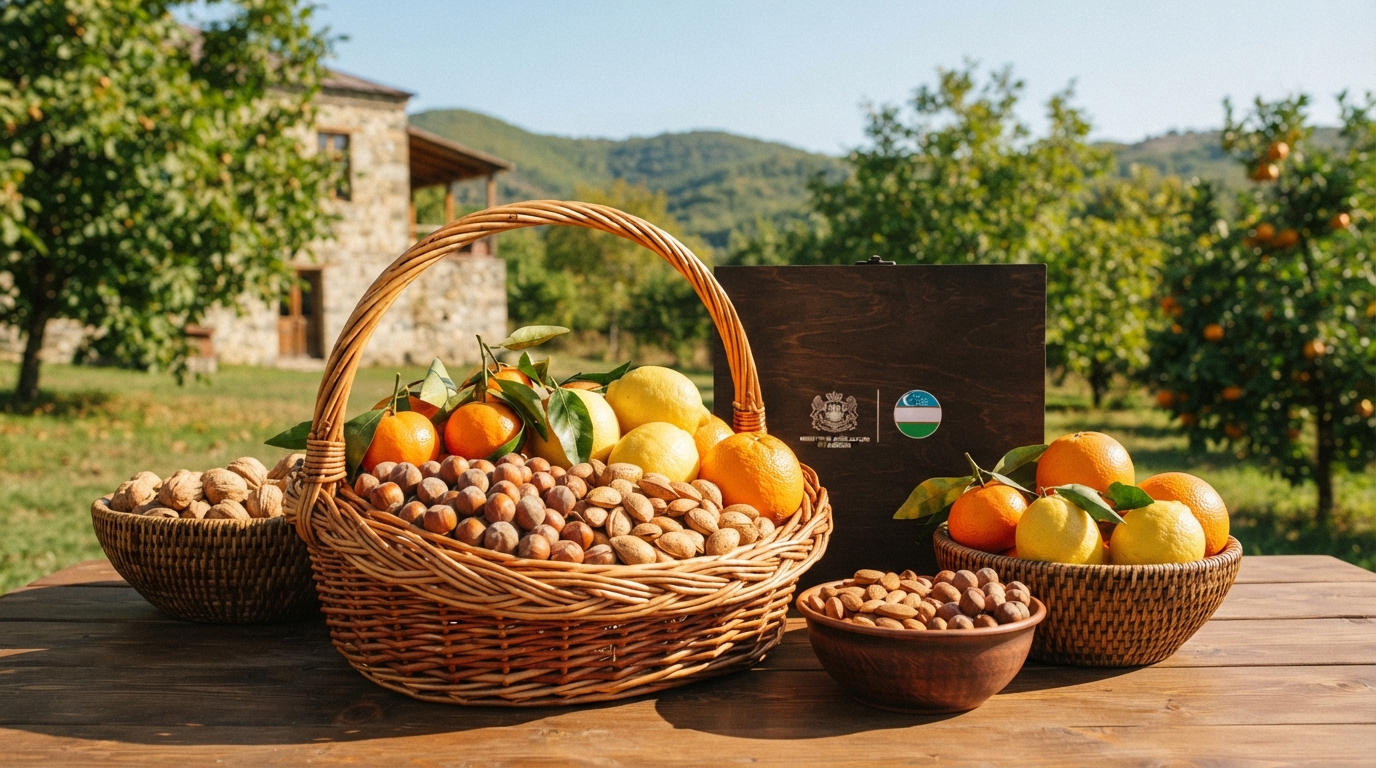
Uzbekistan has authorized the import of nuts and citrus fruits from Georgia
Following a phytosanitary risk analysis, Uzbekistan has authorized the import of hazelnuts, almonds, and citrus products from Georgia.
This became known during an online meeting between Jamshid Urunov, Deputy Chairman of the Food Safety Committee of Uzbekistan for Plant Protection and Quarantine, and Zurab Lipartia, Deputy Head of the National Food Agency of Georgia.
The parties discussed the development of phytosanitary cooperation between the two countries, the creation of conditions for mutual supplies of agricultural products, and ensuring the safety of imported goods.
At the beginning of the meeting, Jamshid Urunov emphasized that the Food Safety Committee was established in Uzbekistan as part of institutional reforms. According to him, this made it possible to unite key tasks in the fields of food safety, phytosanitary, and veterinary medicine into a single system of state administration and control.
The Georgian side expressed interest in supplying a wide range of agricultural products to the Uzbek market. This list includes apples, citrus fruits, peaches, nectarines, blueberries, hazelnuts, almonds, and other goods.
The Committee noted that in Uzbekistan, in accordance with current procedures, work is underway to create opportunities for new types of agricultural products to enter the market.
Based on the results of the phytosanitary risk analysis conducted by the Committee's specialists, the Georgian side was authorized to export hazelnuts, almonds, and citrus products to Uzbekistan.
At the same time, the issue of admitting a number of other Georgian goods will be considered separately. After the Georgian side provides the necessary technical data, Uzbek specialists will conduct a phytosanitary risk analysis for apples, peaches, nectarines, and blueberries.
Based on its results, the requirements necessary for importing these types of products into Uzbekistan will be determined.
In addition, the Georgian side expressed readiness to organize a joint inspection with the participation of Uzbek specialists.
As part of this work, it is planned to study the condition of agricultural production sites and enterprises engaged in preparing products for export in Georgia.
Such inspections make it possible to assess the phytosanitary condition of products, their production and storage processes, the presence or absence of quarantine pests, as well as compliance with established phytosanitary requirements directly on site.
In turn, the opportunity remains for the Georgian market to import all types of agricultural products from Uzbekistan, provided they have the appropriate phytosanitary certificate.