

Uzbekistan earned every eighteenth dollar on the Afghan market
Based on the results of January–July 2026, Afghanistan ranked third among the main export markets of Uzbekistan, yielding only to Russia and China. According to the National Statistics Committee of the Republic of Uzbekistan, during the seven months of 2026, the country's total export volume amounted to $19.9 billion. The largest buyers of Uzbek products included: Russia — $2.8 billion; China — $1.7 billion; Afghanistan […]
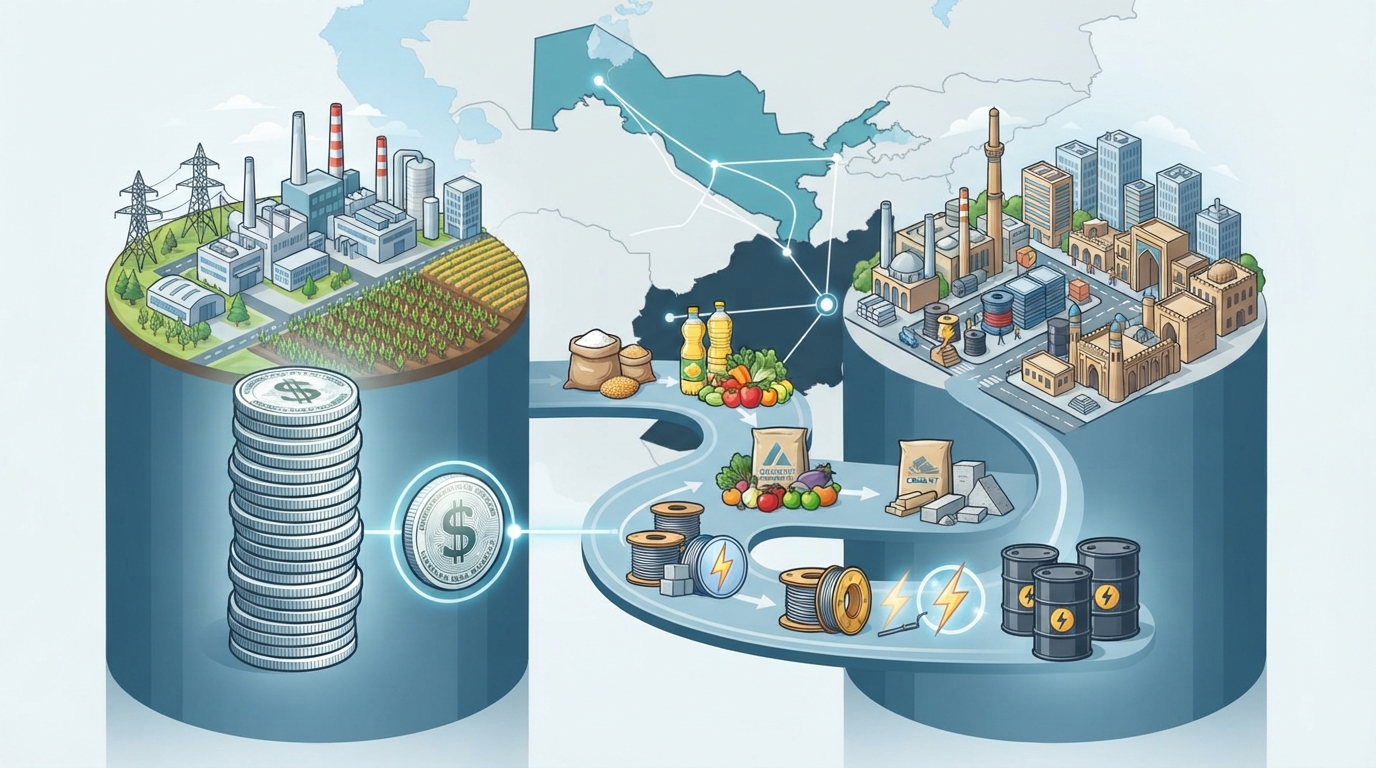
Every eighteenth dollar Uzbekistan earned was from the Afghan market
Following the results of January–July 2026, Afghanistan took third place among Uzbekistan's key export markets, trailing only Russia and China.
According to data from the National Statistics Committee of the Republic of Uzbekistan, during the seven months of 2026, the country's total export volume reached $19.9 billion.
The largest buyers of Uzbek products included:
Russia — $2.8 billion;
China — $1.7 billion;
Afghanistan — $1.1 billion;
Kazakhstan — $868 million;
France — $854.9 million;
Hong Kong — $716 million;
Turkey — $596.2 million;
Kyrgyzstan — $575.8 million;
Tajikistan — $437.5 million;
UAE — $420.8 million.
With total exports at $19.9 billion, shipments to Afghanistan worth $1.1 billion accounted for approximately 5.5% of Uzbekistan's export revenue for January–July.
In other words, about every eighteenth dollar earned by Uzbekistan from exports during this period came from the Afghan market.
This position is not only due to the geographical proximity of the two countries. Established transport routes, energy cooperation, and stable demand for Uzbek products play a significant role in mutual trade.
In the structure of supplies, a notable share is occupied by food — in particular, flour and grain, vegetable oil, vegetables, and fruits. Industrial goods and products for the construction industry, including cement and other building materials, are also in demand.
Energy remains a separate area of cooperation. Uzbekistan supplies electricity to Afghanistan, which is of strategic importance for the Afghan economy and helps ensure power supply to consumers and infrastructure facilities.
An important role is also played by supplies of petroleum products, fertilizers, and other industrial products.