

Uzbekistan Approves Emergency Notification System for Nuclear Power Plants
Uzbekistan's Safety Committee has established standard procedures and radiation thresholds for declaring emergency states at nuclear power facilities.
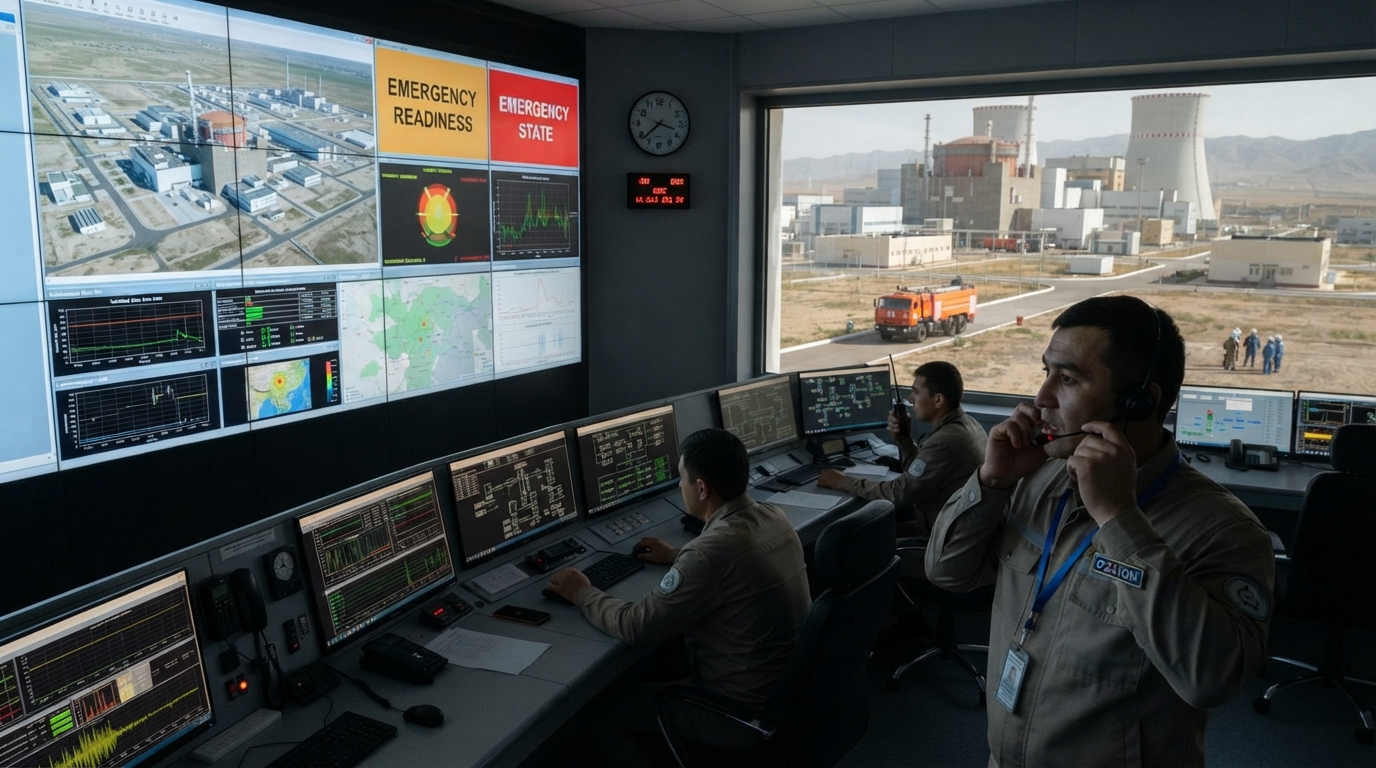
Uzbekistan has given its approval to a new emergency notification system designed for nuclear power plants.
The Committee for Industrial, Radiation, and Nuclear Safety, operating under the Cabinet of Ministers of Uzbekistan, has sanctioned comprehensive guidelines. These guidelines cover the declaration of plant-level emergency conditions, the transmission of operational data, and the organization of emergency response procedures in the event of radiation threats at nuclear power facilities.
The decree, identified as No. 49, was issued on July 29, 2026. It was subsequently registered with the Ministry of Justice on August 19, 2026, and officially published the following day, August 20, 2026. This regulation was enacted in accordance with Uzbekistan's Law "On the Peaceful Uses of Atomic Energy" and Presidential Decree No. PF-224. The finalization of this document involved coordination with the Ministry of Emergency Situations, the Atomic Energy Agency, and the Academy of Sciences.
The instructions define two distinct internal operational states at the plant level:
The "Emergency Readiness" state is activated when there are breaches of safe operation parameters, when radiation dose rates surpass established thresholds, or when external natural or man-made events—such as earthquakes, explosions, fires, or flooding—compromise safety-critical systems.
The "Emergency State" is declared when radiation dose rates reach higher critical thresholds, or when the head of the operating organization initiates protocols for beyond-design-basis accidents, which include severe accident management guidelines.
The regulation specifies particular ionizing radiation dose rate thresholds for various key sectors within the plant.
The authority to declare emergency states rests with the head of the operating organization or the acting director. Should communication with leadership be impossible, the plant shift supervisor is empowered to declare the emergency mode and is required to immediately inform management.
Before the initial delivery of nuclear fuel to the facility, the operating organization must approve formal notification protocols, establish a permanent commission dedicated to radiation accident prevention and fire safety, and ensure that response teams are fully equipped.
Initial emergency reports must include the plant's name, the power unit number, a timestamp, the declared state, verified or suspected causes, the technological and radiological status, the impact on personnel and the environment, and any requirements for external assistance.
Throughout any emergency state, the operator is mandated to submit updated reports on radiation conditions, safety status, and containment efforts every 12 hours to both the Safety Committee and the Atomic Energy Agency. Plant personnel must receive radiation updates at least once every 24 hours.
The regulations stipulate that the operator must establish a technical support group, an emergency response team, and both internal and external emergency management headquarters. The internal headquarters will operate from a protected command point located on-site, while the external headquarters will manage operations from a secure off-site location. Operator teams are required to conduct full plant-level emergency drills at least once annually.