

Uzbekistan and Kazakhstan discussed nuclear power plant safety
Uzbekistan and Kazakhstan held talks on nuclear, radiation, and environmental safety within the framework of the nuclear power plant project.
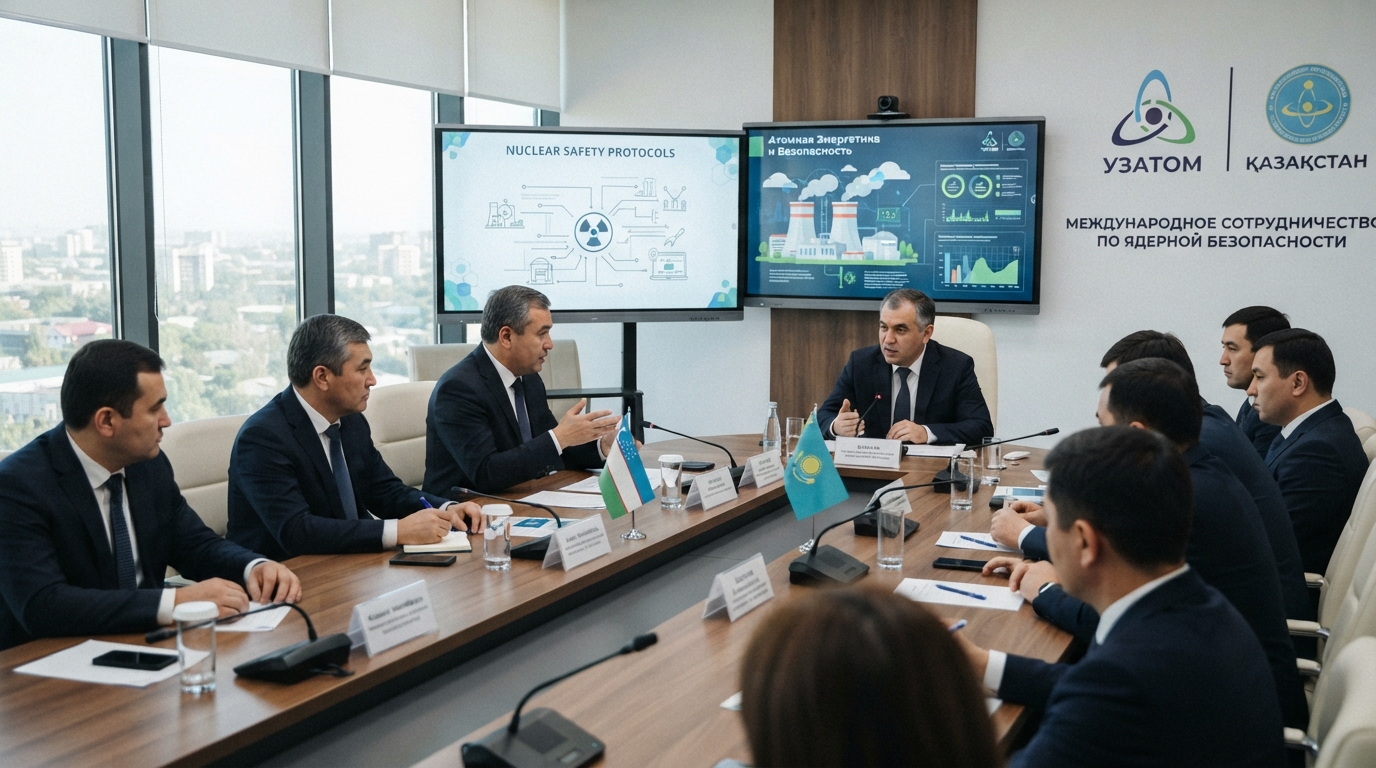
Uzbekistan and Kazakhstan held talks on the safety of the nuclear power plant under construction in Uzbekistan, as well as its future operation. Nuclear, radiation, and environmental safety were discussed.
The meeting took place on August 21 at the Uzatom Agency. The Kazakh delegation was led by Mansur Oshurbayev, Vice Minister of Ecology and Natural Resources, according to the Uzatom Agency.
During the talks, representatives of relevant agencies from both countries discussed the technical and environmental aspects of the nuclear project. Participants viewed presentations from Uzbek organizations involved in the project, after which they held a working meeting.
Uzatom Agency Director Azim Akhmedkhadzhayev emphasized that safety is a key priority for Uzbekistan's national nuclear program. He noted that the nuclear, radiation, and environmental safety system is being developed in accordance with national legislation and international standards.
The Kazakh side expressed interest in the safe and sustainable development of nuclear energy in the region.
Mansur Oshurbayev emphasized the importance of sharing experiences, transparent approaches, and joint efforts in environmental protection.
During the presentation, representatives of the State Institution "Directorate for Nuclear Power Plant Construction," the O'zGASHKLITI Institute, and UzLITI Engineering presented information on the progress of design, survey, and preparatory work. Approaches to safety and environmental monitoring were also discussed.
Representatives from Kazakhstan asked questions about the materials presented. Representatives from the Ministries of Energy, Ecology, and the Ministry of Emergency Situations of Uzbekistan provided additional comments and clarifications.
Following the talks, the parties agreed on key areas for further cooperation, including a roadmap and next steps.
Particular attention was paid to personnel training and developing the expert potential of Central Asian countries. The Uzbek side presented the concept of a specialized center, which is planned to be used for educational and practical training of specialists, simulator training in modern laboratories, and expert consultations on the development of national nuclear infrastructure. The concept also includes a unified academic mobility platform and a knowledge base based on the experience of constructing and operating nuclear power plants in Uzbekistan.
Strengthening the nuclear and radiation safety culture, improving the regulatory framework, and increasing public acceptance of nuclear energy for peace were identified as priority areas of the center's work.
The Nuclear Knowledge Platform and Nuclear Energy Modeling Hub digital platforms are planned for knowledge exchange and development of relevant competencies.
The parties confirmed their commitment to continue regular expert dialogue and develop cooperation in the field of safe and responsible use of nuclear energy in Central Asia.