

US strikes on alleged drug boats could be crimes against humanity, says UN
A report says the attacks, of which there have been at least 68, were not self-defence.
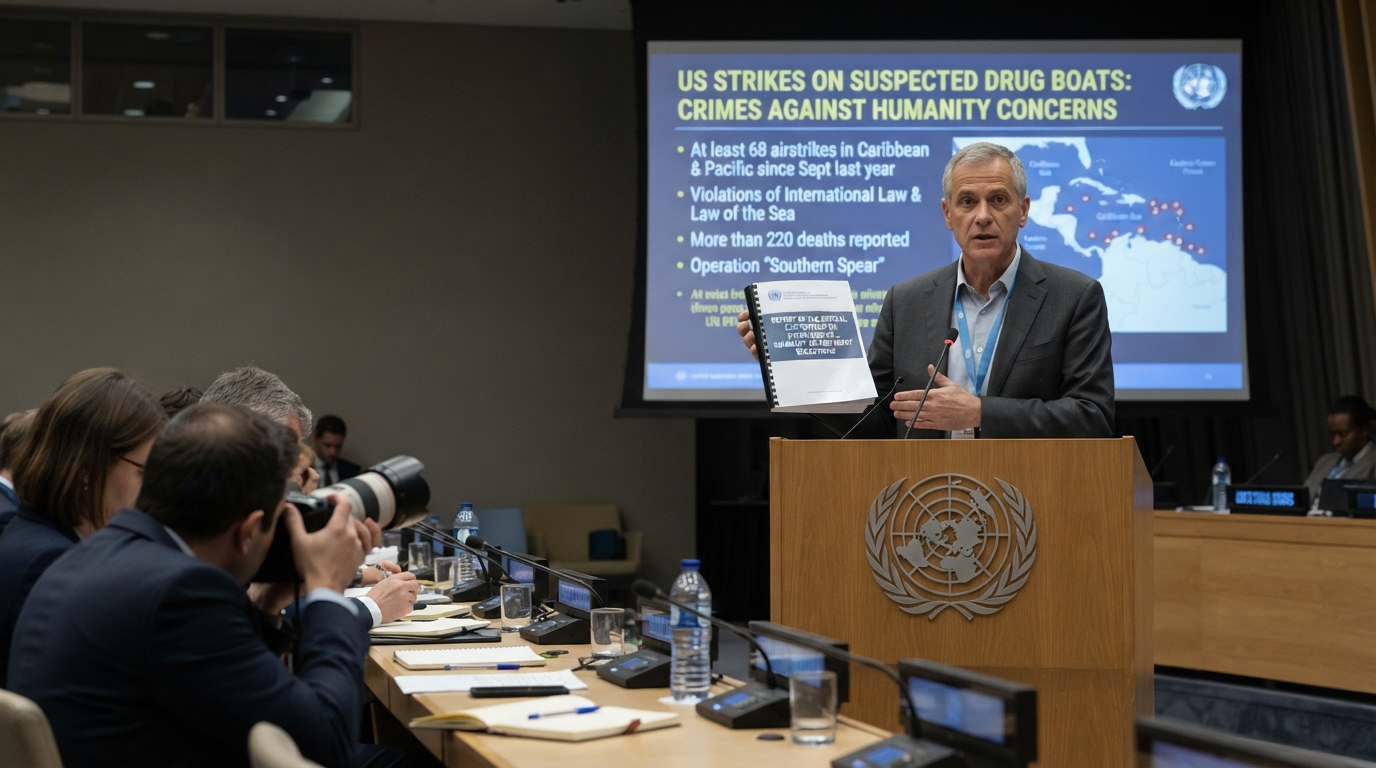
US strikes on suspected drug boats may amount to crimes against humanity, UN says
A UN report has found that recent US airstrikes on boats allegedly carrying drugs violated international law and could amount to crimes against humanity.
The report, written by Special Rapporteur Ben Saul, said that since September last year there had been at least 68 US strikes in the Caribbean and Pacific, beyond US territorial waters, killing more than 220 people.
Saul said that even if the targets were identifiable as members of designated terrorist groups, they had not carried out an armed attack on the US that would activate a right to self-defence under international law.
The report was released two days after the US military said it had killed four people in a strike on a vessel in the Caribbean.
"Confirmed intelligence revealed the vessel's active involvement in narco-trafficking. The operation killed four narco-terrorists," Southcom, which commands US forces in the region, said in a statement about the latest attack, which was accompanied by a grainy video.
But in a briefing note issued by the UN Human Rights Council on Monday, Saul said that "such attacks amount to serial extrajudicial killings in violation of the right to life, being unjustified in national or personal self-defence or under international humanitarian law, the international law of the sea, narcotics suppression conventions, or international counter-terrorism law".
"There are reasonable grounds to believe that the reported 68 attacks that killed 223 people constituted crimes against humanity of murder under customary international law," Saul concluded.
Defence Secretary Pete Hegseth has previously said the broader operation is intended to remove "narco-terrorists from our hemisphere" and protect the US from "the drugs that are killing our people".
The US military began the operation, called "Southern Spear", in early September.
Still, officials have not provided conclusive evidence that the targeted vessels are engaged in trafficking.
From the outset, experts have questioned the legality of the strikes, which first prompted sharp criticism from Latin American leaders whose citizens were among those targeted.
However, Nicolás Maduro, who was Venezuela's leader at the time and opposed the strikes, was captured by US forces in a dramatic and highly controversial night-time raid on the capital Caracas at the start of this year.
Another vocal critic of Operation Southern Spear, Colombia's left-wing president at the time, Gustavo Petro, stepped down in August after a Trump-backed candidate won June's presidential election.