

UN experts say grounds to believe US committed war crimes in Iran strikes
The US has not acknowledged carrying out February's deadly strikes on a primary school in Minab and a sports complex in Lamerd.
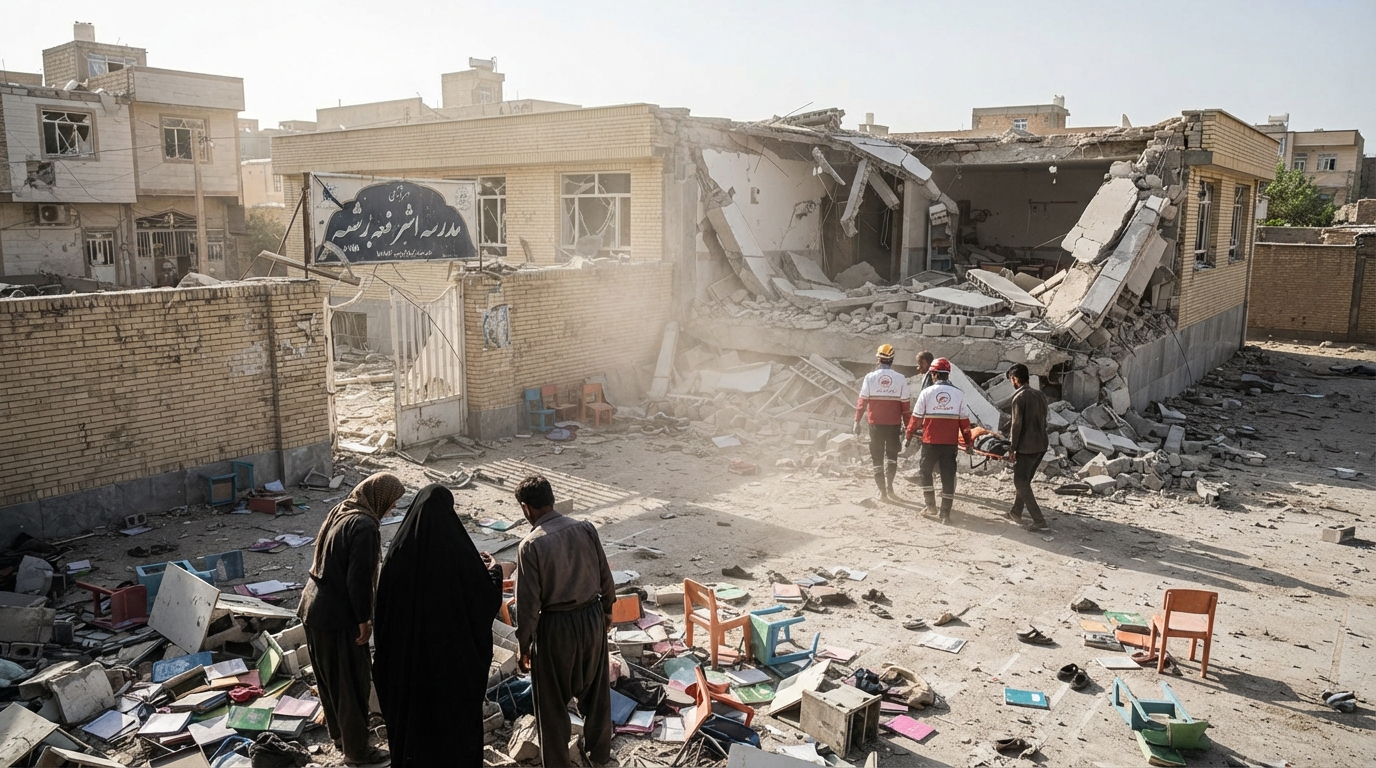
UN experts say there are grounds to believe US committed war crimes in Iran strikes
At least 156 people, among them 120 children, were killed in February’s attack on the main school in Minab.
UN human rights experts said there are reasonable grounds to believe the US committed war crimes in two strikes in Iran that left at least 177 civilians dead.
The US did not immediately respond. It has previously denied carrying out a strike on Lamerd and said it is investigating the Minab incident.
The experts also determined that Iranian authorities committed crimes against humanity during a crackdown on mass anti-government protests in January.
They said security-force killings took place on “a staggering and unprecedented scale” across all 31 provinces.
Iran has also not yet commented on the findings, though it has previously rejected accusations of systematic human rights abuses.
“Civilians in Iran are caught between gross human rights violations and crimes against humanity committed by their own government and the nation's deadly conflict with the United States and Israel,” the fact-finding mission warned in a statement on Thursday.
In their latest report to the UN Human Rights Council, the mission’s three independent experts examined two of the deadliest attacks on civilians during the conflict.
On 28 February, when the US and Israel launched their war against Iran, Tomahawk missiles hit Shajareh Tayyebeh Primary School in the southern town of Minab, killing at least 156 people, including 120 children, according to local authorities.
The fact-finding mission’s experts said the school stood next to an Islamic Revolutionary Guard Corps (IRGC) naval complex that was also struck that day, but that the school was plainly identifiable and that nothing suggested it was being used for military purposes.
Based on the evidence collected — including media reports saying a preliminary US military inquiry found US forces responsible, and the fact that the US is the only party to the conflict with Tomahawk missiles — the experts said they had reasonable grounds to believe the US carried out the strike on the school.
They also said the school was “the intended point of impact and that the damage did not result from an errant strike or collateral damage” from the attack on the IRGC complex, citing survivors who said the school was hit twice.
The US military has not yet published the results of its investigation into the Minab strike, but Defence Secretary Pete Hegseth has said it would “never target civilian targets”.
Also on 28 February, Precision Strike Missiles (PrSM) scattered clouds of tungsten pellets over a sports complex and nearby residential area in Lamerd, killing at least 21 civilians, including seven children, according to local authorities.
Again, the fact-finding mission’s experts said the sports complex was clearly identifiable and that there was no indication it was used for military purposes.
They concluded there were reasonable grounds to believe the strike was carried out by the US, pointing to evidence including the fact that the US is the only party to the conflict that possesses PrSM missiles.
The US military has said it carried out no strikes on Lamerd that day and disputed reports that identified the weapon used as a PrSM.
In both cases, the fact-finding mission’s experts said there were “reasonable grounds to believe that the US committed the war crime of launching an indiscriminate attack resulting in loss of life or injury to civilians or damage to civilian objects”.
The mission’s report also addresses the Iranian authorities’ violent suppression of the mass protests that spread across Iran in December 2025 and January 2026.
The experts said it marked an unprecedented escalation from earlier crackdowns, driven by the widespread use of lethal force that caused mass killings and injuries, along with large-scale arrests.
They cited witnesses, medical workers and victims’ relatives as saying security personnel took positions on rooftops and other high points, firing assault rifles into crowds.
Protesters also suffered serious injuries to the head, chest and eyes from metal shotgun pellets, leaving some permanently blind.
As the crackdown intensified, security forces attacked medical facilities, beating and arresting injured demonstrators and detaining some healthcare workers, which discouraged victims from seeking life-saving treatment, according to the experts.
They also found that the tens of thousands detained during the protests were subjected to torture, solitary confinement and denial of legal counsel.
The experts warned that the government had since stepped up its use of the death penalty against protesters, with at least 29 men executed after expedited trials on charges linked to the unrest.
The fact-finding mission’s report said it was not possible to independently confirm the death toll from the crackdown, but added there were strong grounds to believe it was far higher than the official figure of 3,000, most of whom the government said were security-force members or bystanders.
The US-based Human Rights Activists News Agency (Hrana) has said it has confirmed the killing of more than 7,000 people, almost all of them protesters.
The fact-finding mission’s experts concluded that Iranian authorities had committed “many gross human rights violations” during the crackdown, and that these amounted to “the crimes against humanity of murder, imprisonment and other severe deprivation of physical liberty, torture, and other inhumane acts, committed as part of a widespread and systematic attack directed against a civilian population”.
Iranian authorities accused the US and Israel of stirring up the unrest and blamed the deaths on what they called “terrorists” and “rioters”.