

US scraps limits on emissions from coal and gas power plants
The Environment Protection Agency says the move will save the country billions of dollars and reduce energy prices.
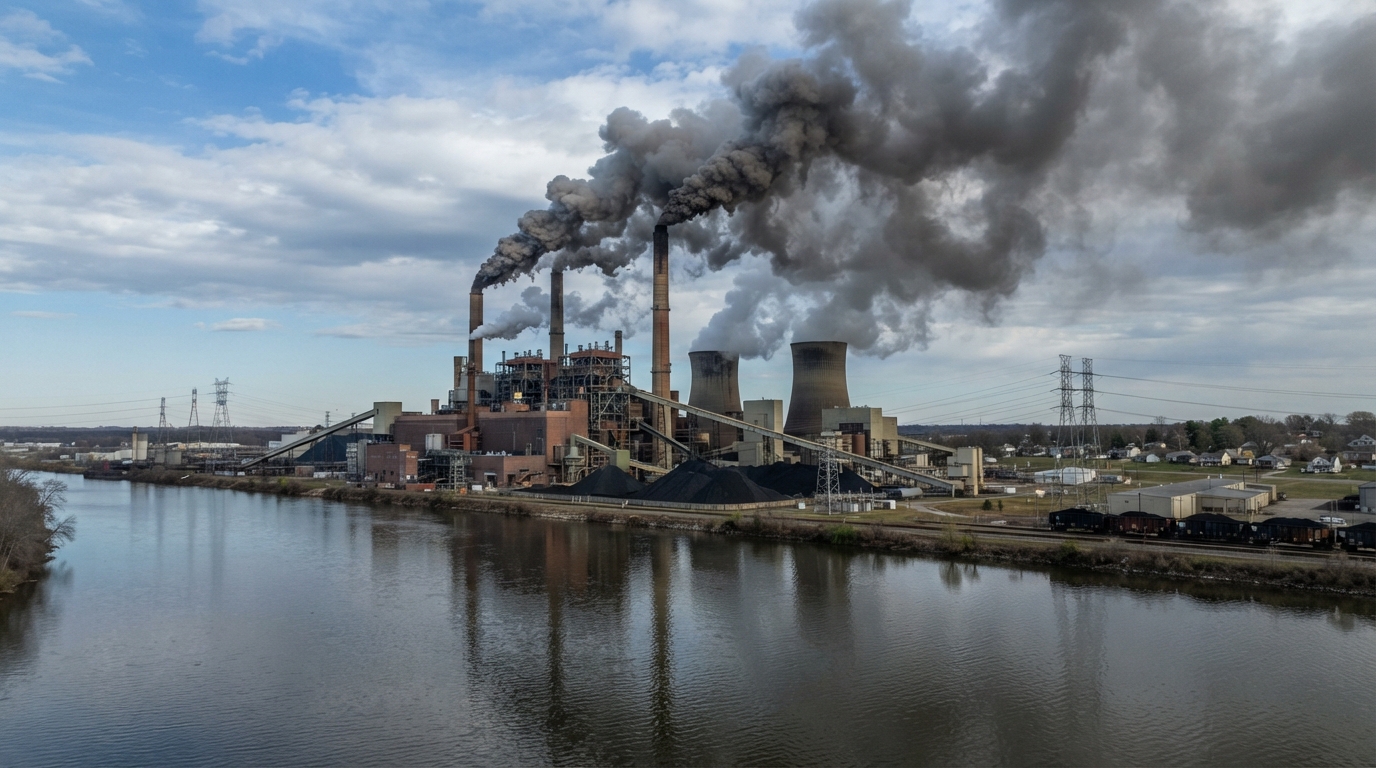
US removes limits on emissions from coal and gas power plants
Restrictions designed to curb pollution from coal and gas-fired power stations are being withdrawn, the head of the US Environmental Protection Agency (EPA) has said.
The agency also said it would move to stop future administrations from regulating emissions from power plants.
According to the EPA, eliminating most of the climate rules introduced during President Joe Biden's term would save $310bn (£223bn) and lower energy costs.
Environmental groups, however, said the decision would carry a massive price for Americans' health and for the planet. The EPA's action is expected to face immediate legal challenges.
"The reality is that America produces energy better and cleaner than anywhere else in the world, and our power plants should not be unfairly targeted," the head of the EPA, Lee Zeldin, said on Monday.
Fossil fuels, including coal and natural gas, are by far the biggest contributor to global climate change, according to the United Nations.
In a statement, the EPA said it had determined that the Biden-era power plant emissions rules had "exceeded the agency's authority".
The agency said the regulations demanded "control technologies that are not adequately demonstrated, effectively forcing plants to retire rather than setting standards they could actually meet".
The EPA is also trying to eliminate all other greenhouse gas rules for the power sector.
The changes, which will be subject to public scrutiny, were put forward last year by Zeldin.
He said the new rules would "ensure affordable and reliable energy supplies and drive down the costs of transportation, heating, utilities, farming, and manufacturing while boosting our national security".
The Biden-era regulations aimed for a substantial cut in carbon emissions from power plants, as well as vehicles and industrial facilities. It was estimated that the measures would prevent 4,500 premature deaths each year.
But the EPA said on Monday: "Any potential public health harms are too uncertain, conjectural, remote, and convoluted to tie specifically to the US power sector."
Zeldin told reporters that protections against "hazardous air pollutants" would stay in place "to safeguard human health".
Nathaniel Keohane, president of the Center for Climate and Energy Solutions – an independent environmental organisation – called the move "a giant step backward".
"In repealing carbon pollution standards for power plants, EPA has ignored sound science and economics and abdicated its responsibility to protect public health and welfare," Keohane added.
The US is currently the second-largest emitter of planet-warming greenhouse gases, such as carbon dioxide, after China.
The power sector accounts for about a quarter of US emissions, at roughly 1.5 billion tonnes of carbon dioxide-equivalent each year, according to the latest available estimates.
That means emissions from the US power sector are greater than the total emissions of all but a handful of countries.
US power sector emissions have generally declined over the past couple of decades, though they rose slightly last year as coal use fell.
But Trump has long pushed for a revival in coal power and has frequently criticised renewables such as wind and solar.
The exact impact of today's announcement on US emissions - and global climate change - is unclear.
Some researchers doubt coal will ever stage the comeback Trump expects. They point to the steep drop in the cost of many clean technologies such as solar power over the past decade.
In 2022, the EPA lost some of its authority to restrict greenhouse gas emissions when the Supreme Court ruled in favour of 19 states and some of the nation's largest coal companies, which were concerned about the economic cost of the policy and argued the agency lacked the authority to limit emissions across entire states.
Monday's announcement is the latest step by President Donald Trump's administration to roll back policies aimed at fighting global warming and climate change.
In February, the EPA overturned a landmark Obama-era scientific finding that greenhouse gases posed a threat to public health. That decision was challenged by several states and local governments.