

US says dozens of countries helped China dodge Trump's tariffs
A new US report said China had moved goods through nations with lower tariffs to dodge higher levies.
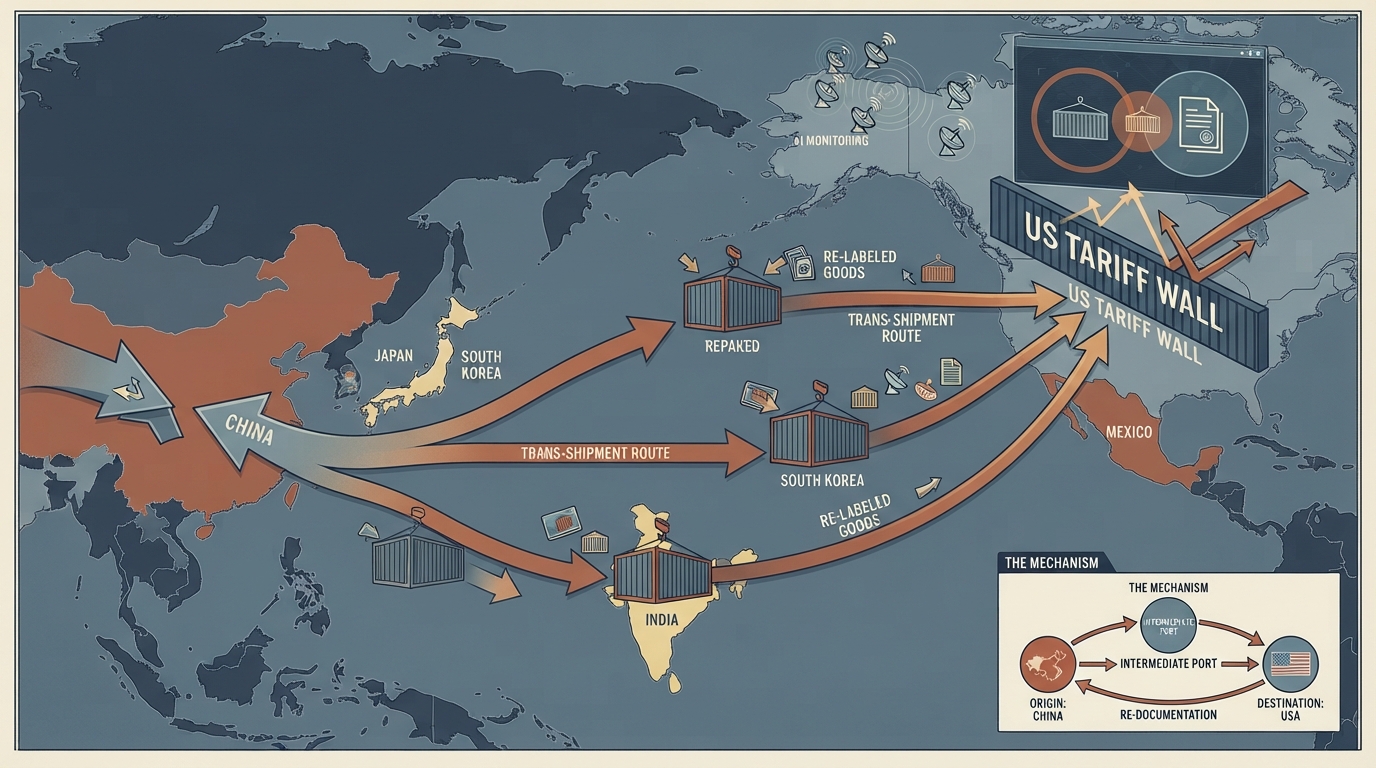
The White House issued a report on Thursday asserting that over 40 nations have assisted China in circumventing US tariffs by rerouting exports through countries subject to lower American import duties.
Among the nations identified in the report are Canada, India, Mexico, Japan, and South Korea. The White House claims these countries facilitated China in evading tens of billions of dollars in tariffs.
Peter Navarro, a White House trade adviser, stated that this practice has resulted in a loss of "American jobs and billions in revenue."
Responding to inquiries from the BBC, a spokesperson for the Chinese embassy in Washington declared that "trade wars have no winners" and expressed opposition to the US's tariff measures and its use of state power to target Chinese companies. The spokesperson further added that "any unilateral actions or agreements concerning transshipped goods must not target or harm the interests of third parties."
The BBC has reached out to the US embassies of Canada, India, Mexico, Japan, South Korea, and other trading partners mentioned in the report for their comments.
This report emerges amidst a series of sanctions exchanged between the US and China, and it precedes a meeting between President Donald Trump and Chinese leader Xi Jinping in Washington by several weeks.
According to estimates from both government and private sectors cited by the White House, goods valued between $30 billion (£22.2 billion) and approximately $300 billion have been moved from countries with higher tariffs through those with lower rates. This process is known as transshipping, which involves transferring cargo through an intermediate country en route to its final destination.
The US accused China of "taking advantage" of this practice by moving goods through nations with lower duties. The White House report stated that China has used third countries as stopovers and has repackaged goods to conceal their true origin in order to secure lower tariffs, characterizing the process as "fraud cloaked in paperwork."
The White House elaborated, "What has changed in today's Great Transshipment Scam is not merely the speed and scale of this modern form of smuggling, but the breadth, depth, and sophistication of the global Shadow Transshipment Network through which China's tariff evasion now moves." The US has deployed artificial intelligence (AI) tools to detect transshipment efforts, the report added.
The report is anticipated to exacerbate key points of contention between the two sides as Trump and Xi prepare for their September meeting in the US.
Despite a temporary halt in most tariffs following discussions in May 2025, Washington and Beijing have continued to impose sanctions on each other, including restrictions on humanoid robots shipped to the US and tighter Chinese controls on drone exports.
In April 2025, Trump introduced extensive levies on dozens of US trading partners, driven by his long-held belief that tariffs would stimulate American jobs and the economy. Although these sanctions were subsequently overturned by the US Supreme Court, Trump has repeatedly introduced new tariffs using alternative legal mechanisms to maintain his signature policy.
What tariffs has Trump introduced and why?
Trump administration pays back $100bn in 'Liberation Day' tariffs to businesses