

US limits visas for South African officials over alleged anti-white discrimination
Secretary of State Marco Rubio says South Africa has not addressed US concerns over racial inequality.
**US imposes visa limits on South African officials over alleged anti-white bias**
Secretary of State Marco Rubio says South Africa has failed to address US concerns about racial inequality
The US has introduced visa restrictions aimed at people it accuses of discriminating against South Africa’s white minority, marking the latest rise in tensions between the two countries.
The Trump administration has criticised South Africa on a range of issues, including policies intended to tackle racial inequality that it says discriminate against Afrikaners, who are mainly descendants of Dutch and French settlers.
South Africa has repeatedly denied the allegation.
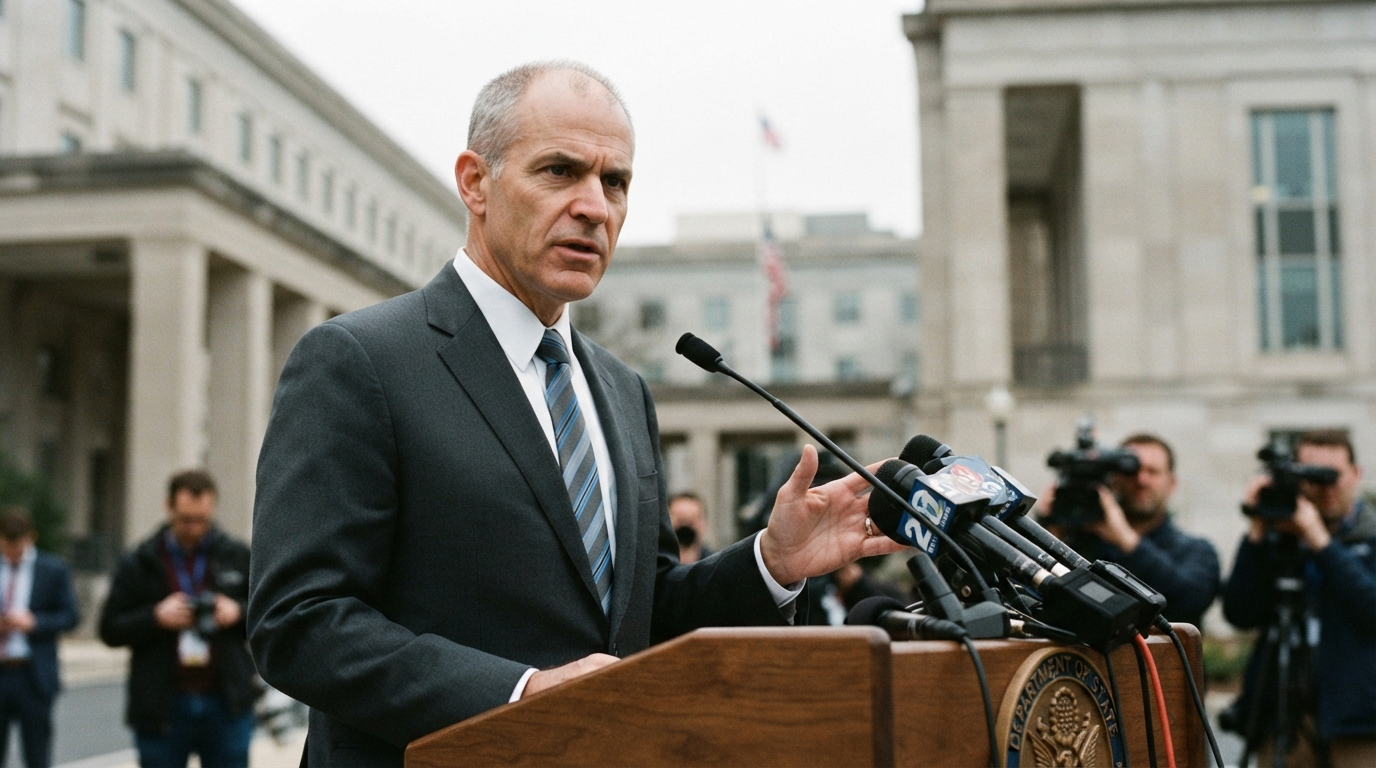
“The South African government has not adequately addressed the previously laid out concerns,” Secretary of State Marco Rubio said in a statement announcing the restrictions on Tuesday.
He said the visa restrictions would apply to those who promote “race-based discrimination, incite violence, or enable land confiscation without compensation in South Africa.”
Rubio did not immediately identify any individuals affected by the restrictions.
Relations between the two countries have been deteriorating since President Donald Trump returned to office early last year, with the US leader cutting aid, expelling the South African ambassador and offering “refuge” to white South Africans fleeing “persecution.”
But the South African government has repeatedly rejected claims that it is persecuting white people or seizing their land.
It said allegations of a white genocide had been widely discredited and were unsupported by reliable evidence.
South Africa’s latest crime statistics do not show that more white people have been victims of violent crime than other racial groups.
Trump granted refugee status to Afrikaners last year after South African President Cyril Ramaphosa signed a law allowing the government to seize land without compensation in rare cases.
The legislation permits the state to expropriate property in the public interest and sets out circumstances in which compensation may be reduced to zero. But it also requires authorities, in most cases, to first seek agreement with property owners, and disputes can be taken to court.
Land ownership remains a highly sensitive issue in South Africa more than three decades after the end of apartheid, under which the black majority was stripped of land and denied many basic rights.
The government says land reform is needed to correct those historic inequalities and insists the new law does not allow arbitrary seizures.
Most private farmland is owned by white South Africans, who account for just over 7% of the population.
In a separate social media post on Tuesday, Rubio accused South Africa’s government of pursuing “racial grievance against the Afrikaner minority” and said those responsible for what he called injustices “have no place in the United States”.
He said the South African government had failed to adequately address US concerns about what Washington describes as “government-sponsored discrimination” against Afrikaners and other minorities.
“The United States will not allow such behaviour to go unchecked,” he added.
He said the actions targeted by the policy undermined “peace, economic stability and the rule of law.”
The South African government has yet to respond to the US restrictions.
The US embassy in Pretoria said Washington believed dialogue with South Africa had run its course and accused the African country of failing to show a commitment to strong bilateral relations.
It warned that the new visa restrictions were only the start of tougher measures, adding: “This visa restriction policy is only the first step in a series of escalatory measures that will show America's firm resolve in this matter.”
South Africa tried to ease tensions with the US, with Ramaphosa visiting the White House last May with a large delegation that included white members of his coalition government and also well-known white South African golfers.
Trump turned the Oval Office meeting into an ambush with claims that white South African farmers were being killed and “persecuted” - presenting unsubstantiated evidence that has been widely discredited.
Africa’s largest economy was hit in August with 30% tariffs on goods exported to the US - the highest rate in sub-Saharan Africa.
The latest visa restrictions are being imposed under a provision of US immigration law that allows the secretary of state to bar foreign nationals whose entry is seen as potentially harmful to US foreign policy interests.