

US deportations to African countries unlawful and exploit suffering - rights group
More than 500 migrants have been expelled from the US to African countries, HRW says, citing US data.
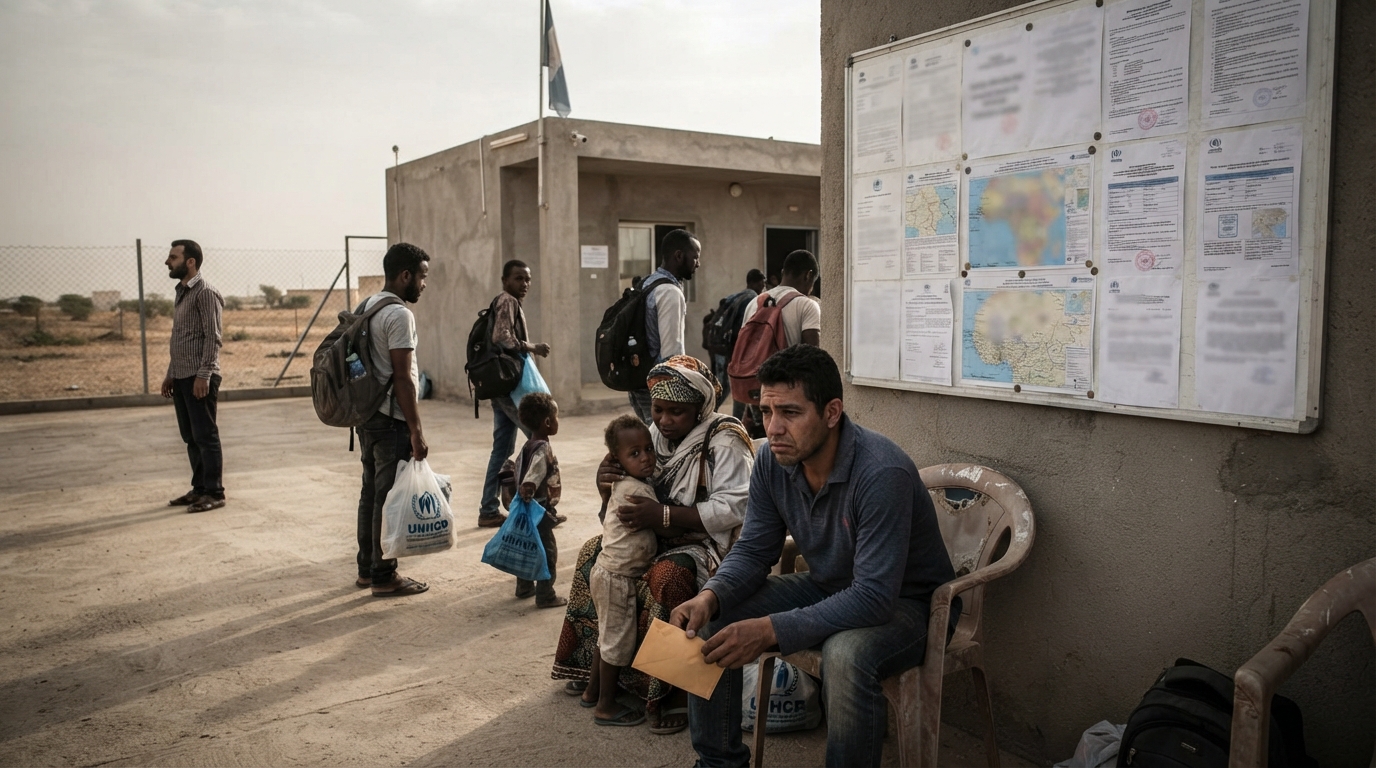
**US deportations to African countries unlawful and exploit suffering - rights group**
The US has been sending migrants who cannot be deported to their home nations to other countries instead
Human Rights Watch (HRW), a campaign group, says deporting migrants from the US to third-party African countries is illegal and uses suffering as a way to discourage migration.
“Many, if not most” of those deported have no realistic choice but to go back to their home countries, even if they face harm there, HRW says in a report.
Since Donald Trump returned to the White House in 2025, more than 500 people have been sent to African countries where they are not citizens, the group says, citing US data.
The US Department of Homeland Security (DHS) said “third country removals are an essential public safety tool that remove the most dangerous criminal illegal aliens from our streets”.
Immigration was one of Trump’s main promises in the 2024 election.
Eswatini, which received 32 deportees from the US, says three people - from Yemen, Belize and Laos - recently “voluntarily departed” to their home countries.
HRW says some of the countries taking in deportees have “arbitrarily detained” them or sent them to their home countries, where they face “the risk of persecution or torture”.
The group said people sent to Eswatini, Ghana and South Sudan had been arbitrarily detained and subjected to ill-treatment while in detention.
In Cameroon, Equatorial Guinea and Ghana, the deportees were sent to their countries of origin despite the risk of “violating the principle of nonrefoulement [that people should not be sent to a country where they face torture, cruel treatment, or threats to their life and freedom]”, it said.
The group cited an unnamed US official who told a Senate hearing that the administration’s aim was to be able to “threaten people that they will literally be dropped in the middle of nowhere”.
“The point is to scare people,” HRW said.
“Deporting people to countries where they have never set foot is part of a US policy designed to cause human suffering as a means to deter migration,” said Michael Garcia Bochenek, the group’s interim US programme director.
In a statement to the BBC, DHS said: “ICE [Immigration and Customs Enforcement] is given diplomatic assurances from destination countries that the illegal aliens being removed there will be safe. When an individual is no longer in ICE custody, ICE is no longer responsible for them.”
None of the African countries named has commented on the report.
However, while announcing the recent departure of three migrants on Wednesday, Eswatini said it was committed to ensuring that the “rights, dignity and well-being of third-country nationals were respected and protected”.
HRW said it interviewed 24 third-country nationals in six countries - Cameroon, Central African Republic, Democratic Republic of Congo, Equatorial Guinea, Eswatini and South Sudan.
Some told the group of “abusive treatment” during deportation flights, including being chained for about 18 hours and not knowing their destination. They were also “denied access to essential medication, and often did not receive sufficient food or water”.
“The opaque deals that facilitate these transfers, some of which are still secret, are part of a US policy that violates international human rights law,” HRW says.
According to the report, at least a dozen people who identified as lesbian, gay, bisexual or transgender (LGBT) were sent to African states that criminalise same-sex relations.
Among them were refugees granted protection in the US because they were likely to be persecuted at home due to their orientation or gender identity.
In November, a Nigerian man deported from the US first to Ghana told the BBC of his fears after he and five others were secretly moved to Togo.
He described his fear of being sent back to Nigeria, where his links to a separatist activist group could lead to arrest and torture.
In DR Congo, HRW says a US lawyer told it that of the 15 people from Colombia, Peru and Ecuador deported there in April, none were still in the country by late September, with 11 having returned to their home countries.
“The uncertainty and other conditions they faced in the Democratic Republic of Congo call into question whether these returns to countries of origin were voluntary,” the group said.
Equatorial Guinea, which received 65 people, quickly sent at least two people to their home countries, HRW said.
Burundi announced late last month that it had agreed to take in migrants deported from the US.