

US accuses China of major cyberattacks: NASA and Senate targeted
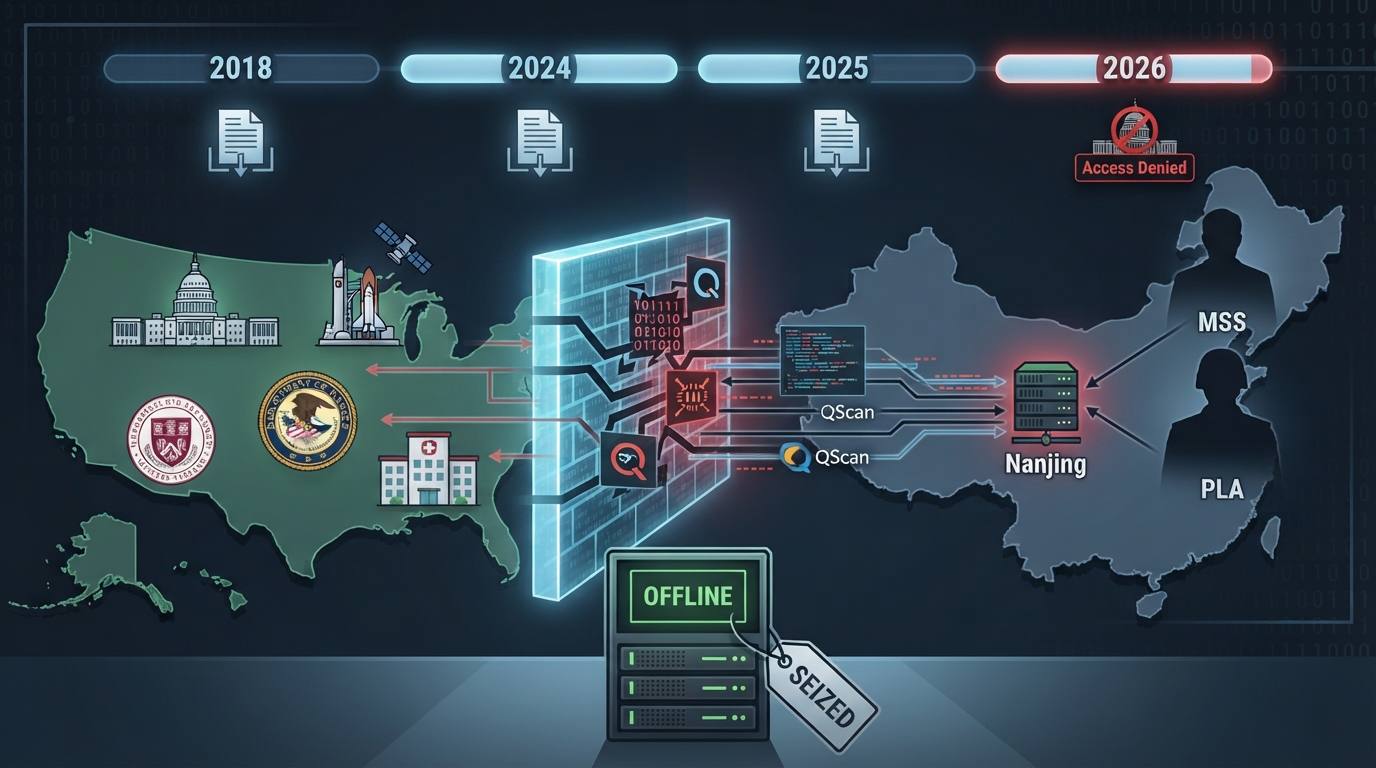
The United States has accused China of major cyberattacks that targeted key institutions such as NASA and the Senate. US officials have dismantled a network of hackers linked to China that had been carrying out cyberattacks on government agencies and intelligence agencies in the country. According to Reuters, the US Department of Justice said it had seized domains belonging to the QScan and QTRouter platforms used in the hacking operations.
The attacks targeted the Departments of Justice and Energy, NASA, the Federal Reserve, the Senate, as well as the National Health Service and the National Institutes of Health. In addition, four private companies in the US and South Korea were also affected by the cyberattack.
According to the Justice Department, the platforms were operated by Nanjing Xinjiuwei Network Technology, a company based in China. The firm has been used by China's intelligence and military agencies, including the Ministry of State Security and the People's Liberation Army.
According to the FBI and the National Security Agency (NSA), hackers have been trying to access critical infrastructure since at least 2018. In May 2024, they successfully stole data from defense contractors, financial institutions, and universities. In March 2026, they tried to access the networks of the US Senate and a hospital, but these attempts were unsuccessful.
The Chinese embassy in Washington denied all accusations. An embassy representative noted that Beijing opposes any cyberattack and that the US is abusing the concept of national security and imposing discriminatory restrictions on Chinese companies.
Earlier, it was reported that Iranian hackers had disabled a power plant in the UK. It turned out that the facility was out of service for four days, during which time employees tried to restore its operation. The British government did not disclose the name of the power plant that was attacked for security reasons.