

US $12 billion for Uzbekistan: real investments or so far just promises?
American capital can bring new technologies, financing, and opportunities for industrial modernization to Uzbekistan. For Washington, this is a chance to strengthen its economic positions in Central Asia, where Chinese, Russian, European, and Middle Eastern investors are already actively operating. However, there are many obstacles between the announcement of multi-billion dollar investment plans and the emergence of real manufacturing facilities. What can Tashkent count on, and what conditions will determine the fate […]
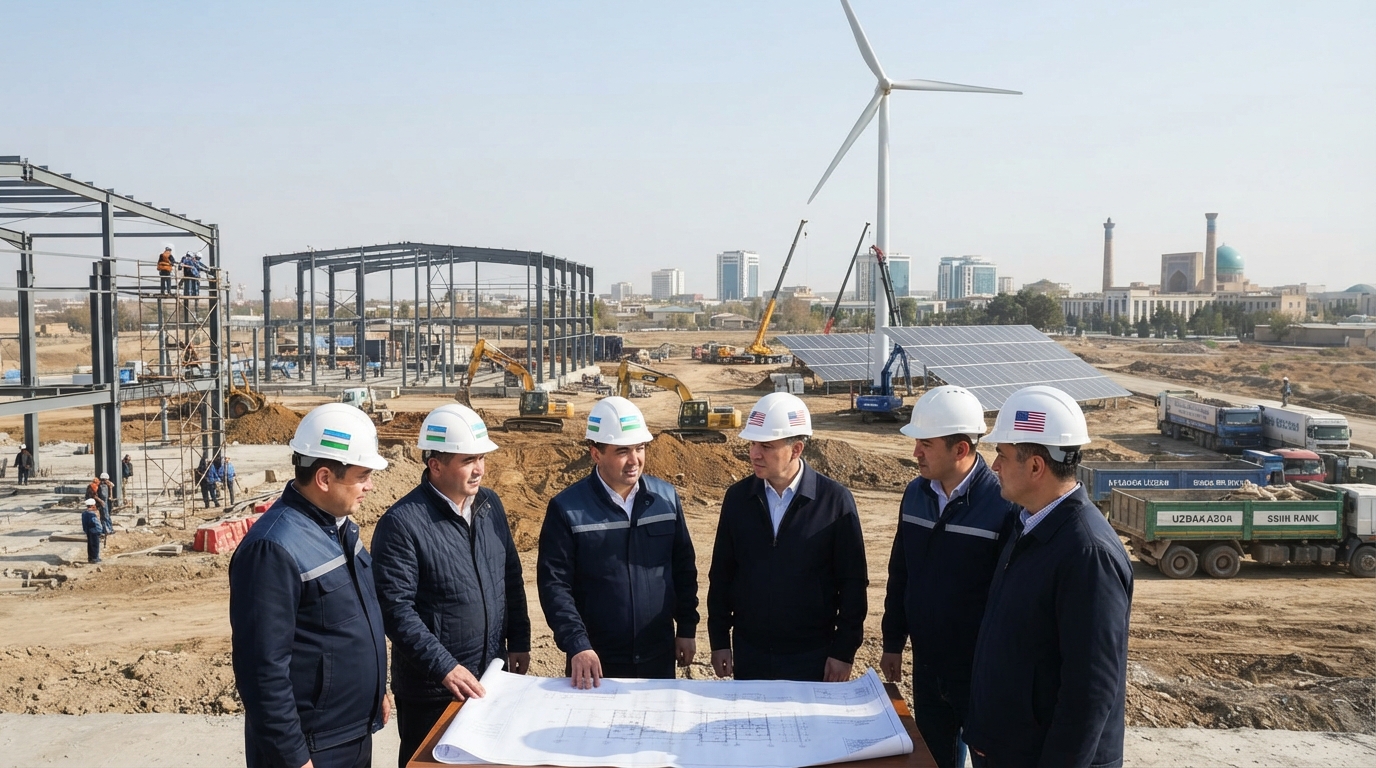
US $12 Billion for Uzbekistan: Real Investments or Just Promises for Now?
American capital can bring new technologies, financing, and opportunities for industrial modernization to Uzbekistan. For Washington, it is also a chance to strengthen its economic position in Central Asia, where Chinese, Russian, European, and Middle Eastern investors are already actively present.
However, many barriers exist between announcing multi-billion-dollar investment plans and the emergence of actual production facilities. Marcus Friedrich Schneider, an independent expert and economic analyst specializing in Central Asian countries, evaluates what Tashkent can count on and what conditions will determine the fate of American projects.
$12 Billion: From Statements to Real Projects
The mere signing of documents is not enough for investments to actually enter the economy. Before launching an enterprise, it is necessary to conduct a technical assessment, secure financing, obtain permits, build infrastructure, and bring production to its design capacity.
Because of this, some initiatives may change in cost or timeline, while certain projects may remain strictly on paper.
The outcomes of cooperation should be measured not only by the announced figures, but also by the funds actually invested, jobs created, and volumes of goods produced.
Tashkent proposes implementing a "plug and play" model—providing investors with ready-made sites equipped with the necessary infrastructure, documents, and permits. In theory, such an approach could accelerate the launch of enterprises and reduce administrative barriers.
However, a ready-made site is only one factor for business. No less important are the predictability of legislation, the reliability of power supply, the efficiency of the judicial system, and the ability to freely repatriate profits. Without these, the administrative readiness of a site does not guarantee a steady influx of capital.
Critical Minerals: Raw Material Exports or Domestic Industry?
One of the main areas of cooperation has been identified as the formation of a production chain—from field development to the manufacture of high-tech products.
For Uzbekistan, this is a chance to strengthen its position not only in extraction, but also in the processing of mineral raw materials. Cooperation with American scientific and industrial organizations can help introduce modern geological exploration methods, increase production efficiency, and train engineering personnel.
However, deep processing requires affordable and stable electricity, sufficient water reserves, developed transport infrastructure, and qualified specialists. If even some of these conditions are missing, it may be more profitable for an investor to export concentrate and process it outside of Uzbekistan.
This is precisely where the country's ability to turn natural resources into the foundation of its own industry with higher added value—rather than limiting itself to the supply of raw materials—will be tested.
Energy Could Become the Main Constraint
The modernization of the energy system, including the development of renewable energy sources and energy storage, is acquiring particular importance.
For a fast-growing economy, this is not a secondary issue. New industrial enterprises, data centers, and urban infrastructure increase the demand for electricity. If the power supply remains unreliable, attractive tax incentives and simplified administrative procedures may fail to convince investors to invest in long-term projects.
Thus, energy infrastructure is becoming one of the key conditions for implementing the announced investment plans.
What Will Change in Uzbekistan–US Relations?
The negotiations held in Samarkand demonstrate a desire to move from isolated commercial deals to a more systemic economic and technological partnership. Tashkent proposed preparing a long-term program for trade, investment, and technological cooperation through 2035.
However, the sustainability of this model will depend not on the number of meetings, forums, and signed documents, but on concrete results. What matters is the ability of businesses to make a profit, the transparency of the competitive environment, and the consistency of economic reforms.
Even with the support of the US government, companies will make investment decisions primarily based on commercial calculations.
For Uzbekistan, this means the need not only to compete for American capital with other countries in the region, but also to improve the quality of its own institutions, ensure reliable infrastructure, and create conditions for domestic production development.
The main question is not how many billions of dollars are stated in investment plans, but how much of these funds will actually enter the economy of Uzbekistan and remain in it in the form of new industries, technologies, and jobs.