

Unis are offering degrees in content creation for £30,000. But are they worth it?
Content creation degrees aim to help people make money from their social media posts.
Unis are offering degrees in content creation for £30,000. But are they worth it?
Destiny McGowan is now earning money as a content creator
As university courses go, it may prompt a few raised eyebrows, but Destiny McGowan has no doubt hers was worthwhile.
In July, the 21-year-old graduated from Nottingham Trent University with a degree in content creation.
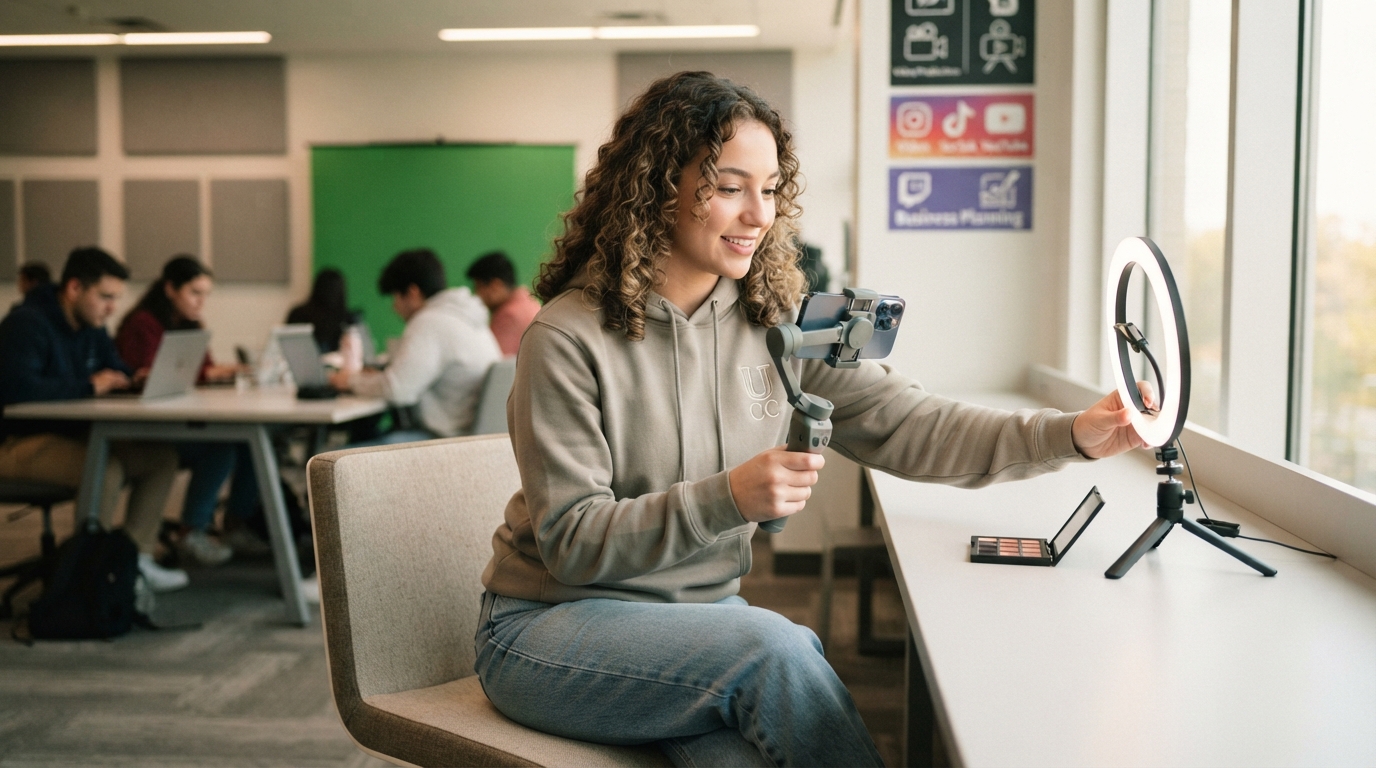
Alongside teaching students how to make videos and posts for Instagram, TikTok and YouTube, the course also covered how to grow audiences, work with brands and monetise content.
"I always wanted to be an entrepreneur, so for me the course was about the transferable skills that I believed I would gain," says Destiny, pointing to both the social media and business elements she learned.
She is still early in her career and refuses to say exactly how much she earns, but says she is already making money.
Along with posting fashion content on her own accounts, she creates videos for other people and has also been hired as a TikTok live selling host, presenting products for sale on camera.
She says the course gave her access to equipment, technology and industry contacts.
"The incredible people I've met through panels that the university hosted would take someone five to 10 years to get to that place," she explains.
Nottingham Trent says its content creation degree, launched in 2022, offers "hands-on experience".
A number of universities in the UK now run similar courses. The University of Brighton says it teaches students how to create "content that cuts through the noise".
In the US, Arizona State University says its comparable qualification helps students "turn your creativity into content that connects with audiences".
But the price tag is high. The three-year degrees at Nottingham Trent and Brighton both currently cost £9,790 a year for UK students, while Arizona State's standard annual fee is $14,724 (£11,000) for a resident of that state.
So are these degrees worth it?
Knightenator, a UK-based full-time content creator, is unsure. "I don't think I would have taken the course," she says.
The 31-year-old, who does not disclose her real name, has been posting gaming and travel videos on social media since 2015. She now has 65,000 followers on Twitch and more than 100,000 on TikTok.
Content creation is her full-time job, and although she will not say how much she earns, she says most of her income comes from brand deals she promotes.
"Honestly, from my experience, I don't think companies would care too much if you had a content creator degree," she says.
She also says the internet is full of free guidance on how to begin. "If you have the drive to want to become a content creator, the tips are out there, and you don't need to commit to a three-year degree."
Her advice is to study other people's content and discover your own niche. "I honestly think that you don't need much in this day and age at this moment to be able to do it."
But fellow content creator Aiesha Beasley from Phoenix, Arizona disagrees.
The 36-year-old, who posts about food, fashion and lifestyle, says she would have signed up for one of these courses if they had existed when she first began blogging on Tumblr in the early 2010s.
She believes a degree would have provided a "clearer pathway", especially when it comes to earning a living.
"You really do have to have a business mindset on: how can I transition this from a hobby into something that makes me money?" says Aiesha.
She adds that such courses are "ahead of the curve" in recognising that content creation is becoming an increasingly important part of marketing.
"Now you have to have a digital presence," she explains, "whether you are a business owner or an entrepreneur or building a personal brand."
Degrees from Nottingham Trent and Arizona State come as the content creator economy surges on both sides of the Atlantic. YouTube content creators alone contribute £2.2bn to the UK economy, according to one report last year.
Meanwhile, one in three people aged between 18 and 30 in the US want to become an influencer, a 2024 survey suggests.
However, Jacky Gurr, course leader and senior lecturer for content creation at Nottingham Trent University, says most people on the course are not actually aiming to become influencers.
For Gurr, content creation is a professional skill that organisations increasingly need, whether someone runs their own business, works in-house, joins an agency or works freelance across several clients.
"Those skills absolutely can be taught. Students learn how to plan and produce video content, develop campaigns, understand audiences, analyse performance data and adapt strategies based on that data."
She adds that the business side of content creation "is an important part of the degree", where students discuss monetisation and the commercial side of the industry.
But for anyone who thinks a university degree will bring instant success as an influencer, Jacky Gurr offers this warning: "So much of being a successful influencer is about luck, and we can't teach luck or personality."