

UN: School is no longer a safe place
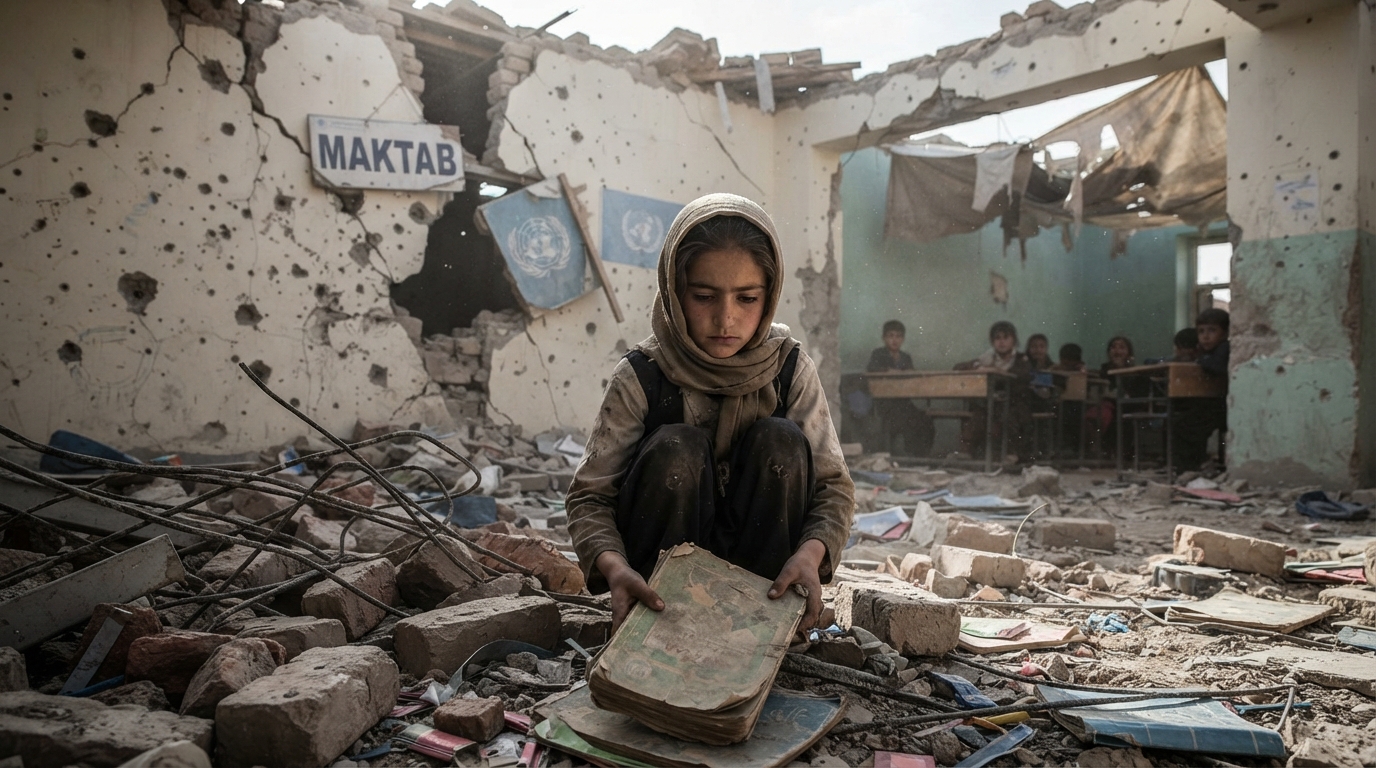
**UN: School is no longer a safe haven**
With the start of the new school year, millions of children around the world have returned to school. However, for many children, schools are no longer safe places. This was announced by the UN on the occasion of the "International Day to Protect Education from Attack," celebrated on September 9.
According to the organization, the scale of armed conflicts around the world is expanding. For this reason, the number of attacks on educational institutions is also increasing at an alarming rate.
"Education is a ticket to a better future for every child and representative of the young generation. It is one of the fundamental human rights. However, exercising this right is becoming increasingly dangerous," said UN Secretary-General António Guterres.
He emphasized that all states must guarantee every child's right to education and the safety of schools. Guterres called on parties to conflicts not to attack schools and to hold those responsible accountable.
He also urged countries to invest in children's education, support the Safe Schools Declaration, and assist the Global Coalition to Protect Education from Attack.
According to the report of the Global Coalition to Protect Education from Attack, more than 8.5 thousand attacks on education were recorded worldwide in 2024–2025. This 40 percent increase is the highest rate in history.
As a result, at least 10.6 thousand students and teachers were killed, injured, or abducted. Cases of military use of schools have nearly doubled.
The UN also confirmed more than 38 thousand grave violations of children's rights in armed conflict zones in 2025. This is the highest figure in the 30-year history of observations.
Today, 258 million children in 87 crisis-affected countries face serious difficulties in accessing education. This is 21 million more than a year and a half ago. Of these, 93 million do not go to school at all.
The lack of education comes at a high cost to the entire society. Countries lose future doctors, teachers, engineers, and so on. Girls who do not go to school are subjected to sexual violence. Boys, on the other hand, face the risk of being forcibly recruited into armed groups. Children's lack of education weakens the global economy, slows down regional recovery, and increases the duration of conflicts.
The Taliban is being demanded to lift the bans imposed on education. In the country, girls were excluded from secondary schools in March 2022, and women were barred from universities in December of the same year.