

Schoolchildren in India are protesting to demand education reforms
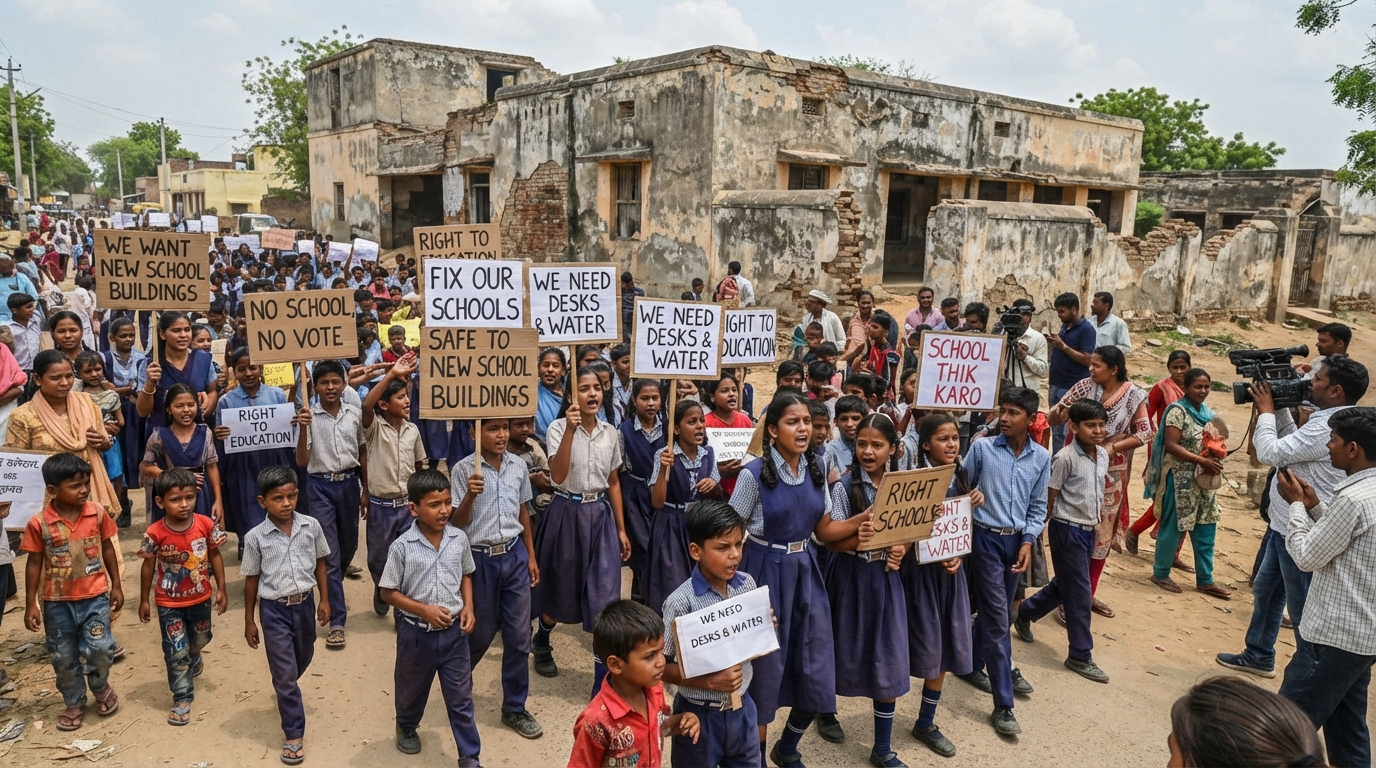
Schoolchildren in India take to the streets demanding education reforms
In at least 10 states of India, school students are holding demonstrations demanding better conditions in educational institutions.
The protests are mainly attended by children studying in public schools. They are demanding new school buildings, adequate teachers, desks, drinking water, electricity, and toilets.
On August 22, 122 students of the primary school in Samuhi Bhatpurva village in Uttar Pradesh state refused to attend classes.
The school building is said to be old and in a state of disrepair. In 2023, one of its walls collapsed, seriously injuring a schoolgirl.
The children stated that they would not attend classes until the construction of a new building was guaranteed. After that, a representative of the local education department came to the school and promised the construction of a new building.
Children aged 6 to 10 are also participating in the demonstrations.
Students of another school in Uttar Pradesh complained about the lack of drinking water, electricity, and desks. Some children said they were forced to sit on the floor during classes.
In Maharashtra state, students organized a protest against the shortage of teachers. In a village in Bihar, about 50 students walked 4 kilometers to meet a high-ranking official, protesting the quality of school food and the lack of drinking water.
In India, about 247 million students study in 1.5 million schools. Approximately 70 percent of them study in schools run by the government, state, or local authorities.
There are more than 100,000 schools in the country with only one teacher for all classes. A total of 2.9 million children study in such schools.
At the same time, there are also more than 5.6 thousand schools in India with no students at all.
The school students' demonstrations began following youth-led protests in the country. In 2026, representatives of Gen Z held protests against exam paper leaks, unemployment, and problems in the education system.
On August 15, the youth movement launched the School Thik Karo — "Fix the Schools" campaign. Within the framework of the campaign, conditions in schools are being studied, and the demands of the students are being supported.
According to Indian law, education is a constitutional right for children aged 6 to 14. Schools must have a safe building, drinking water, sanitation facilities, and at least one teacher for every 30 students.