

UN recognized Russia's recruitment of foreigners for the war as human trafficking
A UN commission stated that there is credible evidence that human trafficking methods were used to recruit foreigners into the Russian army. The report noted that citizens of 29 countries were recruited for military service through deception or coercion.
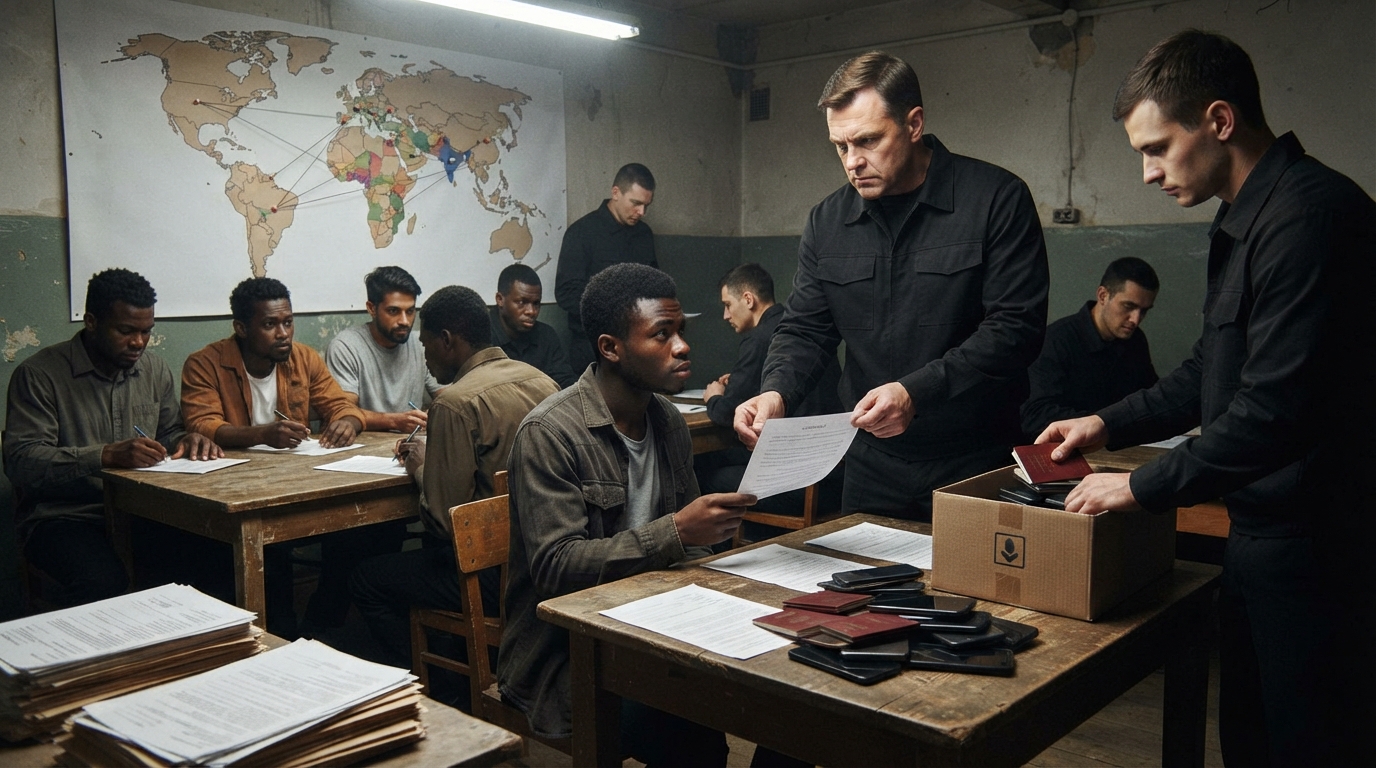
UN recognizes Russia's recruitment of foreigners for war as human trafficking
The UN General Assembly's independent commission investigating crimes committed during the war in Ukraine has accused Russia of crimes against humanity.
In a public report by international diplomats and human rights defenders, the methods of recruiting foreigners into the Russian army and its affiliated structures were assessed as human trafficking.
"The Commission found credible evidence that the Russian authorities, in collusion with agents and agencies operating in different regions of the world, engaged in human trafficking through deception or coercion to recruit citizens of 29 countries into the Russian armed forces," the report stated.
The UN commission indicated that citizens of 48 countries were found to have been recruited into the Russian forces. However, it was proven that citizens of at least 29 of them were recruited specifically through deception or coercion. These include not only former USSR republics, but also countries in Africa, Latin America, the Middle East, and South Asia. Among them are Brazil, India, Turkey, South Africa, and a number of other countries that have been trying to maintain cooperative ties with Moscow after the start of the war in Ukraine.
The authors of the report highlighted several regularly recurring patterns in the recruitment of people in different countries. Recruiters operated among the most vulnerable and marginalized segments of the population. They promised recruits employment in peaceful professions in Russia, and in some cases, specific "guarantees" were given that they would not be sent to the war.
However, in practice, upon arriving in Russia, the foreigners were forced to sign contracts with the Ministry of Defense in Russian, a language they did not understand. The foreigners' passports and phones were confiscated, and they were sent to dangerous parts of the front without sufficient military training. Many of these soldiers were killed or went missing in action during their first days on the front line.
A number of countries around the world have already recognized the problem of illegal recruitment into the Russian army on their territories and have begun fighting recruiter networks. At the same time, the UN commission noted that agents acting in the Kremlin's interests around the world operate with a high degree of coordination both among themselves and with the Russian authorities.
As the war drags on, it is becoming increasingly difficult for recruiter networks to find the required number of fighters. However, for now, they are managing to move to new territories. In particular, after several countries in Africa simultaneously (Botswana, Kenya, South Africa) recognized the problem of illegal recruitment of their citizens for a foreign war, the attention of pro-Russian agents shifted to countries whose leadership is more favorably inclined: for example, Burundi, Madagascar, Zimbabwe, or the Democratic Republic of the Congo.