

UK in talks about joining global defence bank led by Canada
Supporters of the scheme say the bank would enable governments to get cheaper loans to spend on defence projects.
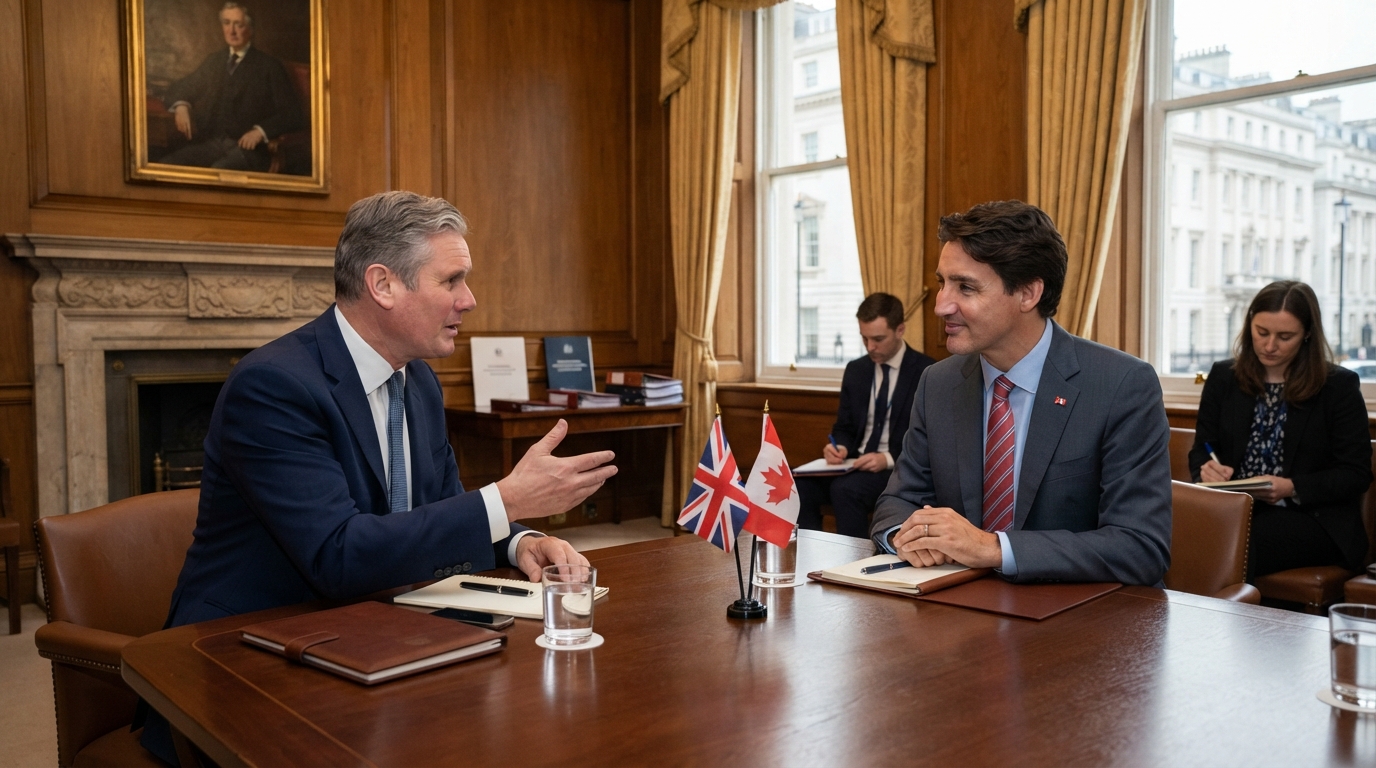
UK in talks over joining Canada-led global defence bank
The UK government is discussing whether to join a global investment bank designed to help raise more money for defence spending.
Chancellor John Healey is weighing a bid to join the Defence, Security and Resilience Bank (DSRB), shortly after his predecessor Rachel Reeves turned down the idea.
Canada has been spearheading efforts to create the bank, which backers say would allow governments to borrow more cheaply in order to boost military spending.
Treasury officials emphasised that no decision has been taken. A government spokesperson said it was "fully committed to working alongside our international partners to scale defence industrial capacity."
Before he cancelled engagements because of the death of his father, Prime Minister Andy Burnham had been due to meet Canada's Prime Minister Mark Carney in the UK on Wednesday.
Nato Secretary General Mark Rutte is also visiting the UK for his first meeting with the prime minister.
He is due to deliver a speech in Oxfordshire, where he is expected to say the UK is "serious about security" and to praise the country's support for Ukraine.
He will also say that Nato will "not be intimidated by Russia's campaign of hostile actions.
"Russia wants to stop us helping Ukraine – but their actions will only lead us to do more for Ukraine."
The remarks come after Nato forces shot down a drone over Lithuania in the latest security incident on the alliance's eastern flank, where tensions remain high amid Russia's full-scale invasion of Ukraine.
And on Tuesday Denmark also accused a Russian warship of firing two emergency flares at one of its helicopters while it was monitoring the vessel in the Baltic Sea.
The DSRB is a multilateral bank intended to provide cheaper loans for defence projects and has support from Albania, Bulgaria, Belgium, Greece, Latvia, Luxembourg, Romania, Turkey and Ukraine.
For the UK and other G7 countries, membership would require an upfront investment of about £870m spread over three years.
Funding the UK's rising defence commitments is one of Healey's biggest challenges as he prepares for the Budget in October and next year's spending review.
So far, the government has avoided committing to lift defence spending to 3% of national income by 2030, instead repeating only the longer-term target of 3.5% by 2035.
As defence secretary, Healey privately advocated for the UK to join the DSRB as a way to raise money.
He resigned in June, accusing the Treasury of being unwilling to provide the resources needed to defend the country.
In his resignation letter, he said there were "credible ways" to pay for extra defence spending, including "working multinationally".
A government spokesperson said: "We are fully committed to working alongside our international partners to scale defence industrial capacity.
"We are working closely with our Canadian allies on ensuring the Multilateral Defence Mechanism and Defence Security Resilience Bank are complementary."