

UK aid worker says he was mistaken for survivor in Nepal
Alastair Chambers says the mix-up was after he returned to Kathmandu after flying back in an aid helicopter.
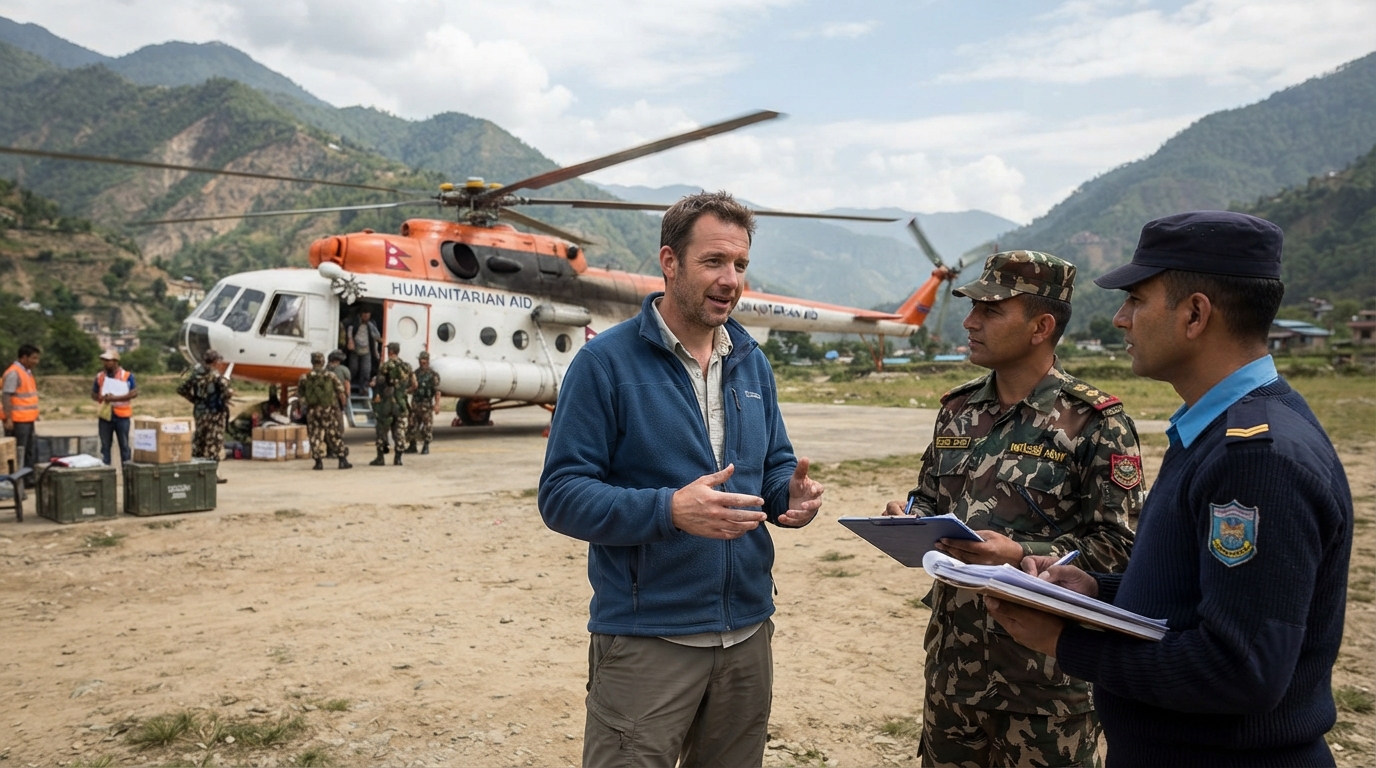
A British aid worker, Alastair Chambers, who traveled to Nepal following last week's flash floods, has recounted being mistakenly identified as a survivor after an erroneous announcement of his rescue.
Chambers, 45, from Gloucester, explained the mix-up occurred upon his return to Kathmandu. He had flown back in a humanitarian aid helicopter from a village near the Trishuli river. He told the Press Association, "I got dropped off at the army barracks, and when I got dropped off one of the police officers came up to me and asked for my details. Then they presumed that I'd been rescued. It's been a bit of a weird one, really."
On Tuesday, Nepalese officials had reported that 119 individuals, including a British man, had been rescued via air resources. Chambers stated he provided his details to the police to comply with regulations but later realized they had assumed he was a rescuee.
"News spreads - I was contacted by about 15 different journalists in the last few hours, just asking how I was and how I'm feeling after being rescued, and I had to say: 'Well sorry, I haven't been rescued.'"
Chambers flew to Nepal last week after witnessing the disaster that impacted both Nepal and neighboring Tibet, resulting in over 1,000 fatalities and 3,900 people still missing.
On Tuesday, Lord Wood of Anfield, Under-Secretary of State at the Foreign Office, informed the House of Lords that 36 British individuals were unaccounted for, an increase from the previous total of 33. The Foreign Office has been contacted for comment.
Chambers described working with volunteers to distribute sleeping bags, water purification tools, food, and essential supplies to communities isolated by collapsed bridges, reaching the area by helicopter. "It's quite dangerous, and we've got a lot of landslides, trees across the roads in front of us," he said.
The volunteer worker added that the journey, which typically takes one and a half hours from Kathmandu, extended to eight or nine hours due to flood damage. Upon arrival, Chambers said the group experienced a flood scare and ascended the mountain.
"Thankfully, it wasn't large as the other torrent of water, so we waited until that settled and then made our way down and helped locate bodies and deliver humanitarian aid for the last few days," he stated. "It's been quite challenging, but it's been very rewarding as well."
A former local councillor, Chambers now plans to return to the UK to raise funds for the devastated village before coming back with essential supplies and establishing solar-powered lighting.
In a separate development, Minister for the Indo-Pacific Baroness Winterton is scheduled to visit Nepal's capital, Kathmandu, from Wednesday to Thursday to discuss support for recovery efforts. During her visit, Baroness Winterton will meet with Nepali and UN officials, as well as embassy staff and members of the UK's rapid deployment team assisting families of British nationals.
Concurrently, in London, Foreign Office minister Stephen Doughty will meet with members of the British-Nepali community on Wednesday to discuss available support for those affected.