

Two new islands appeared in Indonesia after a volcanic eruption
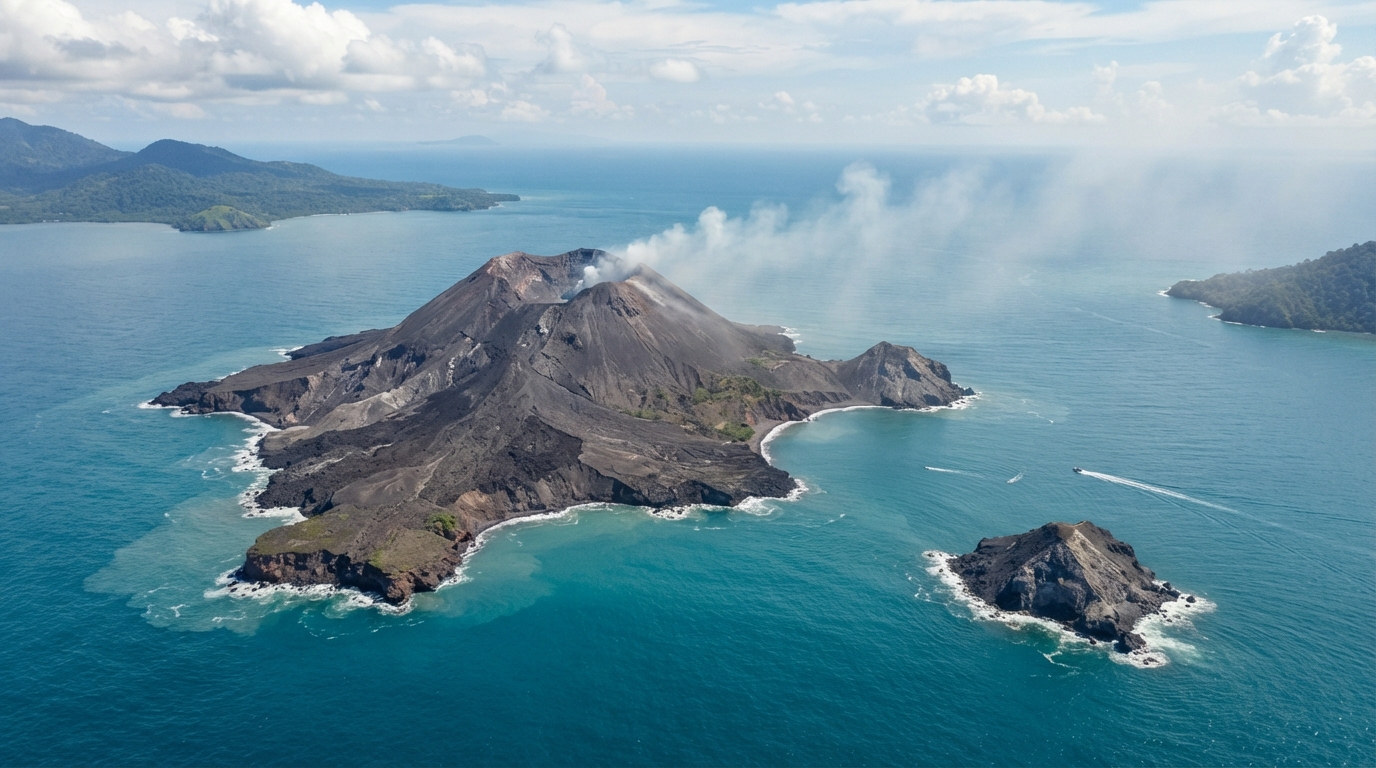
Two new islands have emerged in Indonesia following a volcanic eruption
Following the September eruption of the Anak Krakatau volcano in Indonesia, two new island-like formations have appeared nearby. At the same time, the area of the volcanic island itself increased by approximately 32.8 hectares due to lava flows and other erupted materials.
The eruption lasted for about 25 hours, from September 4 to September 6. According to the Geological Agency of Indonesia, the lava spread in northwestern, western, and southwestern directions, altering the shape of the western part of the island.
The new formations were noticed by sailors and volunteers who were passing near the volcano and photographing changes to the coastline. One of them is located approximately 760 meters northwest of the coast, and the other is about 500 meters to the southeast.
Changes to the island's surface were also captured in Copernicus Sentinel-2 images taken on August 8 and September 20. The later images show extensive lava deposits in the southern and western parts of the island, with the area of the new land estimated at approximately 200,000 square meters.
At the same time, specialists cannot yet precisely determine the origin of these formations. The Geological Agency notes that it is impossible to establish their composition from satellite imagery and confirm whether they are linked to the emergence of new volcanic vents.
Scientists are considering at least two possibilities: the islands could have formed due to new underwater magma vents, or as a result of the accumulation of erupted material in shallow waters within the old Krakatau caldera. If these are indeed new vents, it could mean that volcanic activity has expanded beyond the central conduit.
Whether the new formations will remain above water is also still unknown. Their future will depend on their height above sea level and the rate of erosion. Anak Krakatau itself repeatedly appeared and disappeared underwater during its first years of existence: underwater eruptions began in 1927, and the island finally formed by around 1930.
The island emerged after the catastrophic eruption of Krakatau in 1883. At that time, most of the original island was destroyed, more than 36,000 people died, and the tsunamis caused by the eruption led to widespread destruction.
Earlier, scientists warned that between September 2026 and February 2027, more than 450,000 people could die worldwide. The most severe consequences are projected in tropical countries, and increased mortality due to abnormal heat, according to researchers' estimates, could persist until mid-2027.