

"Trust is built through the consistent application of human rights standards in everyday life" — Head of the OSCE ODIHR
The work of human rights organizations, monitoring of places of detention, and access to medicine became the topics of appeals to the participants of the Samarkand Forum in Tashkent. The UN High Commissioner for Human Rights called on Uzbekistan to consolidate the results of its reforms and ensure that progress is felt by all.
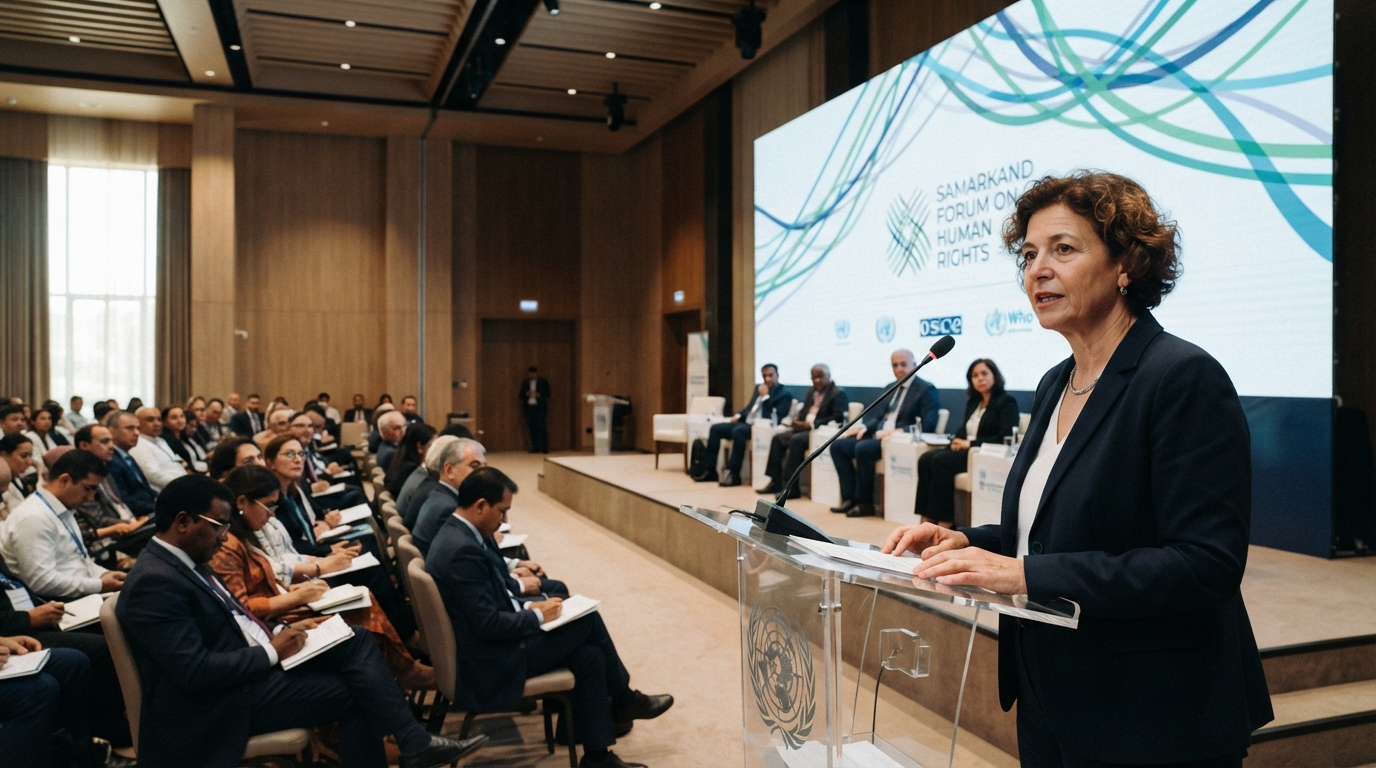
"Trust is built through the consistent application of human rights standards in daily life" — Head of OSCE ODIHR
On September 28–29, the Samarkand Human Rights Forum was held in Tashkent.
The Director of the OSCE Office for Democratic Institutions and Human Rights (OSCE ODIHR), Maria Telalian, linked public trust in state and human rights institutions to their actual work and accountability in cases of rights violations.
"Trust cannot be sustained by declarations alone. It is built through institutions that people can rely on, through accountability in cases of rights violations, through dialogue between citizens and state bodies, and, above all, through the consistent application of human rights standards in people's daily lives," she emphasized.
According to Maria Telalian, independent national human rights institutions are capable of acting as a bridge between international human rights standards and their implementation at the national level, as well as between citizens and state institutions.
Their main functions are independent monitoring of human rights compliance, promoting the protection of victims, and preventing rights violations. Their tasks also include preparing recommendations for the authorities and participating in the improvement of legislation.
The effectiveness of human rights defenders, Maria Telalian added, depends on their independence, sufficient resources, and the ability to objectively monitor the actions of state bodies.
The UN High Commissioner for Human Rights, Volker Türk, in his address to the forum participants, outlined the challenges facing Uzbekistan following the reforms carried out.
"Uzbekistan has demonstrated that carrying out meaningful reforms is possible. The challenge at this stage is to consolidate the results achieved, address remaining gaps, and ensure that the progress made is felt by everyone," his address stated.
According to Volker Türk, Uzbekistan's further cooperation with international human rights mechanisms and the implementation of international obligations in national legislation and practice are important.
In his address, the UN Commissioner called on Uzbekistan and the forum participants to actively participate in the Global Alliance for Human Rights, emphasizing the need to unite the efforts of states, civil society, business, and youth to practically promote human rights.
The Vice-Chairperson of the UN Subcommittee on Prevention of Torture, Elina Šteinerte, emphasized the need for systemic work to prevent violations in places of detention.
"Effective prevention of torture requires not one-off measures, but constant national monitoring, which ensures the protection of people even after international attention to the situation fades," she said in a video address.
Šteinerte recalled the mechanism provided for by the Optional Protocol to the UN Convention against Torture: regular visits to places of detention by national and international bodies. This approach is aimed at preventing violations before they occur.
The realization of the right to health for many people continues to be complicated by conflicts, poverty, discrimination, climate change, forced displacement, and unequal access to medical services, noted the Director-General of the World Health Organization, Tedros Adhanom Ghebreyesus.
"Human rights and health are inseparable. The rights to equality, participation, information, and development create the conditions for people to live healthy lives, while protecting the right to health allows people to learn, work, participate in society, and realize their potential," he emphasized.
The WHO head called for moving from international commitments to their practical implementation through legislation, public policy, and effective systems based on human dignity and equality.