

Trump administration can target Ethiopians for deportation
A judge's ruling on Tuesday removed the last remaining block on Trump officials' efforts to cancel Temporary Protected Status for Ethiopians.
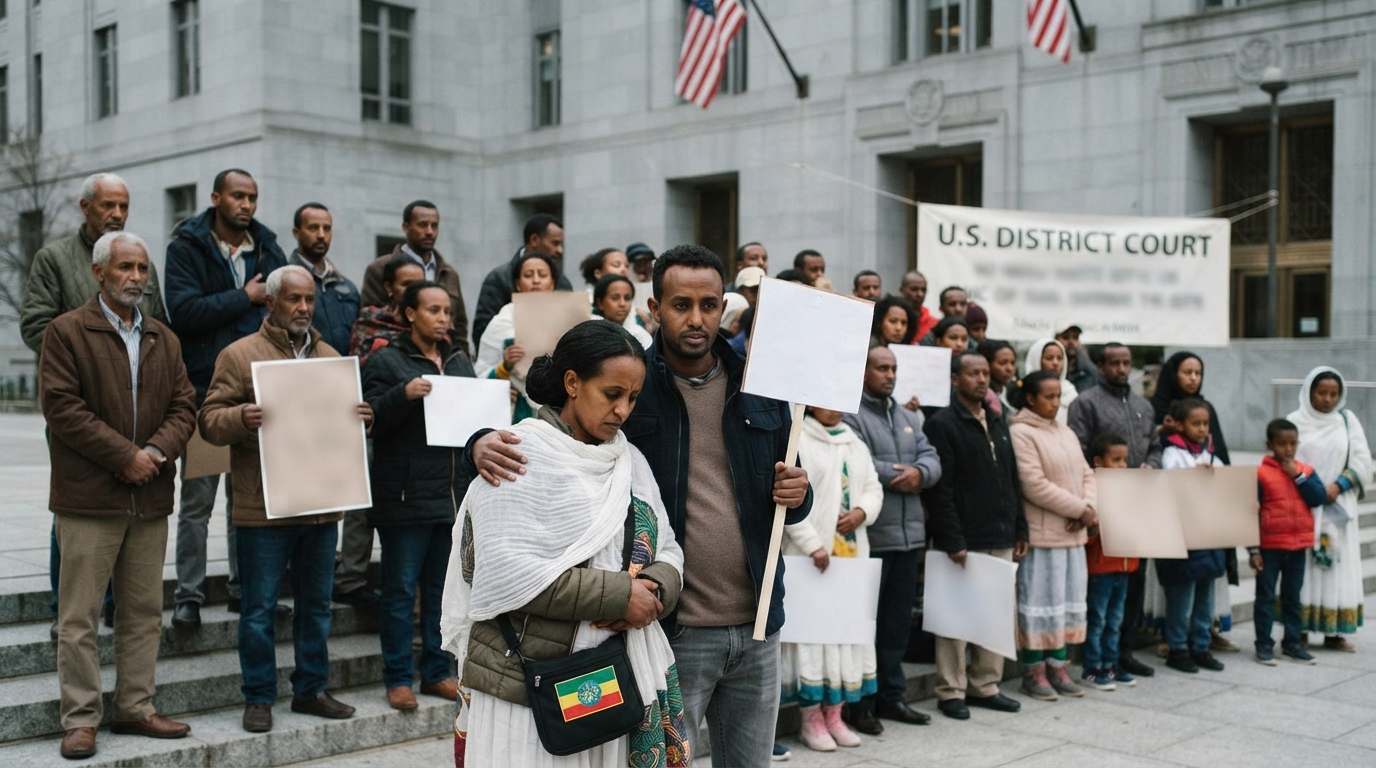
A federal judge has given the Trump administration the green light to proceed with the cancellation of Temporary Protected Status (TPS) for approximately 5,000 Ethiopians residing in the United States. TPS offers humanitarian protections to immigrants.
Following the ruling, the Department of Homeland Security stated on X, "Those with terminated TPS are in our nation ILLEGALLY. They have two options: LEAVE IMMEDIATELY or be DEPORTED."
US District Judge Brian Murphy's decision follows a June Supreme Court ruling that ended similar protections for thousands of individuals from Haiti and Syria.
As part of his broader immigration enforcement efforts, President Donald Trump has aimed to revoke these protections for people from over a dozen countries.
Murphy's ruling lifted a temporary stay that had previously prevented the administration from terminating TPS for Ethiopians.
Ethiopia was the final country for which the Trump administration ended TPS, a program designed to protect individuals who have fled their home countries due to extraordinary circumstances, such as natural disasters and armed conflict. It grants eligible individuals temporary work authorization and safeguards them from deportation.
James Percival, the Department of Homeland Security's general counsel, celebrated the decision on X, posting: "All TPS terminations are in effect!"
Ethiopian nationals who had filed a lawsuit to maintain TPS, along with the advocacy group African Communities Together, expressed their disappointment, asserting that the ruling introduces new dangers.
Diana Konaté, the group's deputy executive director of policy and advocacy, informed Reuters, "The crisis in Ethiopia is still ongoing, and this decision puts the lives of thousands of Ethiopians living in the US at severe risk."
According to Reuters, Murphy dismissed some claims in the lawsuit but is allowing the plaintiffs to continue litigating whether the cancellation was motivated by racial or national origin animus, which would violate the US Constitution.
Ethiopia was initially designated for TPS by then-President Joe Biden's administration in 2022, following armed conflict in the country, including the Tigray war.
Millions in Tigray, northern Ethiopia, are experiencing increasing fears of a wider conflict, nearly four years after the conclusion of a devastating two-year war.
Recent weeks have seen reports of fighting and drone strikes in parts of Tigray.
Tensions have escalated as both the federal government and Tigrayan leaders accuse each other of violating the 2022 Pretoria Agreement, which brought an end to the civil war that claimed hundreds of thousands of lives.
The Tigray People's Liberation Front (TPLF) has recently moved to reinstate the prewar regional government and dismantle the interim administration appointed by Prime Minister Ahmed Abiy's government. Meanwhile, the federal government has repeatedly accused Tigrayan leaders of collaborating with neighboring Eritrea and the Sudanese military.
The renewed confrontation has also raised concerns about potential Eritrean involvement, which could lead to broader regional instability.
Ethiopia is also contending with armed insurgencies in Oromia and Amhara, the country's two most populous regional states.
DHS first announced its intention to end TPS for Ethiopians in December, under then-Secretary Kristi Noem, stating that conditions in Ethiopia were safe.
The department had previously ended TPS for several South and Central American countries, including Venezuela and Honduras.