

Traders' tools stolen every 20 minutes in UK
Gangs and "chancers" are behind the crimes, says a MP calling on the Government to do more to help.
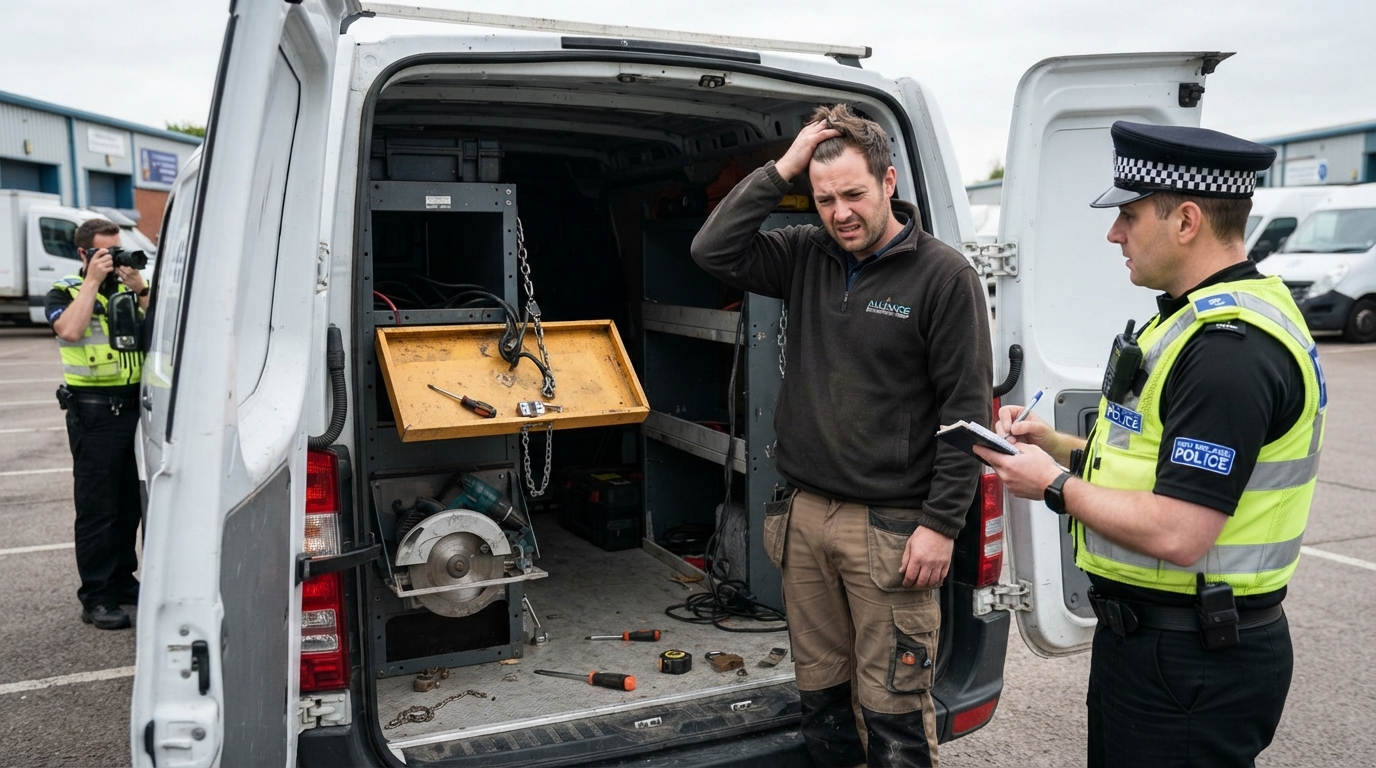
Traders’ tools stolen every 20 minutes in UK
Tools belonging to traders, and worth thousands of pounds, were stolen somewhere in the UK every 20 minutes last year, according to figures.
At least 26,164 tool thefts were logged in 2025, based on replies from 30 police forces that provided data. The real total is probably higher, as another 15 forces were unable to respond.
Labour MP Amanda Martin said gangs and “chancers” were responsible for the offences, and she is urging her government to do more to assist.
The Home Office said it was “working with the police to tackle and prevent tool theft to protect more hardworking tradespeople”, including by expanding neighbourhood policing, investing in police and working with industry and AI to tackle the sale of stolen goods.
Lulzim Pjetri owns Alliance Refrigeration Group, a commercial refrigeration company in Aston, Birmingham, from which tools were stolen six times in a year.
On one occasion, thieves broke into a parked van while two employees were sitting in the cab eating lunch.
Pjetri said the offenders were not wearing masks, were carrying crowbars and told the workers it was not worth trying to stop them.
Pjetri said: “Unless they choke the second-hand tool market, this problem will always be there.”
“I’m concerned for my guys’ safety,” said Pjetri, who employs seven people.
“It is our living. It is the emotional trauma that you get from it. It’s happening again and again and again and no one out there can see this.”
Replacing the tools stolen from each van can cost Pjetri as much as £7,000, plus another £4,000-£5,000 for repairs, before even accounting for lost work while the vans are off the road — sometimes for weeks.
“You’ve got to remember these vehicles are supporting the hardest working class of the UK,” said Pjetri, who is also known as Mike.
According to insurers Direct Line for Business, the average value of an insurance claim for tool theft in 2025 was £4,206.60.
The largest cost from repeated tool thefts for Kerry Field, owner of Change It Homes in Norton Lindsey, Warwickshire, was £10,000 worth of tools and motorbikes taken in a break-in.
The BBC has seen CCTV footage showing the thieves making offensive gestures straight at the cameras during the crime.
Kerry Field said the burglars who broke in “knew what they were looking for”.
Field then spent another £10,000 on security improvements, including new electric gates, cameras and a rescue dog to help protect his headquarters.
His staff found one of their stolen saws listed for sale online, but when he reported it to police, Field was advised to go and collect it himself.
Field said the force later apologised and told him the member of staff should not have suggested that.
“I think it’s definitely got worse,” he said. “I think a lot of it isn’t notified to the police because people know it’s not going to make any difference; they’re not going to get any tools back.
“It’s always been classed as very low level. If you take away someone’s livelihood, it has an impact on the whole of society.”
He added that the absence of consequences for thieves or action by police did not inspire confidence, though he understood forces were overstretched.
Warwickshire Police said it took all reports of tool theft “very seriously”, but a suspect could not be identified in this case.
A spokesperson said: “Following concerns raised by the victim, the case was re-opened and thoroughly reviewed. No further lines of enquiry were identified.”
The Home Office said it had increased neighbourhood policing, with more than 3,800 extra neighbourhood officers in post, and was investing “a historic £18.5bn in police force funding”.
Martin — whose father was a plumber — has campaigned for tougher sentences for tool theft.
“We, as a government, have to do more,” said the MP for Portsmouth North.
She said stronger regulation of the second-hand market was needed, including for pawnbrokers and major online retailers and auctioneers.
“It’s making sure if you’re selling some tools, you’ve got to have proof that you’ve owned it,” she said.
Businesses with physical shops often require sellers to show ID and have transactions recorded on CCTV, while other measures include signed undertakings confirming they can legally sell an item and staff checks for missing, removed or obscured serial numbers.
Online retailers have published terms and conditions stating they do not accept stolen goods and urging users to report suspicions if they think items for sale are stolen.
The Home Office said it continued to work with police, industry bodies and online platforms on the issue of unregulated tool sales and what more could be done.
A frequent complaint among traders at a conference organised by Fix Radio in Birmingham last week was that insurance payouts for stolen tools would not cover the cost of buying replacements or the business lost while waiting for repairs.
Gareth Powley, a senior technical underwriter at Aviva and Direct Line for Business insurance, said it had a “new for old” basis policy.
He said: “The worst thing you want when you have to claim is to be trying to find secondhand tools or to have that shortfall. It’s really important to look at the underlying cover you’re buying.
“Maybe a cheap policy isn’t as good as one providing more full cover.”
Businesses can also apply a liquid DNA watermark to their tools — invisible to the naked eye but glowing brightly under UV light — to help trace them and prove ownership if they are stolen.
Sgt Dave Catlow from the National Business Crime Centre is leading a crackdown on tool theft and said organised crime groups were responsible for a large share.
He said stolen tools were being moved around the UK for resale, as well as overseas.
A five-strong rural gang was jailed last month after a Lincolnshire Police investigation found the men often used older 4x4 vehicles with cloned registration plates and usually travelled at night, wearing gloves, heavy clothing and face coverings to hide their identities.
The Metropolitan Police has now started issuing notices to car boot sale organisers, warning they could face criminal liability if they knowingly facilitate or ignore the sale of stolen, counterfeit and illicit goods. The warnings are issued under the Proceeds of Crime Act 2002.
Catlow believes this has reduced the number of stalls selling tools at car boot sales that police have since revisited.
His job is to ensure best practice is shared across police forces to prevent “displacement” — when one force succeeds in reducing one type of crime locally but offenders move elsewhere.
Bonzer Car Boot Sale in Romford, east London, was visited by The Met earlier this month as part of its efforts to deter the resale of stolen tools.
Sniffer dog Kaiser, a two-year-old Alsatian rescue from SelectaDNA, joined officers on the operation. He is trained to detect forensic marking or liquid DNA on tools.
The owner of the land where Bonzer Car Boot Sale is held, who did not want to be named, said: “We don’t want to be on the wrong side of the law.
“We don’t want individuals who have their power tools stolen not being able to go to work on top of losing the value of those power tools, so we will do whatever we need, whatever we’re advised to do, to cut that out.”