

Topsoe, Sasol to supply technology for $6.1bn sustainable aviation fuel project in Uzbekistan
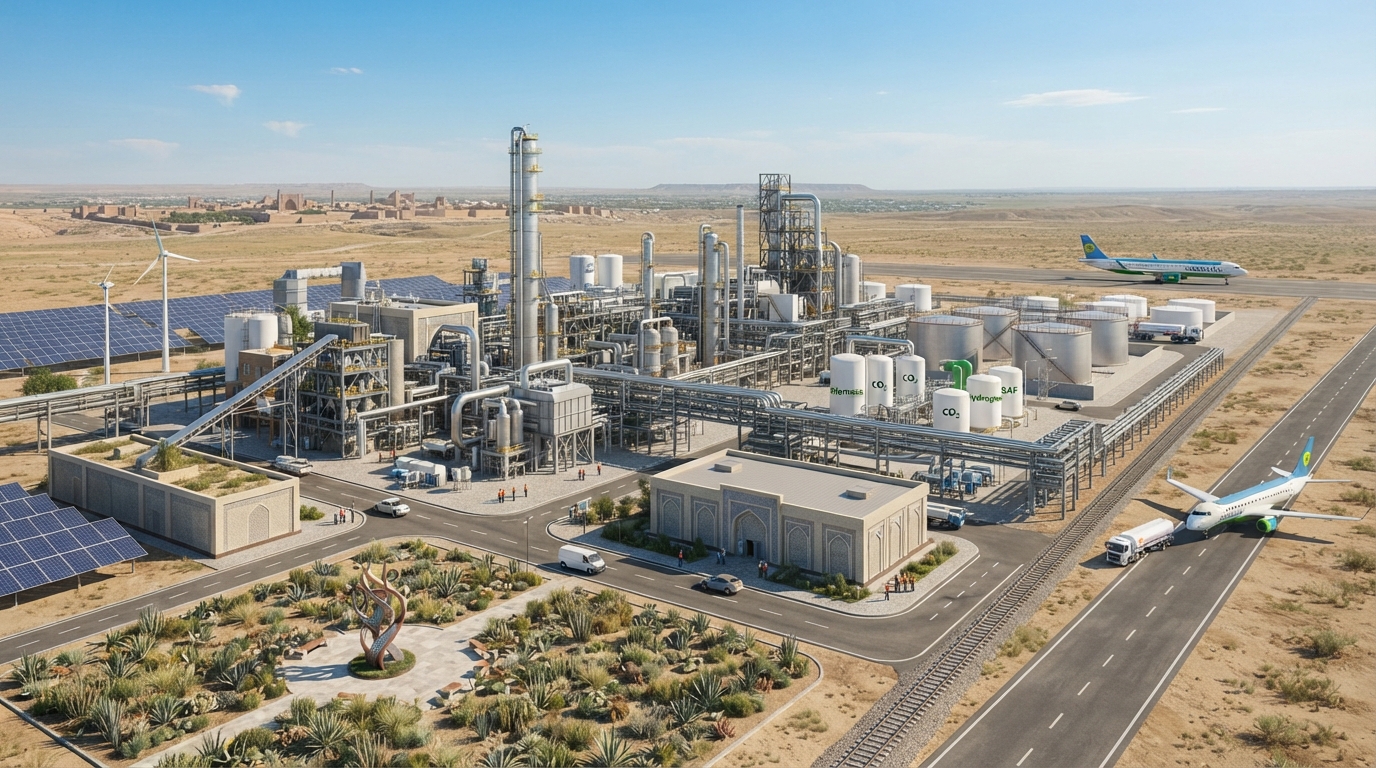
Topsoe and Sasol have entered into licensing and engineering agreements with Allied Biofuels Foreign Enterprise Limited Liability Company to provide technology for a sustainable aviation fuel (SAF) production facility in Uzbekistan's Khorezm region. This marks a significant step in the establishment of one of Central Asia's largest clean aviation fuel initiatives.
The facility is projected to generate around 300,000 tons of sustainable aviation fuel (SAF) and electric sustainable aviation fuel (eSAF) each year, utilizing Topsoe's SynCOR™ technology alongside Sasol's Fischer-Tropsch (FT) technology. This project is part of a larger integrated clean fuels complex that aims to produce over 400,000 tons of aviation fuel annually.
The final investment decision for this venture is anticipated in 2027, with commercial operations expected to commence in 2030. Under the terms of the agreements, Topsoe and Sasol will deliver the core technology license, engineering design package, and technical services necessary for the eSAF production process.
The production facility will integrate Topsoe's proprietary SynCOR™ technology with Sasol's Fischer-Tropsch process, enabling the production of aviation fuel from various feedstocks, including biomass, green hydrogen, and captured carbon dioxide. The companies state that this integrated production process is designed to offer flexibility in feedstock selection while facilitating the creation of lower-carbon aviation fuels.
This initiative is part of Allied Biofuels' ambitious $6.1 billion integrated clean fuels development in the Khorezm region, which is touted as Central Asia's first large-scale integrated biorefinery for the production of SAF, eSAF, and renewable diesel. The facility aims to provide aviation fuel to domestic, regional, and international markets by leveraging renewable energy sources, advanced fuel conversion technologies, and global engineering expertise.
Topsoe's Chief Commercial Officer Yassir Ghiyati remarked that this project signifies the company's inaugural eSAF initiative in Uzbekistan, merging technologies from both firms to facilitate production using diverse feedstocks. Sasol's Executive Vice President for Business Building, Strategy and Technology, Sarushen Pillay, noted that the agreement builds on over 30 years of collaboration between Sasol and Topsoe and highlights the ongoing commercial application of the Fischer-Tropsch technology.
Allied Biofuels' Managing Director Alfred Benedict stated that the agreements lay the groundwork for the project's engineering and technology, supporting the company's ambitions for large-scale sustainable aviation fuel production. This project is timely, as the demand for sustainable aviation fuel is rising in response to new regulatory requirements in major international markets.
The European Union's ReFuelEU Aviation regulation mandates that fuel suppliers provide eSAF equivalent to 1.2% of aviation fuel supplied at EU airports by 2030, with this requirement set to escalate to 35% by 2050. Sustainable aviation fuel, produced from renewable feedstocks, aims to lower greenhouse gas emissions from air travel by replacing traditional jet fuel. The project will employ Topsoe's SynCOR™ reforming technology in conjunction with the jointly developed G2L™ process, which facilitates the conversion of renewable feedstocks such as biomass, captured carbon dioxide, and hydrogen into aviation fuels.