

'Too hot for ice cream' - summer's impact on trade
Figures from the UK and Channel Islands say the summer has been the hottest on record.
**'Too hot for ice cream' - summer's impact on trade**
Hocking's said the record-breaking weather actually made it too hot for some to enjoy an ice cream
This summer’s hot weather brought mixed results for businesses as they navigated both the benefits and drawbacks of record-breaking conditions.
Some traders in south-west England and the Channel Islands said they saw gains from more visitors and stronger demand for food and drinks, while others struggled because of the prolonged dry spell.
Provisional data from the Met Office shows the average mean temperature for June, July and August was 16.5C (61.7F), making it the warmest summer on record in the UK, based on figures going back to 1884.
Meteorologists in Jersey and Guernsey said both islands also recorded their warmest summers ever, with average temperatures of 20.5C (68.9F) in Jersey and 18.9C (66.2F) in Guernsey.
Ice cream seller Christian Hocking, from Hocking's in Appledore, Devon, said trade had been steady, but customers were opting for water instead of a sweet treat because the heat reduced their appetite.
He said: "When it gets too hot, it does actually gets too hot for ice cream."
Others affected over the summer included Guernsey Dairy, whose spokesperson said dry periods and high temperatures had impacted milk volumes from local farms.
However, they added that milk supplies were still enough to meet daily demand across the island.
Operations director Andrew Tabel said: "Our local dairy farmers and production teams have worked incredibly hard throughout this prolonged period of hot and dry weather."
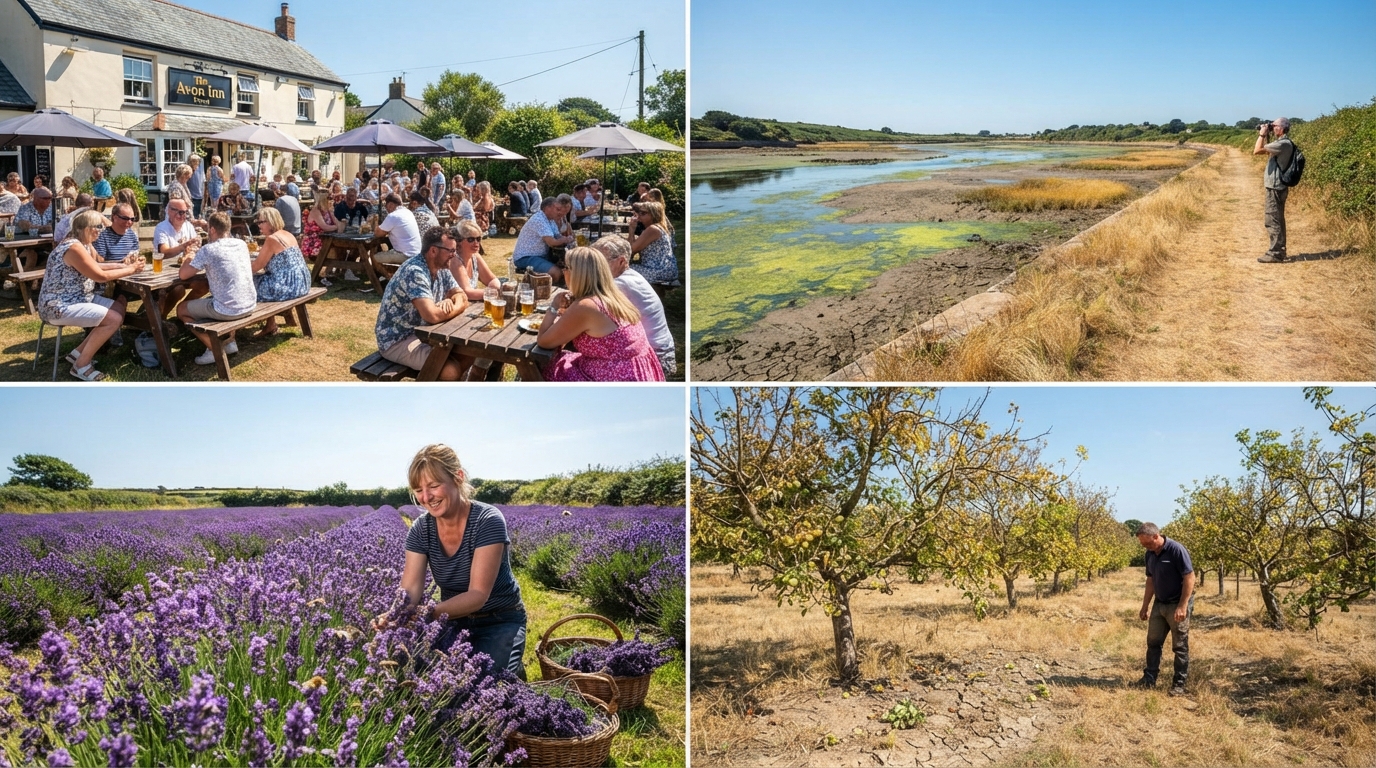
In Devon, The Avon Inn in Avonwick reported a rise in trade, with manager Eda Iannone saying the pub had enjoyed "a fantastic summer for footfall" after adding more outdoor seating.
She said: "We took a lot more bookings and we put a lot more outside events on with confidence, knowing that with the UK being weather dependent, they would go well."
Tina Bessell said her Cornish Lavender farm "loved the heat"
Tina Bessell of Cornish Lavender, based between St Agnes and Perranporth, said the heat produced a "fantastic" oil yield, although visitor numbers dropped on the hottest days.
"The farm has loved the heat," Bessell said.
"I think I must be the only farmer in the South West that is happy with the heat."
But for cider producers Rocquette Cider in Guernsey, the hot weather is expected to leave its apple harvest about 80% lower than normal, with manager James Miller calling it "appalling".
Guernsey-based Rocquette Cider says the hot weather is set to cause a much lower apple harvest
Miller added: "The grass is very dry, we haven't had to mow the grass at all.
"The trees have been suffering, I think the only moisture they've been getting is from morning dew.
"Last year we had a good harvest, so we have a lot of cider stored which will carry us through, but two bad years would be devastating."
Jon Parks from the National Trust for Jersey said extreme weather was affecting St Ouen's Pond, with low water levels and algal growth threatening an important habitat for migrating birds.
"Normally at this time of year we'd have all sorts of visitors like green sandpipers, curlews and we've had spoonbills visit us at this time of year before," Parks said.
"They're all looking for that wetland habitat, a chance to feed and there's no water there, there isn't that opportunity unfortunately."
Parks said extreme summers were a "major contributing factor" to the problems, but stressed they were not the only cause.