

To promise — does not mean to pay
Uzbekistan has begun negotiations with the Russian Federation and Kazakhstan on recognizing the work experience of migrants and calculating their pensions
**To promise does not mean to pay**
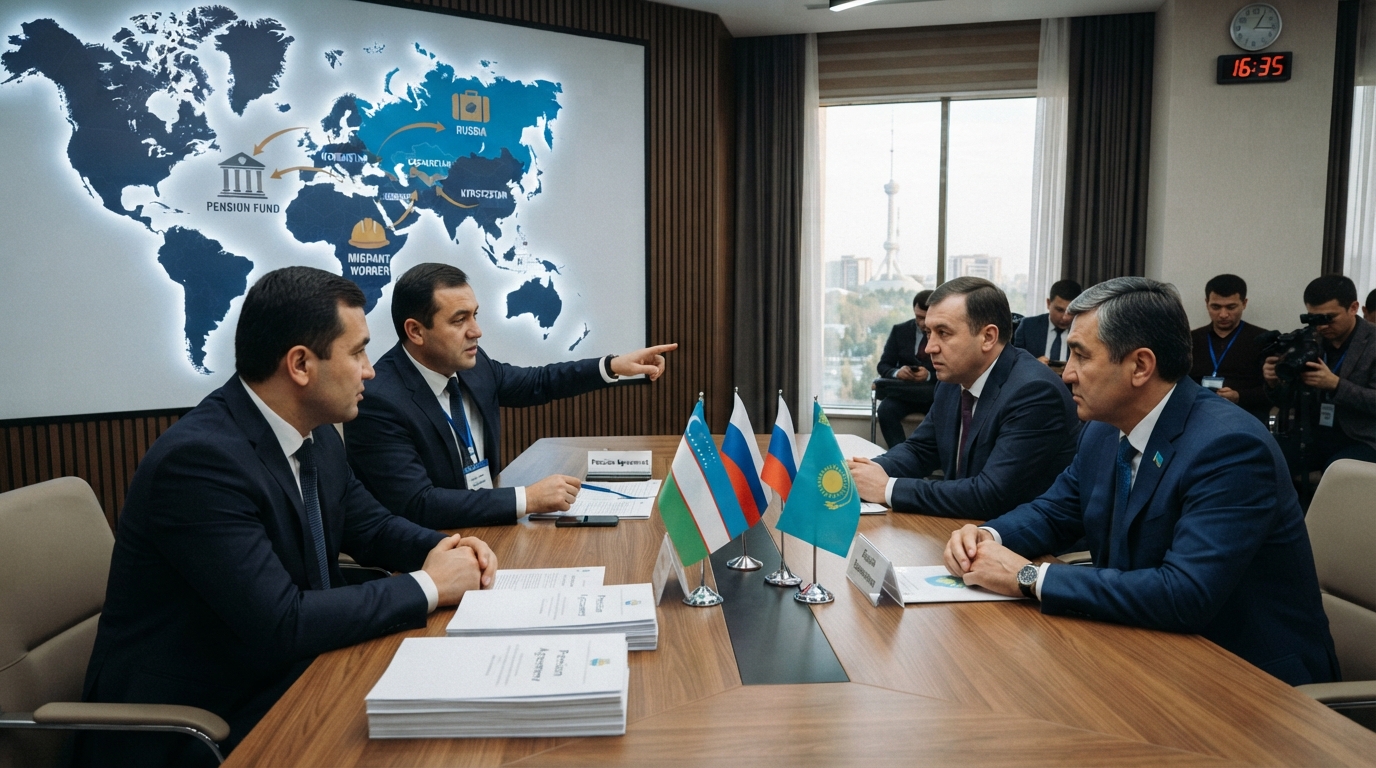
The authorities of Uzbekistan are negotiating with Russia, Kazakhstan, and a number of other countries on how to account for the work experience of migrants and calculate their pensions from the foreign state. Nuriddin Shadikhodjaev, Deputy Executive Director of the Off-Budget Pension Fund under the Ministry of Economy and Finance of the Republic, told journalists about this.
According to the official, similar agreements have already been signed with Kyrgyzstan and Azerbaijan. These documents provide that a citizen who officially worked in other countries is entitled to a pension in each of them. For example, if a citizen of Uzbekistan worked for ten years in Azerbaijan and five years in their homeland, both states will pay them a pension for the respective period.
N. Shadikhodjaev emphasized that the key condition for the formation of a pension is the official employment of the migrant. Only in this case is the work experience counted and does it affect the size of future payments.
In addition, citizens of Uzbekistan can voluntarily transfer contributions to the Pension Fund of the republic, even while abroad. After returning home, they will be able to include the past periods in their work experience if, within three years, they pay a social tax for the time spent abroad in the amount of one basic calculation value per year — 440 thousand soums ($37).
It was reported in July of this year that the governments of Uzbekistan and Kyrgyzstan had signed an agreement on state social insurance and pension provision. This treaty protects the pension rights of citizens of both countries, regardless of which of these states they officially worked in. At the same time, the size of the pension is determined by the legislation of the specific country. Indicators such as work experience, salary, and insurance contributions are taken into account.
For Tashkent, signing such documents with Russia and Kazakhstan is particularly relevant due to the large number of Uzbek citizens working in these countries. Thus, in September 2026, statistics were cited according to which about 1.4 million citizens of Uzbekistan work abroad. More than half of them — over 834 thousand people — are in Russia, and almost another 84.5 thousand are in Kazakhstan.
Many migrants from Central Asia choose Russia as their place of work. Therefore, for the countries of the region, pension agreements with Moscow are of great importance. After the collapse of the USSR, the Russian authorities processed and paid pensions to arrivals from CIS countries, regardless of where the emigrant who received a Russian passport made insurance and other contributions. However, in 2023, the document regulating this provision lost its legal force.
After that, the Russian Federation began to conclude separate agreements. Thus, Kyrgyzstan and Kazakhstan again became partners in the "pension program" under the relevant treaty with the members of the Eurasian Economic Union. This means that for settlers from these Central Asian republics, Russia counts work experience from the Soviet era and state independence — up to 2021 (the beginning of the process of denunciation of Russia's agreement with the CIS countries), as well as work on the territory of Russia.
Tajikistan has a separate treaty in place, under which the Russian Federation, when calculating a pension, takes into account all work experience acquired by an emigrant on the territory of their former place of residence.
There are no such agreements between Russia and Uzbekistan. At the same time, the parties have been negotiating on this issue at various levels for several years.