

To fertilize, not to burn. Farmers in Uzbekistan called upon to turn fallen leaves into useful compost
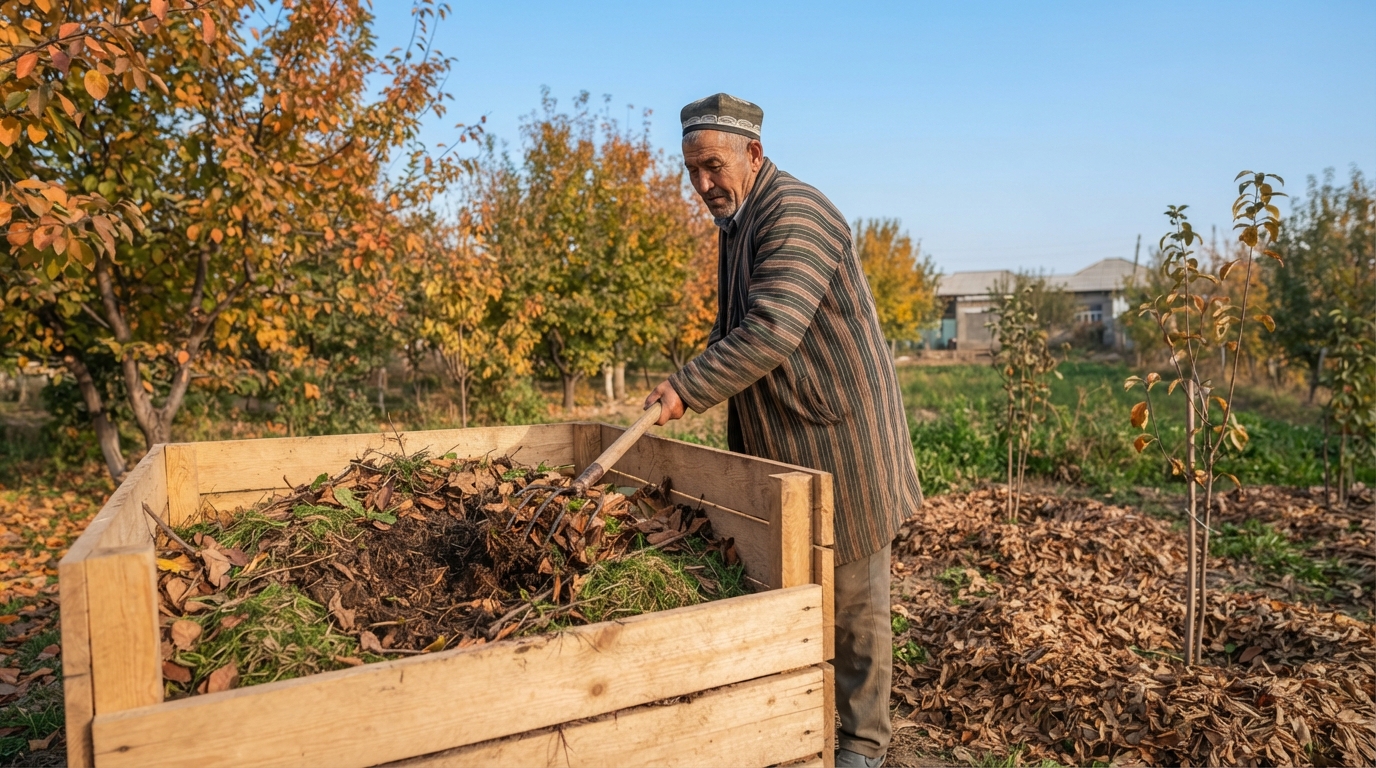
Do not burn, fertilize instead: Uzbek farmers urged to turn fallen leaves into useful compost
With the arrival of autumn, burning fallen leaves and dry branches often begins in yards and gardens. But instead of clearing the plot, such bonfires only pollute the air: harmful substances and fine particles, dangerous to human health, enter the atmosphere along with the smoke.
Ecologists remind: leaves can be put to good use. They are used to make compost or applied for soil mulching. This helps retain moisture, improve soil structure, and return organic matter back into the ground.
Jamshid Temirov, head of a laboratory at the Forestry Research Institute under the National Committee on Ecology and Climate Change, spoke about why leaves should not be burned, how to handle plant residues properly, and how they can be beneficial for seedlings.
Why burning leaves is harmful
The combustion of dry leaves releases smoke containing harmful impurities and fine particulate matter. They pollute the atmosphere and can negatively affect human health, especially for those living nearby. Therefore, fallen leaves should not be viewed as garbage that needs to be destroyed by fire.
What to do with plant residues
One option is composting. Healthy fallen leaves, grass, and small branches are suitable for this. Plant residues are chopped, cleared of debris, and laid in layers, alternating moist green mass with dry leaves and branches. The compost must be turned from time to time and monitored so that it does not dry out or become too wet.
With proper care, the organic mass gradually turns into fertilizer that improves soil structure and helps it retain moisture.
Another method is mulching: chopped plant residues are spread around plants to protect the soil and preserve moisture in it.
In this way, autumn leaves will become a help to the garden, not a source of smoke. Refusing to burn is a simple way to reduce air pollution and preserve natural resources.