

Three questions to ask yourself every day...
Confucius would ask himself the following three questions every day: "Have I done any good for people? With my friends
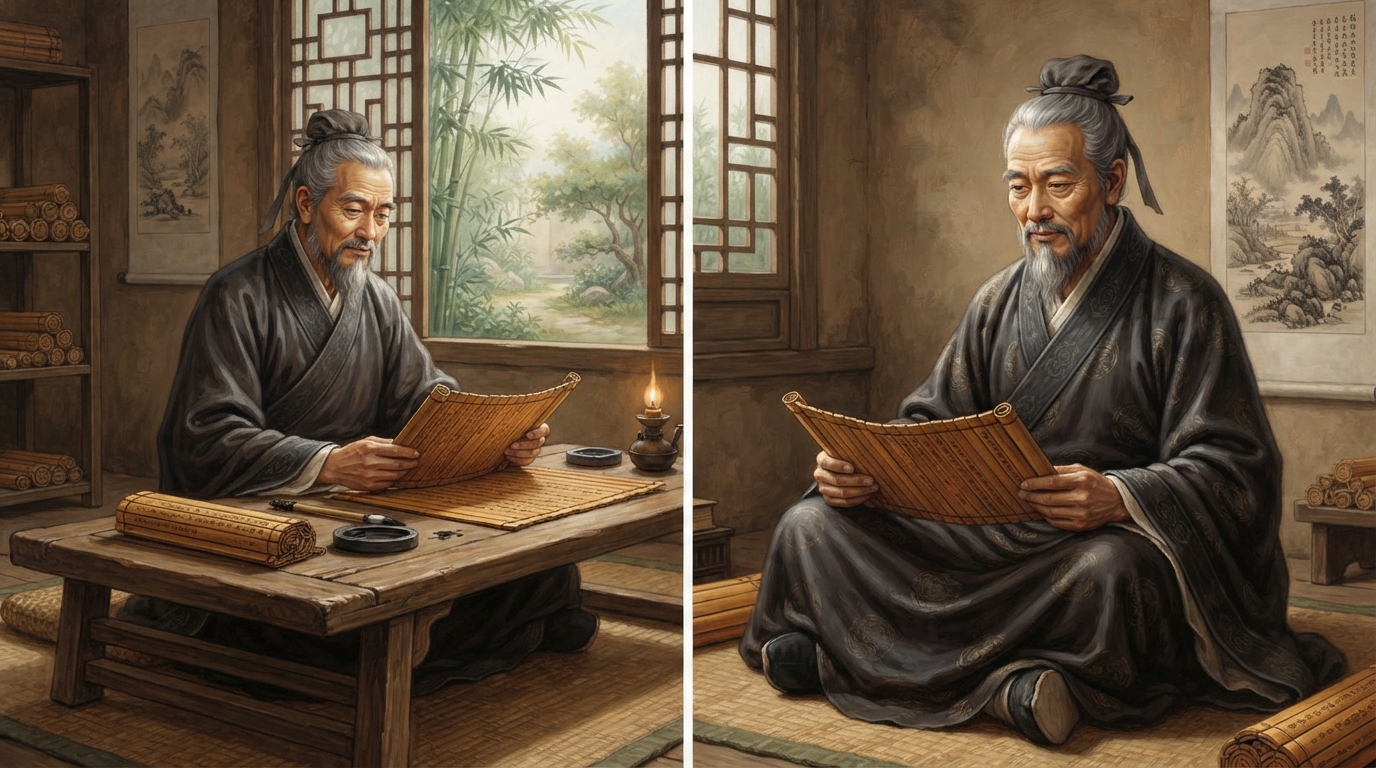
Three questions to ask yourself every day...
The great Chinese philosopher Confucius says, "Do not impose on others what you do not wish for yourself, keep the memory of your ancestors in mind, and respect the traditions established in society and the family."
When the future scholar was one and a half years old, he was orphaned by his father, grew up with difficulty, and was forced to work to feed himself. At the same time, he was earnestly interested in acquiring knowledge, repeatedly reading books written on pieces of wood, silk, and bamboo.
At the age of twenty-two, he reached the level of wisdom and achieved the status of the nation's great teacher, and at the age of thirty, he was the first in the history of the country to open a private school.
"At fifteen, I had a desire to study. At thirty, I made a firm decision. When I turned forty, I became free from doubts. At fifty, I understood the will of Heaven. At sixty, sincerity and truthfulness conquered me. Having turned seventy, I act according to the command of my heart," he told his disciples.
Confucius's teachings, leaving years and centuries behind, still live on with their spiritual and moral power, vitality, and at the same time, simplicity and clarity. This teaching has spread not only to China and Southeast Asian countries, but also to various other corners of the world.
His name is mentioned among the four great sages of the world. In the appeal adopted at the Paris meeting of the international Nobel Prize committee in 1988, there are these words: "If humanity wants to survive in the new 21st century, it must be well aware of and follow the teachings of Confucius, who lived 25 centuries ago."
Confucius used to ask himself the following three questions every day: "Did I do any good to people? Was I sincere in my relations with my friends? Did I follow the upbringing and education I received?"
These wisdoms of Confucius have an extremely deep meaning: "Birds cry painfully before death, while people speak about the important and most necessary things. A noble person thoroughly masters three values in his life: his appearance and actions are free from rudeness and arrogance, he can win trust with the signs of seriousness on his face, and there is no cunning in his words and tone," "People who have studied the customs and music of their people will be kind-hearted," "Water and fire are important for people, but humanity is even more important than them. I have seen people perish because of water and fire, but I have never seen a single person perish because of their humanity."