

Thousands of European troops to rehearse Ukraine deployment in event of peace
Western officials stress that any force sent to Ukraine would not take part in any offensive operations.
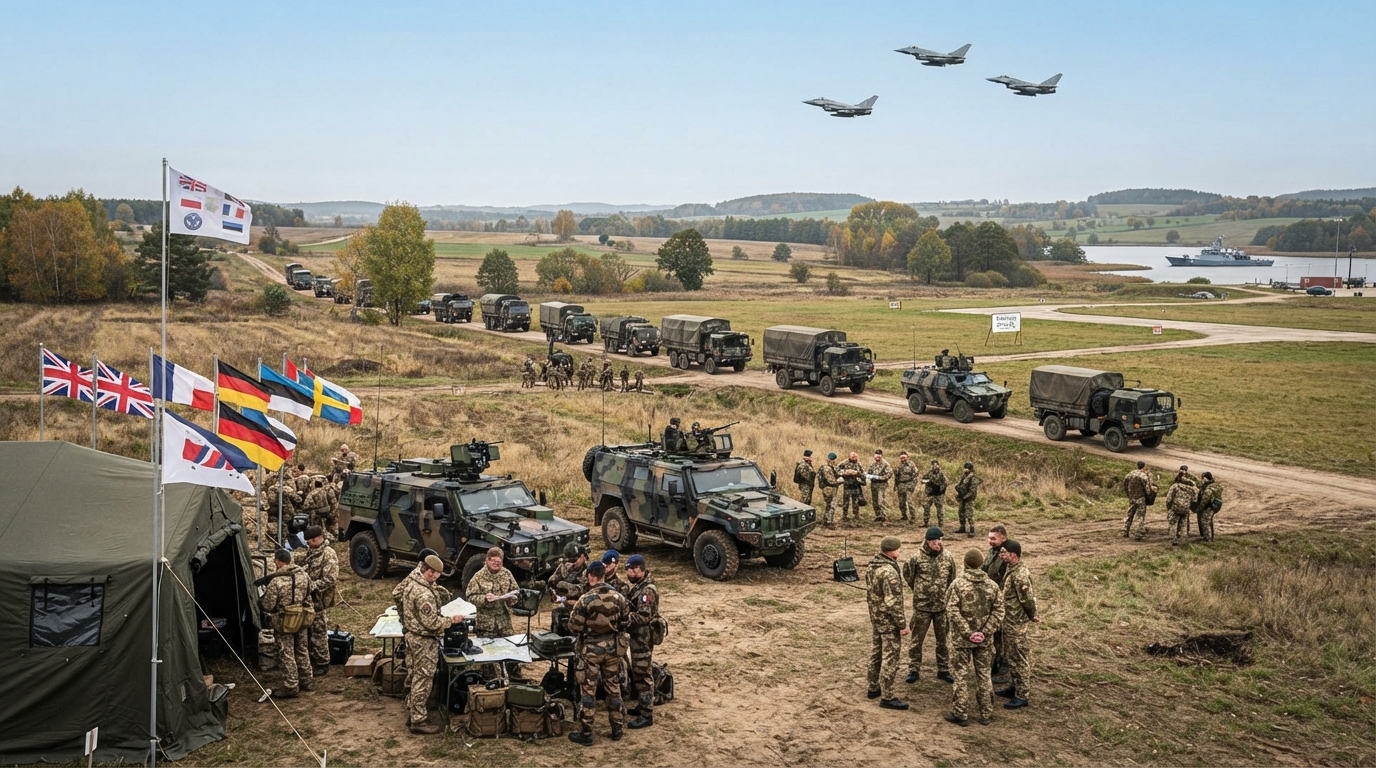
Thousands of European troops to rehearse Ukraine deployment in event of peace
Britain and France are set to lead a military exercise designed to test whether a multinational force could deploy to Ukraine if a peace agreement is reached.
Almost 3,000 military personnel from 12 European countries will take part in the drill in neighbouring Poland this month.
Plans for a reassurance force for Ukraine were outlined last year as one of the long-term security guarantees being put forward by European nations.
But there are still more questions than answers about how such a force would function in practice. Western officials emphasize that any force sent to Ukraine would not engage in offensive operations or take part in peacekeeping or ceasefire monitoring missions.
Nor would it operate under Nato command or be deployed on the front line.
Officials say its role would be to reassure Ukraine and help rebuild its armed forces.
The US has been part of the discussions, but is not contributing to the mission.
Russia has already expressed opposition to foreign troops being based in Ukraine and, last year, President Vladimir Putin said they would be "legitimate targets".
Western officials have refused to set out the rules of engagement if any international troops were attacked in Ukraine, although they say the force would be able to defend itself.
UK Defence Secretary Wes Streeting said the exercise showed Britain, France and their allies were increasing preparations for the day peace comes to Ukraine.
He said: "This is not a hypothetical plan, it's a real force, ready to help Ukraine once the fighting stops."
Lt Gen Tom Bateman, the UK commander of the Multi National Force – Ukraine (MNF-U), said the exercise was an important step in turning political commitments into credible military readiness.
He said it was a "real, capable, readily deployable force that represented a serious commitment from Coalition of the Willing nations to Ukraine's long-term stability and security".
Exercise Koalicja, which runs from 9-22 November, will rehearse how to move, protect and supply a force in Ukraine. It will also test command and control to make sure troops from different countries can operate together.
About 2,800 military personnel will take part across land, sea and air, with the UK contribution including 300 troops and a pair of RAF Typhoons.
The fighter jets will simulate how they would reassure commercial aircraft once Ukraine's skies can be reopened.
Turkey has agreed to lead the maritime mission, with the eventual aim of clearing mines and allowing trade to resume in the Black Sea.
Alongside the UK, troops will come from France, Belgium, Estonia, France, Germany, Lithuania, the Netherlands, Poland, Spain, Sweden, and Turkey.
However, Western officials were unable to comment on the final composition and shape of the force that could be sent to Ukraine if the fighting ends.
In the past, military experts have suggested that Western countries might need to deploy tens of thousands of troops to Ukraine to ensure its security.
Officials acknowledge that the countries' commitments and contributions will depend on the circumstances of a cessation of hostilities and the political decisions of individual nations.
It is also unclear what training role Western forces could offer to battle hardened Ukraine.
Ukrainian soldiers are already in high demand training Nato forces, sharing their expertise in drone warfare.
Above all, Russia has shown no sign of wanting to end its war.