

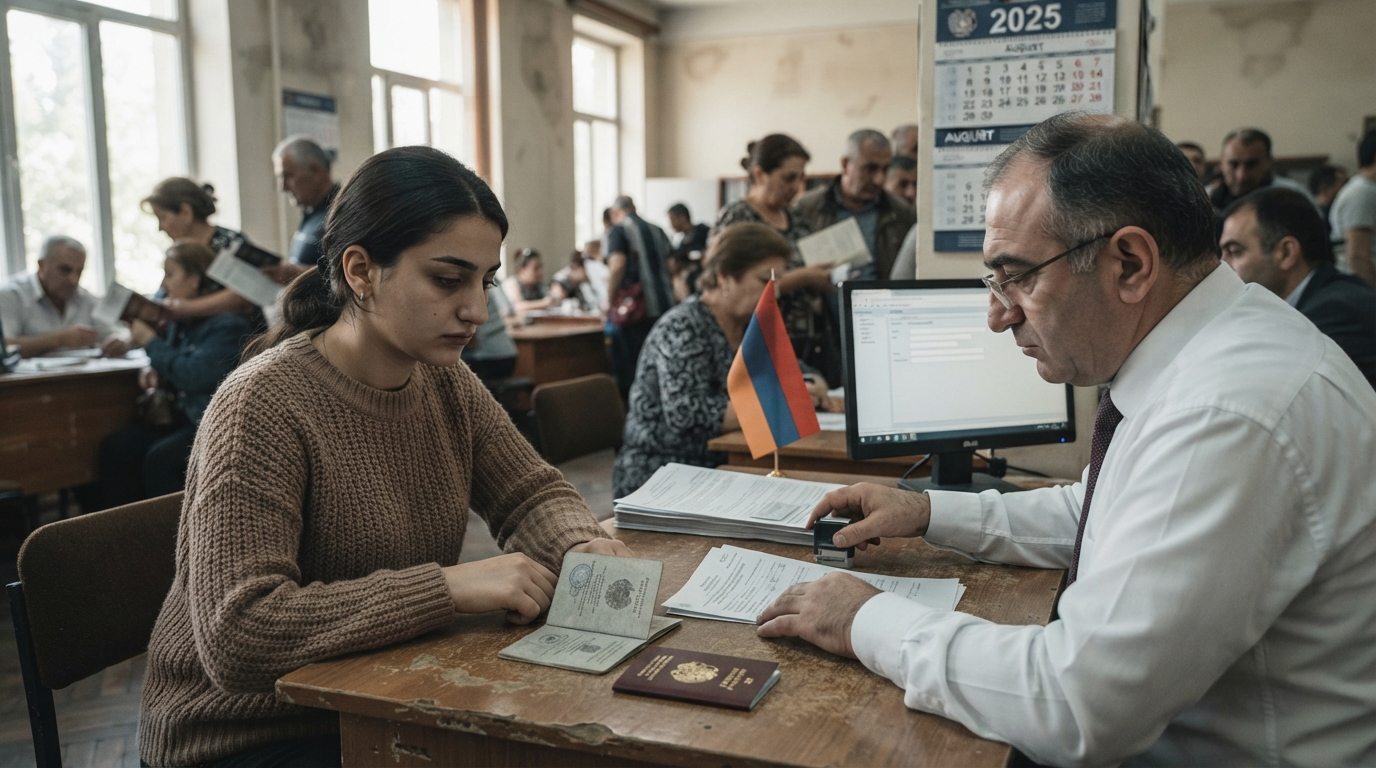
The "immigration reform" conceived by the Armenian authorities envisions not only imposing restrictions on foreign Armenians seeking Armenian citizenship, but also clarifying the status of former residents of Nagorno-Karabakh (Artsakh), reports the Yerevan Observer Telegram channel.
"If previously, before their mass exodus from their homeland, gifted to Azerbaijan, the people of Artsakh were considered full citizens of the Republic of Armenia, then after the fateful September 2023, they are being forced to re-acquire Armenian passports, with highly dubious success. The innovation conceived by Pashinyan's allies is to recognize Artsakh residents who have received Armenian citizenship as immigrants, which opens the possibility of subsequently stripping them of this citizenship, just as anyone who has received citizenship not by birthright can be stripped of it," the channel's author stated.
According to him, the Ministry of Justice, which is developing amendments to the law, believes that such clarification of the status of internally displaced persons from Karabakh will significantly reduce political and social risks.
People who disagree with Prime Minister Nikol Pashinyan's policies, as stated by "Observer," "will simply be stripped of their passports and thrown out of the country, and luckily, not to Azerbaijan."
Earlier, media reported that it would become more difficult for Armenians from Russia to obtain Armenian citizenship. In mid-August, Acting Deputy Minister of Internal Affairs Armen Kazaryan announced the need to tighten the conditions for compatriots from other countries to obtain Armenian citizenship. According to Kazaryan, the number of people seeking Armenian citizenship has increased in 2026. He noted that the majority of applicants are Russian citizens of Armenian descent.
According to Kazaryan, more than 32,000 people received Armenian citizenship in 2025. Two years earlier, the figure exceeded 20,000 per year, and before that, it averaged 7,000-8,000.
Kazaryan believes that the current citizenship procedure for ethnic Armenians is overly simplified. He noted that foreigners must live in the country for three years and pass language and legal proficiency tests to naturalize, while for compatriots from the diaspora, "there are virtually no such requirements."
"Perhaps there are some administrative obstacles, but not government requirements. Essentially, there are none. In my professional opinion, this is a problem, and it must be addressed. The question is the value of the institution of citizenship," Kazaryan stated.