

The US has 11 aircraft carriers. Why can't all of them deploy to sea at the same time?
As of October 2026, the US Navy has 11 officially commissioned aircraft carriers in service. All of them are equipped with nuclear power plants. However, this does not mean that the fleet can deploy all ships on combat missions at the same time.
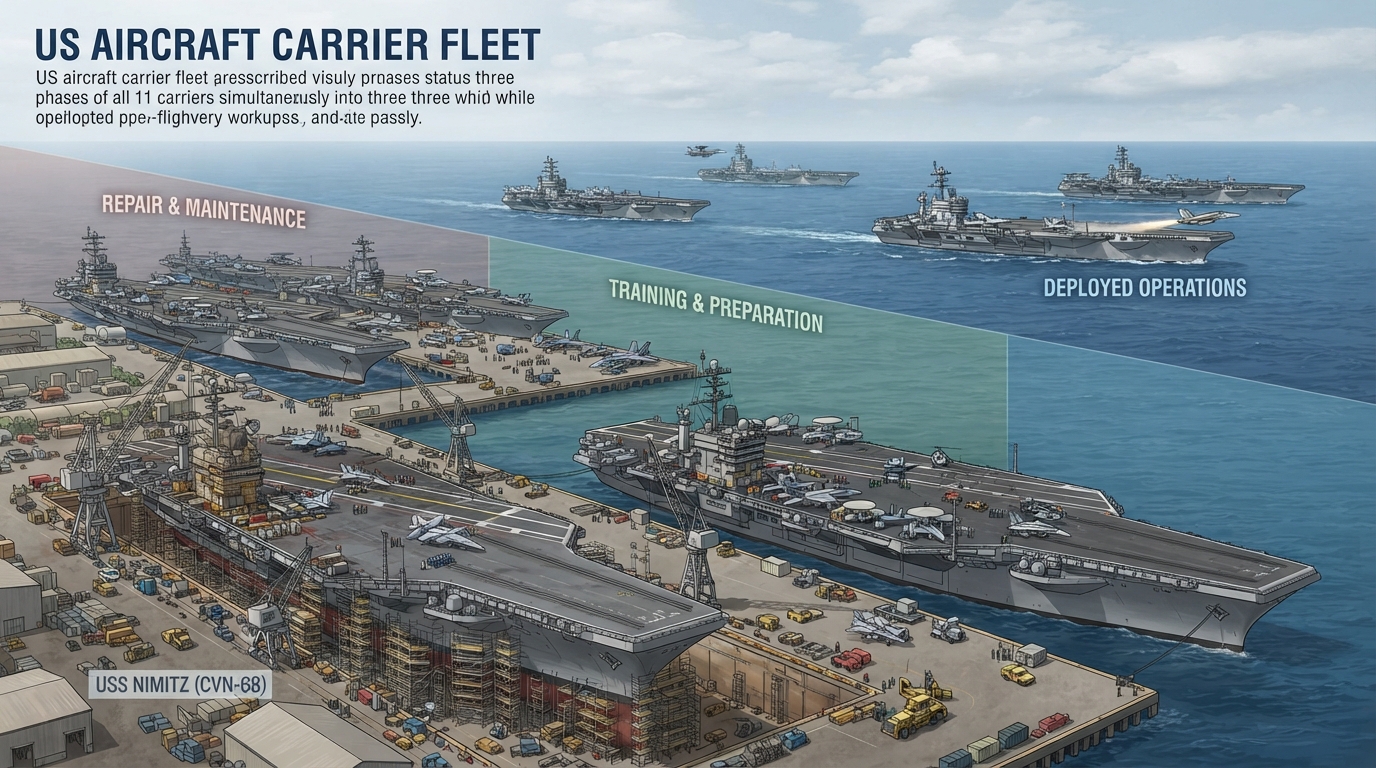
The US has 11 aircraft carriers. Why can't they all go to sea at the same time?
Some of the aircraft carriers are undergoing maintenance or long-term repairs, while others are training crews or preparing for their next deployment. For this reason, the number of ships in the fleet and the number of aircraft carriers actually ready to perform missions are two different indicators.
The backbone of the US aircraft carrier fleet consists of ten Nimitz-class ships:
- "Nimitz" - CVN-68;
- "Dwight D. Eisenhower" - CVN-69;
- "Carl Vinson" - CVN-70;
- "Theodore Roosevelt" - CVN-71;
- "Abraham Lincoln" - CVN-72;
- "George Washington" - CVN-73;
- "John C. Stennis" - CVN-74;
- "Harry S. Truman" - CVN-75;
- "Ronald Reagan" - CVN-76;
- "George H.W. Bush" - CVN-77.
The CVN designation is applied to nuclear-powered aircraft carriers of the US Navy.
The eleventh ship is the "Gerald R. Ford", numbered CVN-78. It was commissioned in July 2017 and launched a new generation of American aircraft carriers.
Nimitz-class ships use steam catapults to launch aircraft. On the "Gerald R. Ford", electromagnetic catapults have taken their place. The ship is also equipped with new aircraft landing systems and new weapons elevators.
These ships serve as floating airfields, allowing aviation operations to be conducted on the open sea. The aircraft on board are used for missions such as strike operations, air defense, intelligence, and electronic warfare.
Although the nuclear propulsion system allows the ships to sail for long periods, it does not make them independent of supply. Aviation fuel, food, ammunition, and other supplies must be regularly replenished.
Aircraft carriers rotate through phases of combat deployment, maintenance, and training. Major repairs can remove a ship from operational duties for several years. Nevertheless, it officially remains part of the fleet.