

Aircraft carriers are heading East
On the eve of the Third Middle East War — analysis of the situation
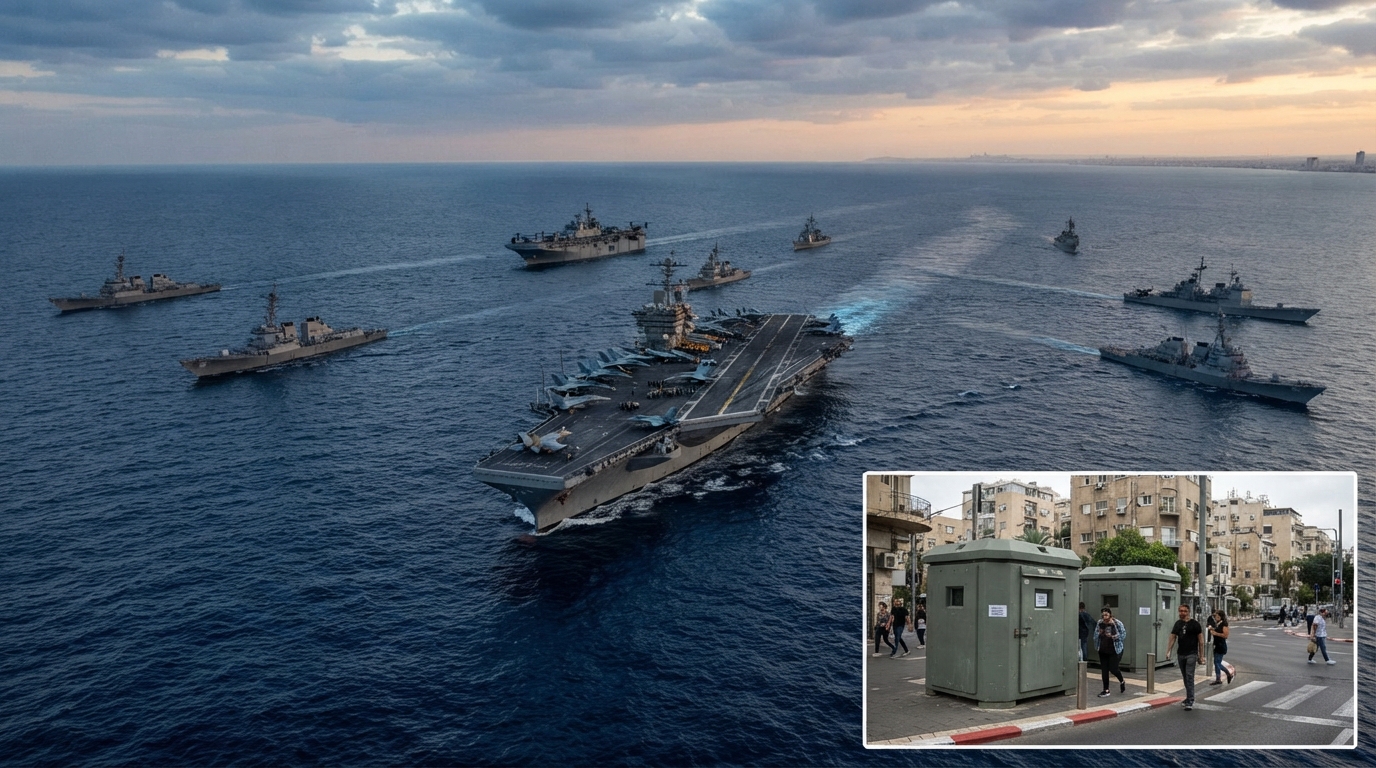
**Aircraft Carriers Move East**
In the Middle East, alongside the media noise and the ongoing war of Saudi Arabia against the legitimate government of Yemen (the Houthis), preparations for a new large-scale war are continuing.
A third US aircraft carrier, the *Theodore Roosevelt*, is already heading to the region. Along with it, the amphibious assault ship *Makin Island* is en route to replace the *Tripoli* and *Boxer* that were located in the region. Up to 20 American *Arleigh Burke*-class destroyers have long been present here on a rotation basis. Somewhere in the Arabian Sea, at a distance of more than a thousand kilometers from Iran—it is dangerous to approach closer—are the aircraft carriers *George Bush* and *George Washington*.
They no longer have a coastal base of their own: the base of the US 5th Fleet in Bahrain was destroyed by the Iranians and, by all appearances, is beyond restoration. According to some information, it is also remotely mined with Iranian naval mines, the minesweeping of which in the narrowness of the port waters is virtually impossible. As a result, more than 20 American warships are floating in the Indian Ocean and are being supplied by transport vessels from Singapore and from the base on the island of Diego Garcia. In the event of an intensive war, ammunition replenishment will proceed extremely slowly, and this squadron will not be able to conduct prolonged, high-intensity combat operations.
Reports are constantly coming in about the organization of another American airlift bridge to the remaining American military bases in the region located in Saudi Arabia and Jordan. The simultaneous presence of several tanker aircraft in the sky at once has been reported. Earlier, information also surfaced regarding frequent meetings at the White House with the military and meetings between American and Israeli military officials.
Israeli politicians and military officials have made a number of aggressive statements in recent days, and the troops are on high alert. Additional temporary above-ground bomb shelters have appeared on the streets of Tel Aviv—about half the size of an international shipping container and strongly resembling public toilets.
In the coming weeks, the Israeli and American leaderships have two important dates—the elections in Israel on October 27 and in the US on November 3. Israeli Prime Minister Benjamin Netanyahu needs the war to rule out the continuation of the court trials threatening him, which could result in him going to prison. This means that he is ready to attack Iran immediately, right now. Some senior Israeli military officials have stated in recent days that Iran is going to launch a preemptive strike, which means Israel must strike first.
Donald Trump does not need a war now, before the US elections, as this threatens an even heavier election defeat for his Republican Party. On the other hand, after November 3, Trump's hands will be untied: the new composition of both houses of the US Congress will gather only on January 3, and after that, Trump will no longer fear the elections. All these considerations indicate that the probability of another, this time combined US-Israeli aggression against Iran after November 3 will be extremely high.
It should be noted that after the US-Israeli attack on Iran on February 28, almost all or all American bases around the Persian Gulf were destroyed as a result of Iranian retaliatory actions, and all American military bases in the region—in Iraq, Saudi Arabia, and Jordan—were damaged.
The current position of the United States and its allies, primarily Israel, before a possible repeated attack on Iran is much weaker than the previous one. First, due to constant combat operations, the Iranian army and the IRGC are in a state of full combat readiness, so with any sudden military aggressive actions by the US and Israel, there simply will be no element of surprise.
Second, due to the destruction of American military bases, as well as American radars and air defense systems in the Persian Gulf in the immediate vicinity of Iran, American and Israeli aircraft will begin attacks from very long distances—from 1,000 kilometers (aircraft carriers) to 2,000 kilometers (Jordan and Israel). This also reduces the effectiveness of such strikes and increases the risk of losing combat aircraft and aerial refuelers.
Third, the intensive use of air wings on American aircraft carriers could turn out to have fatal consequences for them. One version of the fire and warping of the flight deck of the aircraft carrier *Gerald Ford* is that the deck was burned through by high-temperature jet engine gases from F-35 aircraft, which are significantly higher than those of the F-18 aircraft traditional for aircraft carriers.
Fourth, Iran has not stood still recently: new missiles and unmanned aerial vehicles may have been developed, and the air defense system strengthened.
The US and Israel do not have any significant advantages over Iran compared to the previous attack. On the contrary, knocked-out bases and radars make this second war more difficult for Israel and the US, unless they use some new weapon against Iran. Of the weapons available to the US and Israel, only two types have not previously been used against Iran—bunker-buster bombs on a massive scale, and nuclear weapons.
The fact that an attack on Iran is now being discussed at the Pentagon and the White House means that the Americans may be planning to use precisely these types of weapons against Iran. Reports recently appeared in the press about the possibility of the US using the "Mother of All Bombs"—the GBU-43/B Massive Ordnance Air Blast—with a warhead weight of over 8 tons against Iran. There are not so many such bombs in the US, and their use will not be massive, but rather targeted—at the most protected Iranian facilities.
US President Donald Trump speaks in plain terms in interviews not about victory—he speaks about the destruction of Iran, since the US and Israel lost the conventional war and will lose again, and with much greater losses.
Based on the constant aggression of the US and Israel against Iran, the Iranian leadership and the Iranian people need to make a final decision on acquiring the status of a nuclear power, as happened with the Democratic People's Republic of Korea, which, after creating nuclear weapons, secured complete safety for itself from a possible American attack.
Iran now controls the strategic Strait of Hormuz while being subjected to constant attacks from the US. Therefore, to protect and save its country and its thousand-year-old civilization, Tehran needs full possession of nuclear weapons, which, combined with the capabilities and experience of using heavy ballistic missiles, will give the Iranian people reliable protection against unceasing aggression.
Some media reports state that Iran has maintained the number of missile launchers at a level of several hundred units, and also that Iran could launch a preemptive strike against Israel. Also, Iran will most likely try to inflict maximum damage on the United States of America, including an attack on American aircraft carriers, as it turned out that the Aegis air defense system of American destroyers is "tailored" against low-flying cruise missiles, but is not very effective against anti-ship ballistic missiles.
Surely, right now in Washington, in Tel Aviv (the Israeli general staff is located in the center of Tel Aviv), and in Tehran, the military are planning and modeling various combat scenarios in the final check mode before the start of military operations, which could begin in the near future—most likely after November 3 of this year.
P.S. A full-scale war could break out in the Middle East. Such a statement was made at a press conference following a ministerial meeting within the framework of the ninth strategic dialogue between Russia and the Cooperation Council for the Arab States of the Gulf by Russian Foreign Minister Sergey Lavrov, TASS reports.