

The teacher phenomenon — what should their role in education be?
Being a pedagogue has ceased to be a prestigious profession in Uzbekistan. This is influenced by several factors, in particular, the lack of academic freedom, poor working conditions, and still low salaries. What needs to be done? The topic was discussed in Gazeta’s education podcast.
**The Teacher Phenomenon — What Should Their Role in Education Be?**
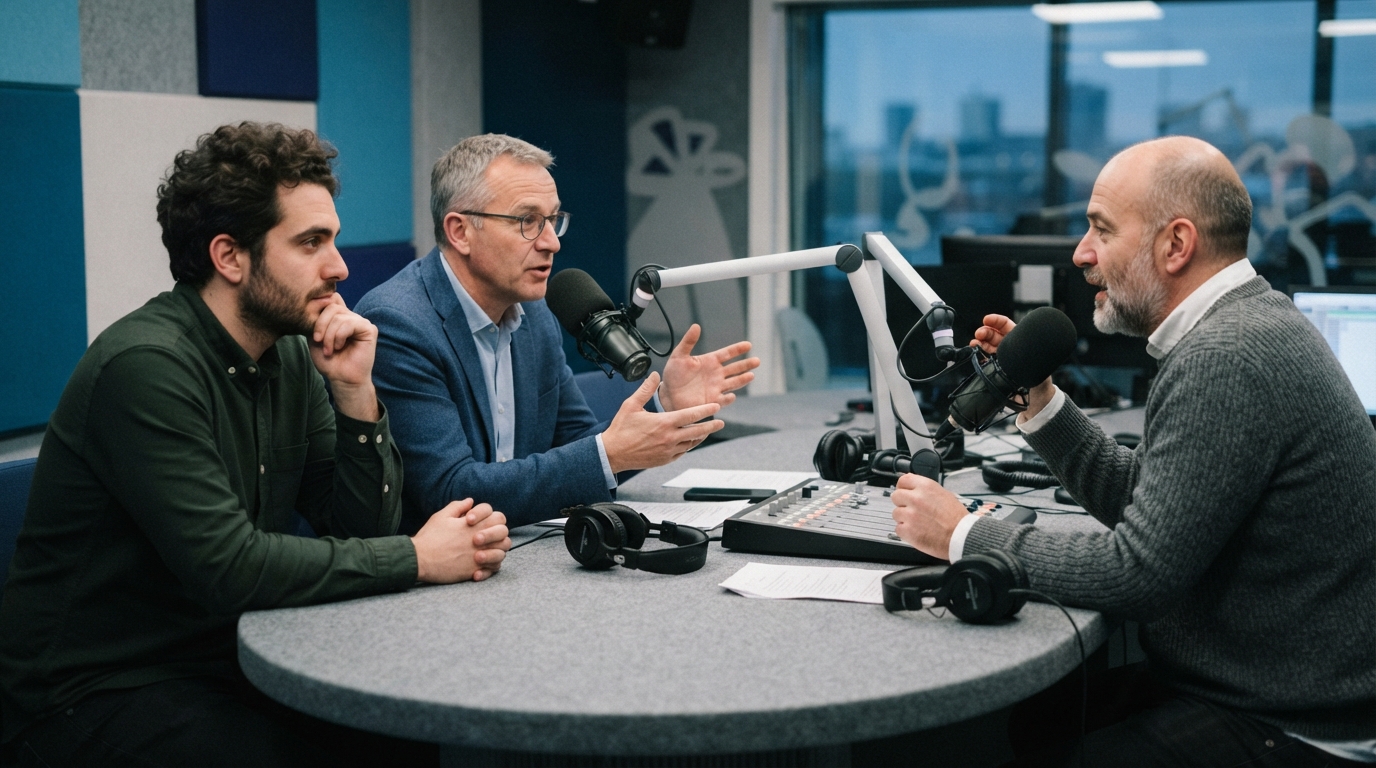
As you may know, Gazeta has launched a series of podcasts specializing in educational topics. It discusses both theoretical and practical aspects of a specific topic, as well as international experience. For this reason, the editorial team, in agreement with the staff, named the project "Ta’lim 360" (Education 360).
The 3rd episode of the podcast analyzed the teacher phenomenon. Who is a teacher in education? What is their role? What should a quality teacher be like? How is the field of pedagogy working in Uzbekistan? To find answers to such questions, this time the studio hosted permanent education expert Komil Jalilov, educator Shokir Tursun, and Abduvali Ismoilov, rector of the Abdulla Avloniy National Institute of Pedagogical Mastery.
— Komil aka, the topic we always address first in our podcasts is theory. Let's talk about this first: who is a teacher and what function do they perform?
— **Komil Jalilov:**
Before answering the question of who a teacher is, whether we like it or not, we have to refer to the previous episodes of our podcast. Because education is still a whole system. If you remember in the previous podcasts, we talked about the philosophy of education and methodology, that is, what educational philosophies and methodological approaches exist in teaching. Back then, we said that the 3 important components of education are interconnected and must work in harmony.
Now, when we ask who a teacher is, they stand at the center of this system. Because it is the teacher who directly implements the curricula or educational philosophy in the classroom. That is, no matter what goals education faces, the teacher directly decides to what extent these goals are achieved; they play the role of the most fundamental figure.
As for the question of what the teacher's function is, here too we return to philosophies. Based on the philosophy of education, roles are defined differently. In general, we divided educational philosophies into several approaches. In traditional philosophies, the goal is more about delivering knowledge, skills, or values deemed important for society to the student.
In this, students are in a passive role, that is, in the role of receivers and absorbers of information. The teacher, on the other hand, appears as a provider of information, that is, as some kind of expert. In the second approach, progressive philosophies were put forward.
Here, more attention is paid to developing the student's personality, critical and creative thinking, and other skills, and shaping them as an active individual. In this, the teacher appears as a facilitator, that is, not someone who delivers knowledge ready-made to the student, but someone who creates conditions and guides them to acquire this knowledge.
They ask questions, give assignments, and students perform the tasks set by the teacher by answering these questions, thereby shaping their knowledge. The third, even more progressive philosophy is reconstructionism, which clearly emerged in the 1950s and 1960s of the last century, and is associated with rebuilding society.
In this, schools begin to consider that preparing a student for a democratic society and making them an active citizen is not enough. Here, the student is prepared not only as an active citizen but also as a person who can see the flaws in society. That is, tomorrow, after graduating from school, they must be ready to change society as an active member.
The teacher should be more of a dialogic partner. They try to explain where the problems are and what can be corrected and how. In general, whether we like it or not, the role of the teacher varies depending on the goal.
Of course, it is not necessary to cling to a single philosophy of education and say that a teacher must do only this or only that. Because within subjects, the goal of a single day's lesson can be different. Depending on this, the role of the teacher also varies.
— Abduvali aka, in practice, how do you see the real place of teachers in Uzbekistan's schools? What function do you think they are performing?
— **Abduvali Ismoilov:**
A teacher should not be limited to just giving knowledge. While yesterday the teacher was seen as the source of knowledge, today necessary information can be obtained not only from the teacher but also from artificial intelligence and the internet. Opportunities have expanded. Therefore, the role of the teacher is also changing.
In the past, if teachers were limited to just delivering information from the textbook, today this is not enough. They need to teach students how to think and reason, and it is also becoming important to explain how much they should apply the acquired knowledge in practice. Therefore, a teacher must constantly work on themselves and pay special attention to their professional development.
At this point, I think we should also list the opportunities provided by the state. For a teacher to be dedicated to their profession and perform their role well, they first of all needed conditions. Where were our teachers 10 years ago? At that time, they did not even have time to think about the quality of school education, because they were busy with work that did not belong to them.
Today, conditions have been created, attention has been paid to schools, and a new professional development system has been established. If a teacher lacks knowledge, it has reached a level where this becomes clearly visible. Now they are constantly working on themselves, developing, and trying to become good educators.
— Abduvali aka, if I may interrupt you here, we will talk about this again. There are also questions about how adequate the conditions actually are, that is, whether they meet the demand, and whether quality teachers are being trained. Which of the theories listed by Komil aka do you think is currently being addressed in practice?
— **Abduvali Ismoilov:**
As Komil aka himself said, it is difficult to say that we are in either this or that theory, of course. The teacher's activity is changing. If previously they were a knowledge provider, now they are transitioning to the role of a facilitator. To transition to the role of a facilitator, it would be more correct to say that we are on the path of reconstruction and development.
Because it is difficult to say that we have reached the modern developed model. But, of course, we are on this path. In the professional development system, issues such as what it actually means to be a facilitator, that is, what methods are used to teach reasoning, or what methods are needed to teach critical thinking, are being taught in professional development.
Teachers are learning this and trying to apply it in their activities. I think we are on the way to implementing the most modern models. We are all striving for this. The teacher will also reach this model sooner or later.
— Shokir aka, in international experience, there are countries with strong education systems. In countries with such systems, who is the teacher and what function is defined for them to perform?
— **Shokir Tursun:**
Personally, for me, a teacher has 3 types of functions. The first is instructional design. First of all, an answer must be developed to the questions of what the child will learn, when they will learn, and how they will learn. The second function is diagnosing the learning process.
That is, this is not assessment; by diagnosing, we mean analyzing where the problems are, where the children are unable to learn, and for what reason the problem is arising. Of course, solutions to this are agreed upon with a consortium, that is, a team.
And thirdly, the most important, which we can say is somewhat lacking, is inspiring motivation. That is, the issue is to inspire internal motivation in the child to acquire knowledge. We can also call it generating interest in the subject. But in general, across the entire system.
I believe that a teacher who performs these 3 functions will be the ideal teacher in any of the philosophies listed above. Now, if you ask if there are such teachers in practice, there are few in Uzbekistan. You have to search for them. Even if you find them, such teachers are expensive. Because the system does not allow the first function, that is, the design stage.
— **Komil Jalilov:**
If you allow me, I would like to add something here. Based on several of the functions just listed, I wanted to focus on the process of designing education. The most commonly used term in English is instructional design. This means designing the teaching process.
Design here is used in the sense of planning. To use a simple analogy, to make something, you first draw a sketch of it on paper at least, right?! A drawing is needed to see how I want to achieve the final result and what is needed for this.
It should be the same in education, that is, there must be a question of what kind of student we want to produce after certain quarters, years, or in general after 11 years, what kind of person we see. Once there is an answer to this question, education can be designed, that is, what needs to be done to lead to this is developed.
Just now Shokir said that the education system does not give teachers this opportunity; if you remember, we talked about this last time too, that is, whether we like it or not, in many cases the education system, especially the state education system, has restricted the teacher. I am referring to academic freedom.
For example, there is no opportunity to choose the textbook or the topic. Officials have defined this. They give you something called a calendar plan; whether you like it or not, you teach the given topic, you cannot change it. If an inspector comes and you are teaching another topic instead of the given one, you will face problems.
If the system defines your every step, functions atrophy, that is, when functions are not used, they slowly begin to disappear. For example, if a person does not walk on their feet for a long time, they forget what walking is.
This is a similar process; if a teacher does not design education in practice, they forget it and work only with ready-made material. As a result, another major risk arises: they see the main function of the material as simply delivering this material.
In my view, especially in the state education system, the main task of teachers is seen as teaching the textbook, as if whether the children understand it or not is not important. Because we do not allow the function of designing education, this function crumbles on its own, and along with it, adjacent functions also continue to disappear.
— **Shokir Tursun:**
That is, we are saying "facilitator," but to reach that, a teacher must go through 3 stages. For example, if I wrote a textbook, I wrote it with my own worldview.
Such textbooks cannot cover 6 million children studying in more than 10,000 schools. This is absolutely impossible. Abduvali aka, perhaps you will also confirm this, I have found neither the legal basis nor the logic for why going through the textbook is mandatory.
That is, it is mandatory for a teacher to cover the curriculum, but I do not understand the part where it is mandatory to cover the exact topic in the textbook and have the assignments in the textbook completed.
— **Abduvali Ismoilov:**
I wanted to emphasize the results of the TALIS (Teaching and Learning International Survey — a large-scale international study conducted by the Organisation for Economic Co-operation and Development (OECD) that evaluates the activities, working conditions, and learning environment of teachers and school principals) conducted among teachers. According to the results of the study conducted in 2024, there are very large shifts and several positive aspects in education.
Several positive things have been seen regarding teachers' satisfaction with their profession and salary, and their rising status in society; at the same time, there is one interesting aspect: the teacher's autonomy to carry out their activities is not quite sufficient. That is, they are not independent. I agree with Komil aka's words; it has become clear that the teacher's authority to conduct lessons is limited.
This also showed a lower indicator in the study. Currently, education is on the path of development. I think we should also think about this in the next stage. True, currently the teacher has no opportunity to choose the textbook; the time to choose will also come. For this, we need to raise the question of what an ideal textbook actually looks like. In our country, with great effort, new textbooks are being introduced through the experience of Singapore and Finland.
In the next stage, as the person responsible for professional development, together with our team, we implemented methods for teaching this. That is, we delivered the methods in the new textbooks adopted in 2024–2025 and 2025–2026 to teachers in the professional development system. Teachers were very happy about this.
They were pleased and accepted it with great interest, saying, "No, good methods and good experiences have entered; if we learn this, it will really help our lessons." In 2024–2025, a professional development program of 116 hours for natural sciences and 106 hours for mathematics was introduced. The process of introducing textbooks has not been completed, that is, it has not yet reached the 11th grade. Let it reach the end. I think after it reaches the end, we will probably also reach the opportunity to choose.
— If we leave aside your opinion on autonomy, we can continue discussions later on the rest, that is, whether teachers are actually happy with their profession or not. Because in practice, we observe the opposite more often.
— **Abduvali Ismoilov:**
No, I don't know if we will stop on this later or not. But at the international level, the largest study for analyzing teacher activity is TALIS. At the national level, no better study has emerged yet. According to its results, 95 percent of the participating educators showed that they are satisfied with their profession today. This is also a good signal for us.
— **Shokir Tursun:** It may look like an astronomical number, but if you think about why it is so, they compare it with the past and the present. They do not compare it with the ideal. That is, they take the average. To be more precise, they feel satisfied because it is better than before.
— **Komil Jalilov:**
They compare it with, say, 10 years ago, when they did not return from cotton fields for months or performed other tasks not specific to them. True, compared to before, it is much better now, but in my view, when taking the results of TALIS or similar studies, one should approach them with a bit of caution. In English, there is a concept called self-reporting, which means self-examination or self-assessment.
This skill is not very well developed, not only in teachers but in general as a society. That is, when we evaluate ourselves, we often either exaggerate greatly or understate greatly. It is very difficult for us to give a correct assessment. Especially those working in state structures, in my view, approach filling out such questionnaires very cautiously and answer based more on what is expected of them rather than on their personal observations or personal assessment.
True, for example, there may also be directors who say "fill it out nicely," we do not exclude that either. But even if such a situation does not occur, we still think more about what answer is expected of me.