

The start-ups hoping to return battery making to the US
Batteries based on sodium-ion technology could be made in the US with locally sourced materials.
The start-ups aiming to bring battery manufacturing back to the US
Europe’s heatwave has increased demand for battery storage systems
As heatwaves swept across Europe this summer, staff at a US battery company saw demand rise.
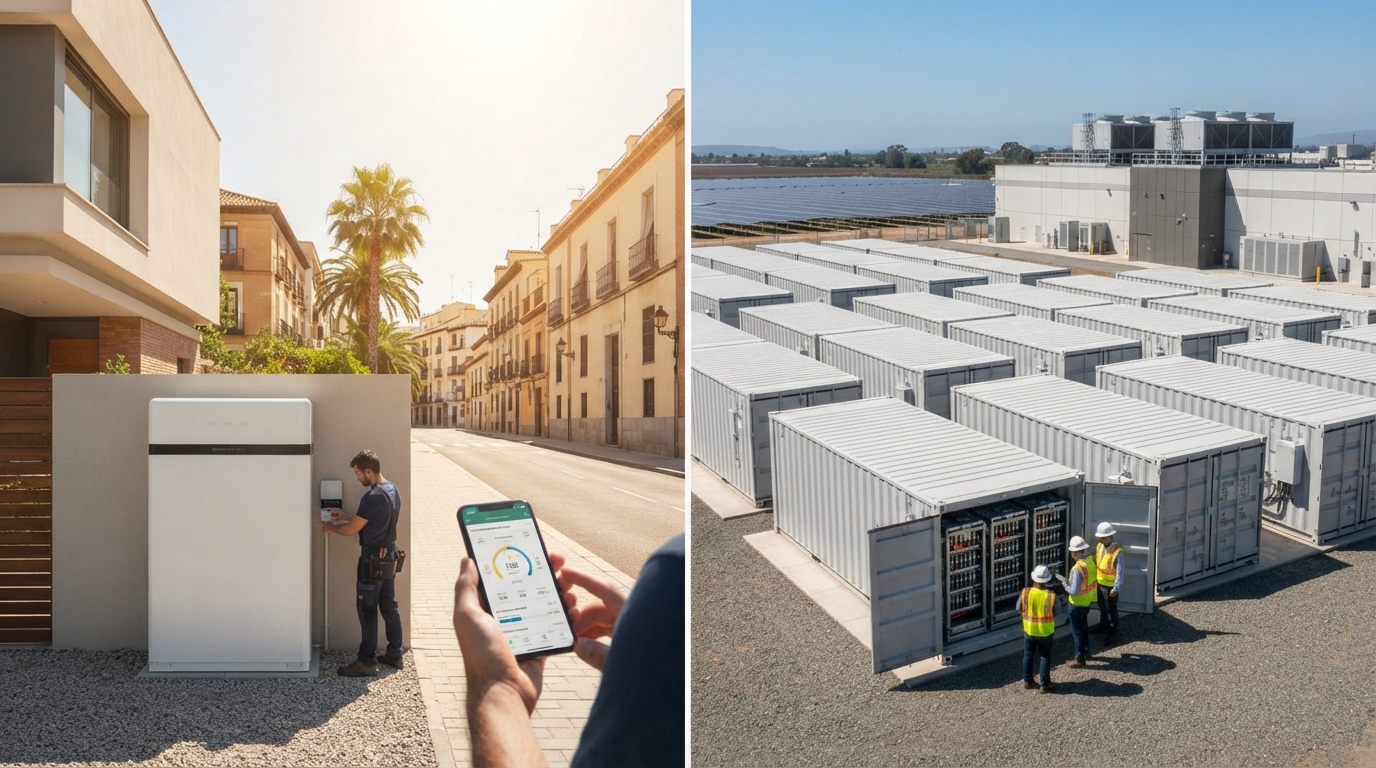
Unigrid, based in San Diego, sells a nine kilowatt hour battery for homes. Apparently, overheated European homeowners were searching for ways to store electricity when it was available from the grid at lower prices. They could then use the battery to run air conditioners more cheaply during the hottest part of the day.
“We have requests coming from Spain, France, Germany, The Netherlands,” says Darren Tan, co-founder and chief executive. “We’ve shipped the first 100 units and [expect to ship] 1,000 before the end of the year.”
Unigrid’s battery uses an emerging technology: sodium ion rather than lithium ion. Energy storage specialists are excited about sodium ion batteries because they could ultimately be far cheaper to produce and operate than lithium ion.
They may also be less prone to catching fire and should function across a broader temperature range, including as low as minus 40C.
Darren Tan founded Unigrid, a sodium ion battery maker.
However, there is disagreement about what the best and safest sodium ion battery design is.
China currently leads the world in sodium ion battery production, so US rivals will need to work hard to catch up.
The potential reward is batteries made in the US using 100% US-sourced materials. That is unlike lithium ion batteries, where China dominates the materials, the external supply chain and manufacturing.
For Tan, China has helped his company reach the market. Unigrid’s battery currently uses sodium ion cells made there rather than in the US. “We can switch back and forth and choose what battery we want to work with,” says Tan, adding that in future his company may source cells from the US, although the cost could differ.
There is also another issue. Unigrid’s battery uses chromium-3 in its cathode. In a battery, electrons move from the cathode to the anode.
Prof Dame Clare Grey at the University of Cambridge, who co-founded battery company Nyobolt, says that under certain conditions chromium-3 may turn into chromium-6, a toxic, cancer-causing substance.
“If you’re going to go for sodium […] and you’re going to sell safety, then don’t start putting elements in that are going to raise red flags,” she tells the BBC.
Ivana Hasa at the University of Warwick, who has no link to Unigrid, agrees that chromium-3 can form chromium-6 at very high states of charge, though she says this can be reduced by controlling voltage inside the battery. “Safety tests reported on the cell chemistry are very promising,” she says of Unigrid’s technology.
Tan says worries about the toxicity of the battery’s materials are “overblown” and stresses that Unigrid’s battery has passed certification and safety tests for sale in Europe and is currently undergoing the same evaluations for the US market.
He says third-party tests have not been able to make the battery form chromium-6. “We’ve tried very hard to try and produce it, we’ve overcharged it as much as we can... We were unsuccessful in generating chromium-6.”
The choice of cathode material, or the way the electrolyte — which separates cathode and anode — is formulated, are key factors affecting the performance and lifespan of sodium ion batteries. Some manufacturers are not using chromium in their cathode, instead opting for hard carbon or sodium iron phosphate pyrophosphate (NFPP).
Overall, confidence in the reliability of sodium ion batteries has grown over the past few years, says Prof Dame Grey, and they are now being used in grid storage applications.
Last December, LFP batteries — a relatively inexpensive type of lithium ion battery — were selling for $81 per kilowatt hour (kWh), while Unigrid’s sodium ion battery is priced at roughly $100 kWh.
Some companies speaking to the BBC said sodium ion could fall to as low as $30 per kWh, but analysts say costs that low may still be many years away.
Sodium ion batteries are also less energy dense than lithium ion batteries, meaning they need to be somewhat larger and heavier to deliver the same amount of power.
The technology has been improving.
Large-scale energy storage is where most people expect sodium ion to dominate.
“We think sodium ion […] is going to make up 80% of the market,” says David Bell, co-founder and chief executive of Seattle-based Emerald Battery Labs.
Bell would not reveal details of the battery design his company is developing, though he says Emerald is also currently depending on China-sourced sodium ion cells while it develops its first product: 12 volt auxiliary batteries for vehicles, now supplied to unnamed commercial fleets in the US.
“We took a look at the market and said ‘Hey, no-one’s trying to attack this space, let’s have Emerald Battery Labs attack it,’” says Bell. The company’s next aim is to develop new anodes for US-produced sodium ion cells.
Another company, Peak Energy, based in California and Colorado, announced a partnership with General Motors (GM) in June. The two companies want to build a US supply chain for sodium ion batteries to support large-scale energy storage for electricity grids.
Peak Energy is also currently relying on China-sourced cells for its first installations, but hopes to help GM open a US production facility in Michigan “by the end of 2028”, says Cameron Wiles, president and co-founder. “China does not have an insurmountable lead in sodium ion batteries,” he says.
One reason US companies believe they can compete is the surge in electricity demand from data centres, which are helping drive up greenhouse gas emissions in the US. Data centre-led demand is also increasing elsewhere in the world, including the UK.
This is an “opportunity”, says Drew Buckley, chief executive at ESS Tech, based in Oregon. He says sodium ion batteries could help deliver renewable energy to data centres. And they should be cheaper to operate than lithium ion alternatives, because they are not expected to need as much cooling.
ESS Tech is working with Alsym, another US company that plans to ship “hundreds” of megawatt hours’ worth of sodium ion batteries — made in the US — by 2027.
Hasa says it will be “challenging” for companies to achieve mass production of sodium ion batteries. She also notes that although this type of battery is often described as much safer than lithium ion, it is not completely free of fire risk.
But if any companies can succeed in this area, they could create new strategic options, she adds — helping prevent renewable electricity from going to waste and potentially keeping energy costs low. “I’m a strong believer in the technology,” says Hasa.