

Firms scramble for battery power in Spain and Portugal
After last year's massive power failure Spanish and Portuguese firms are buying battery back ups.
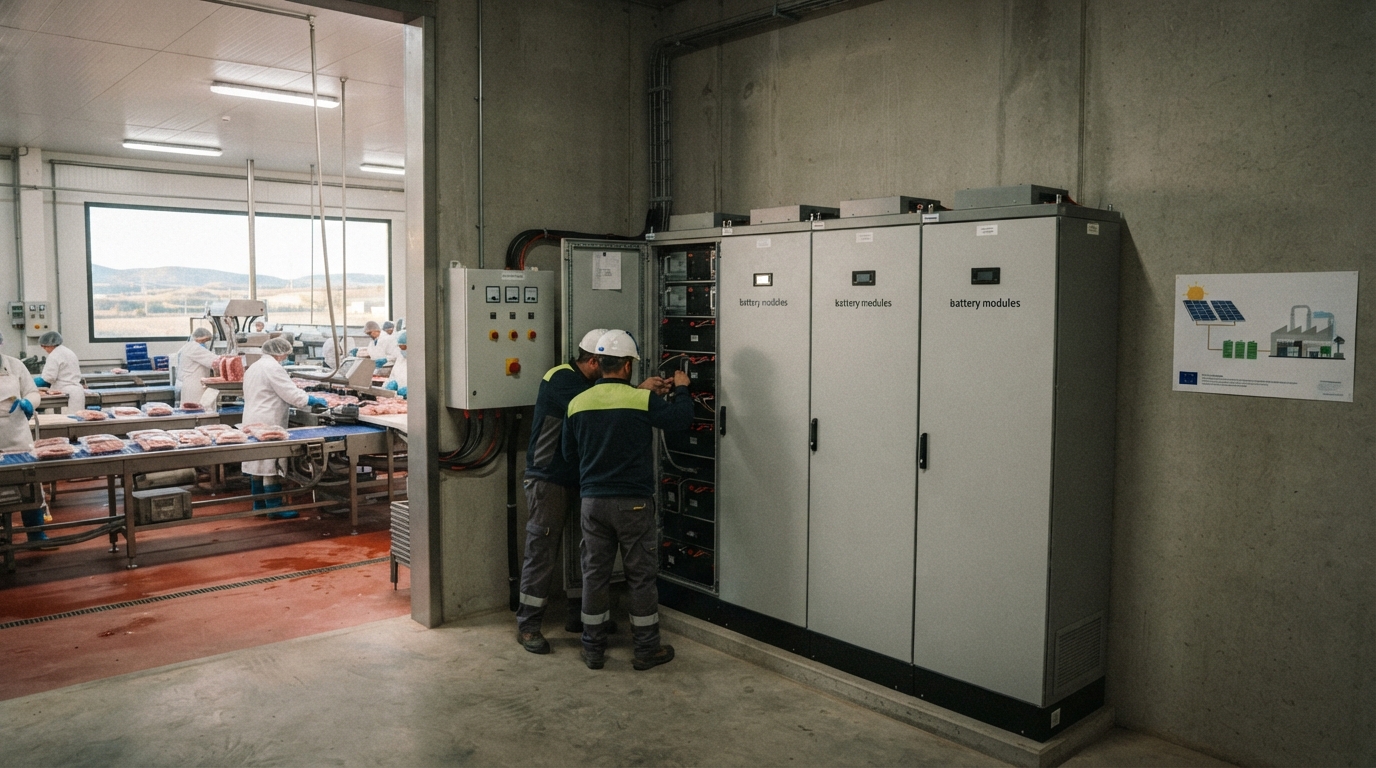
Businesses in Spain and Portugal are urgently seeking battery power solutions following a widespread power outage that plunged the Iberian Peninsula into disarray in April 2025.
On April 28th of last year, both Portugal and Spain experienced a multi-hour blackout. This extensive power failure led to widespread chaos, with individuals resorting to lanterns and old radios, while companies frantically tried to salvage their production.
Fribin, a Spanish meat processing company located in Binéfar, Aragon, was in the midst of its morning shift when the sudden power loss brought its production lines to a halt. Andrés Altabás, Fribin's technology and systems director, described the situation as a "nightmare." Their emergency systems lacked the capacity for sustained operation. Altabás stated, "Refrigeration was prioritised but all the lines had to be stopped." Consequently, many tonnes of meat in the processing stage had to be discarded, resulting in "losses of hundreds of thousands of euros," according to Altabás.
The incident prompted Fribin's management to re-evaluate their backup strategies. This was a significant undertaking, given the company's substantial energy requirements, exceeding 25 gigawatt-hours annually, primarily for refrigeration. While the business had considered investing in a battery backup system for years, it had previously been deemed too costly. Altabás informed the BBC, "And then came the blackout, and all of that together catalysed the investment."
Fribin acquired its first five megawatt-hour battery module in June 2025, followed by an order for a second module of the same capacity in early June 2026. The total investment for both modules is approximately €1.5 million (£1.3 million; $1.7 million), partially funded by the European Union's Next Generation funds.
Across Europe, companies are transitioning from fossil fuels to electricity for their industrial needs, encouraged by EU subsidies. While this shift contributes to reducing climate-warming gas emissions, it also increases businesses' vulnerability to power outages. This vulnerability was starkly demonstrated in Spain and Portugal last year.
On both sides of the border, companies are actively seeking ways to prevent future disruptions. Miguel Matias, founder of the UK-headquartered Portuguese energy services company Self Energy, noted, "The industrial sector has been one of the first to look at storage systems, since it can't have its production drop off too abruptly." He added, "A backup for a few hours, or even minutes, might guarantee that machines don't get damaged."
Recent events have further spurred investment. At the end of January, Storm Kristin caused extensive damage in central Portugal, toppling thousands of electricity and telecom poles. This left hundreds of thousands of people without power and communications, some for weeks.
In response, companies and organizations are taking action. Spain's battery storage capacity has surged nearly sevenfold since last April, increasing from approximately 28 MW before the blackout to 193 MW in April 2026, according to grid operator Red Eléctrica. Substantially more capacity is in the pipeline. In December, the IDAE, Spain's Institute for the Diversification and Saving of Energy, allocated €827 million in EU funds to 133 energy storage projects, totaling 2,400 MW, with roughly 80% dedicated to battery storage. This new capacity will be nearly ten times the amount currently registered on the Spanish grid by Red Eléctrica.
This trend is beneficial for battery suppliers. Alberto Bodegas from battery storage company Sungrow observed, "We are seeing not only an increase in demand, but also a clear evolution in customer requirements." Bodegas explained that while commercial and industrial clients traditionally sought partial or full backup solutions, they now demand more advanced capabilities, such as seamless backup. This means an instantaneous and imperceptible transition from grid power to backup, which is crucial for sensitive environments like hospitals and data centers. Delivery times are also a critical factor for buyers, who are operating under tight deadlines linked to EU funding programs, leading to pressure on battery companies to meet increasingly shorter delivery dates, Bodegas noted.
Portugal's Vista Alegre, the oldest and largest porcelain manufacturer in the Iberian country, began installing energy storage systems in 2022, leveraging the ample funds available from the EU's Recovery and Resilience Plan. Emília Encarnação of Vista Alegre stated, "The blackout ultimately served, above all, to accelerate this process." The company's facilities in Ílhavo, Aveiro province, are now equipped with modules providing approximately 2 MWh of storage capacity. Encarnação recalled, "The blackout caused some irreparable losses, particularly at the plants operating on a continuous production basis, where sudden power interruptions have a direct impact on production processes."
Beyond responding to sudden energy network shocks, these systems offer additional advantages. For instance, installing batteries allows the company to profit by selling energy back into the general network.
At Primus Ceramics, located near Aveiro in central Portugal, a diesel generator proved vital during last year's blackout. Their roller kilns, which transport materials through industrial ovens during production, are powered by electric motors. The generator kept products moving during the power cut, minimizing losses for the day. This experience accelerated the company's plans to enhance the resilience of its production process, CEO Paulo Almeida told the BBC. Primus had already installed two batteries in 2022 to back up their energy supply and to sell electricity back to their energy provider when market conditions were favorable. By the end of this year, Primus plans to more than double its battery capacity to store more energy from the factory's solar panels.
For Almeida, this increased capacity would provide reassurance after the stress of last year's blackout. He recounted, "We were at it until eight, nine at night, deciding whether we should stop, whether we should lower the furnace temperatures, or whether we'd take the risk and wait for the power to come back in time." The power did return in time, but it was a close call for Primus.