

The Samarkand delegation is studying the US healthcare experience.
A delegation from the Samarkand region is studying the US healthcare system and developing cooperation with Project C.U.R.E. on equipment supplies.
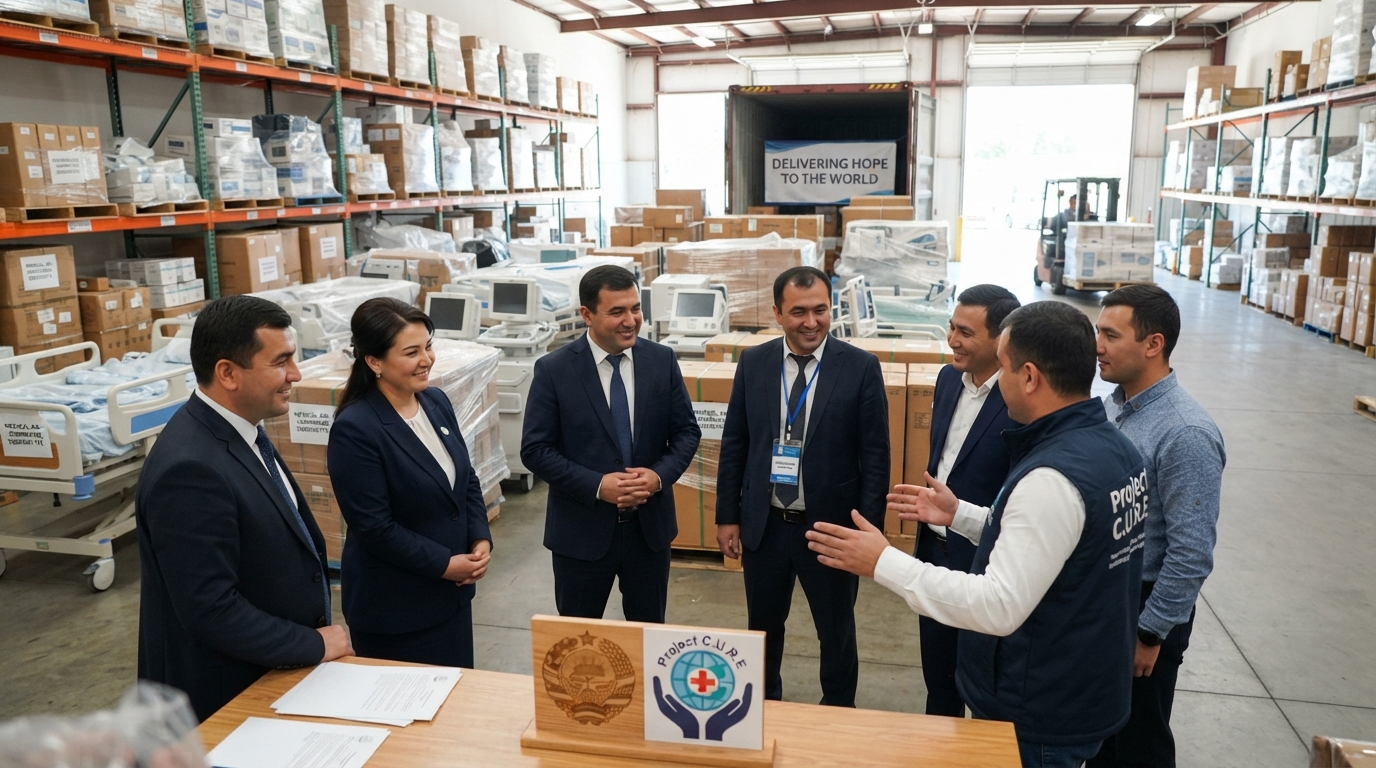
A delegation from the Samarkand Region is visiting the United States to study advanced healthcare system organization practices and discuss new projects with American partners. The delegation included representatives of the Samarkand Regional Administration, the healthcare system, and the private medical sector, including Meros International Hospital.
One of the key goals of the visit is to further develop cooperation with the American organization Project C.U.R.E., as well as to explore modern approaches to managing healthcare facilities, providing medical services, and implementing technologies.
The groundwork for the current visit was laid earlier this year during a working visit by Samarkand Region Governor Adiza Boboev to the United States. At that time, negotiations were held with the leadership of Project C.U.R.E., resulting in a number of agreements.
Following this, the organization's specialists visited 10 healthcare facilities in the Samarkand Region and assessed their needs for medical equipment and supplies. Following this work, an agreement was reached to donate equipment and supplies worth a total of $10 million to the institutions.
The prepared equipment is currently in Project C.U.R.E. warehouses and is scheduled for container delivery to the Samarkand region.
The current working visit includes meetings and talks with Project C.U.R.E. management and specialists, as well as representatives of leading US medical institutions. The delegation intends to learn about modern healthcare management models, medical care practices, medical equipment logistics, the modernization of medical institutions, and the use of modern technologies.
A separate focus will be the development of the private medical sector in the Samarkand region. Representatives of the region will discuss modern management approaches and medical technologies used in private clinics, as well as opportunities for international cooperation and investment projects.
The participation of representatives of the private medical sector in the delegation plays an important role in this area, allowing them to exchange experiences with their American colleagues and establish new partnerships.
During the visit, the delegation also visited the Embassy of Uzbekistan in the United States and met with Furkat Sidikov, Ambassador Extraordinary and Plenipotentiary of Uzbekistan to the United States. The parties discussed expanding interregional cooperation in healthcare, leveraging the professional experience of compatriots living abroad, and implementing new initiatives.
In addition, talks were held with representatives of Islamic Relief USA and Project C.U.R.E. Participants discussed providing medical institutions in the Samarkand region with modern equipment and necessary supplies, expanding humanitarian medical aid, and further developing the partnership.
Following the visit, it is expected that cooperation with Project C.U.R.E. will be further strengthened, medical facilities in the region will be upgraded, and modern practices will be introduced in public and private healthcare.