

The process of licensing banks for Islamic products has begun in Uzbekistan
Uzbekistan has begun the process of licensing banks that want to open Islamic branches based on a new law that came into force last month. This was announced by Sanjar Nosirov, Deputy Chairman of the Central Bank, in an interview with Kun.uz. He predicted that Islamic branches will be opened in conventional banks before Islamic banks. As a result, the population will be able to place Islamic (investment) deposits in banks along with traditional deposits.
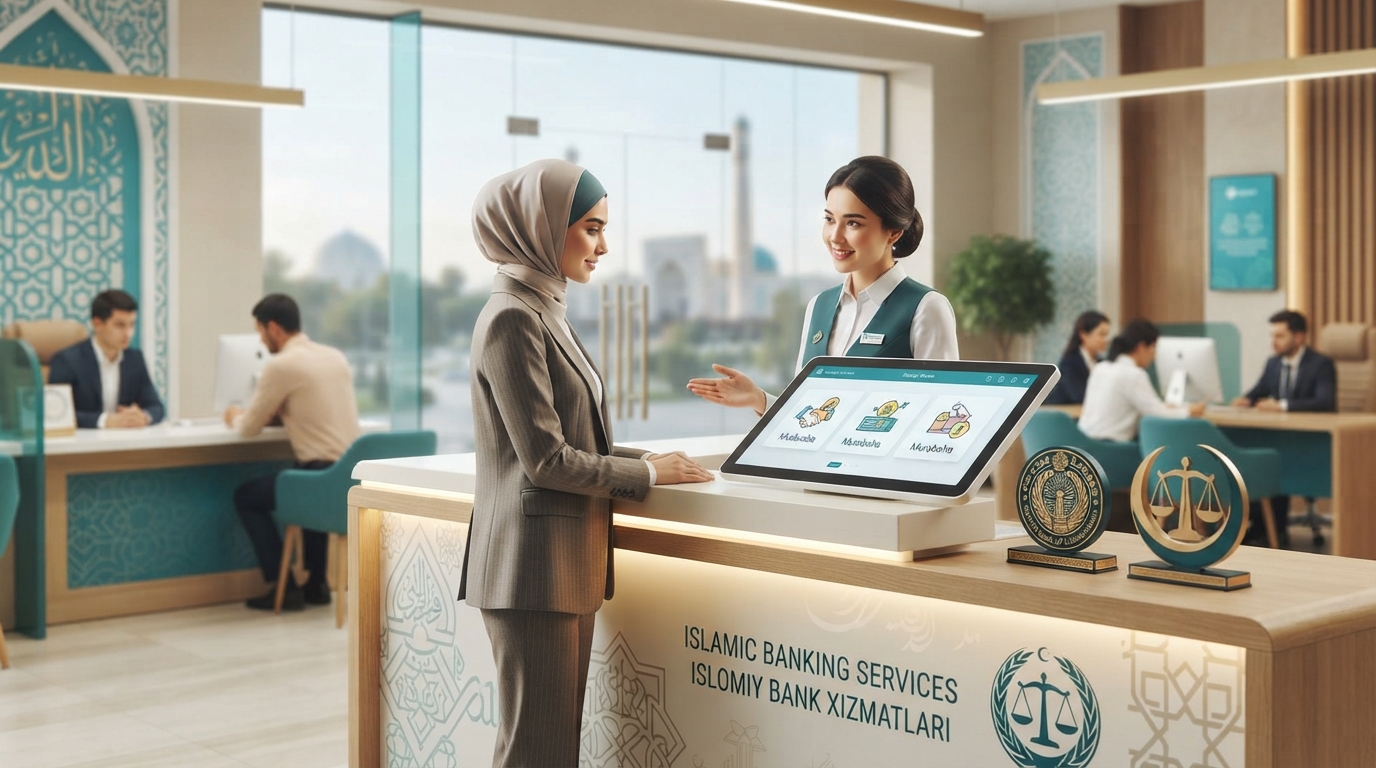
**The licensing process for Islamic banking products has begun in Uzbekistan**
Issues of expanding the legal and institutional capabilities of Islamic finance are being discussed within the framework of an international forum held in Tashkent. Kun.uz correspondent spoke with Sanjar Nosirov, Deputy Chairman of the Central Bank, on this topic.
Sanjar Nosirov noted that Islamic financial services are also emerging as an alternative to traditional banking products. Previously, there were many obstacles due to the lack of legislation and clear mechanisms. Recently, a law was adopted on the introduction of Islamic finance. Initially, microfinance organizations were allowed to provide Islamic financing services, but now Islamic banking activities are also allowed by law.
Currently, work is underway to develop by-laws within the framework of this law. The procedure for licensing Islamic banks was recently announced. Two types of licenses have been introduced: the first, for Islamic banks that provide full-fledged Islamic financial services; the second allows opening an "Islamic window" that provides Islamic banking services within a conventional bank.
Procedures for monitoring their current activities after obtaining a license and entering the system are also being developed and will be announced soon.
In addition, the law introduced two-tier Islamic finance councils. The first is the Islamic Finance Council under the Central Bank. At the next stage, banks providing Islamic financial services will have separate Islamic finance councils themselves. This council is a body that monitors and ensures that banking activities meet Islamic finance standards. The legal framework for this has been created.
According to Sanjar Nasirov, after the Islamic finance system is introduced, work will also be carried out on its development. Since Islamic finance is an alternative financial instrument, appropriate standards will be introduced for each instrument. A separate standard will be introduced for each instrument, such as murabaha, ijara, and exemption. This will serve to make services understandable not only for banks, but also for consumers.
Just as the population is now using digital banking services, it will be possible to easily use Islamic financial services in a digital format - through mobile applications. All services, such as murabaha or other services, deposit acceptance, can be carried out through digital channels, online platforms. These services compete with traditional banking services. As a result of competition, Islamic financial services should also be available via telephone so that they can compete on equal terms. That is why the idea of "digital Islamic finance" has been increasingly heard all over the world recently. The goal is to provide services on equal terms.
Islamic deposits such as mudarabah and wakala (which are referred to in the law as "investment deposits") have not yet been introduced in Uzbek banks. According to Nasirov, this is because no bank has yet received a license. Currently, banks act as agents for murabaha services, that is, they receive money from external investors and provide services on their behalf. There is no product yet in the area of attracting funds from the population and entrepreneurs. After receiving a license, full-fledged banking services will be provided. A system will be created for attracting funds, providing resources, and providing alternative services similar to loans.
After the system is established and banks are licensed, deposit-like products such as amana, mudaraba, and wakala will be introduced. Through such services, banks attract funds based on Islamic finance standards and invest these funds.
When asked when Uzbeks will be able to deposit deposits based on the principles of Islamic finance, Sanjar Nosirov replied: "We have to wait. Our banks and licensing legislation are ready. Banks can apply to the Central Bank for a license. Licensing processes are also underway. It may be wrong for us to say how many banks have applied and other details. But licensing processes are underway. After we issue the license, they will also have to set up their internal systems. Initially, I think, Islamic windows will appear. Services will be provided through those Islamic windows. This process should not take long. By the end of the year, I think, services may begin to be offered."
For information, the following two types of investment deposits are most common in Islamic finance: (the types are not given in the original text here, so we will leave this part unchanged).
We would like to remind you that the law on the introduction of Islamic financial products came into force on July 29, 2026. According to information provided at a meeting held in March, in connection with the signing of this law, at least one commercial bank is planned to establish an Islamic window this year, and two banks that will fully carry out Islamic banking activities are planned to be established in 2026-2030.