

The procedure for identifying and assessing corruption risks has been defined in Uzbekistan
Procedure for Identifying and Assessing Corruption Risks Approved in Uzbekistan
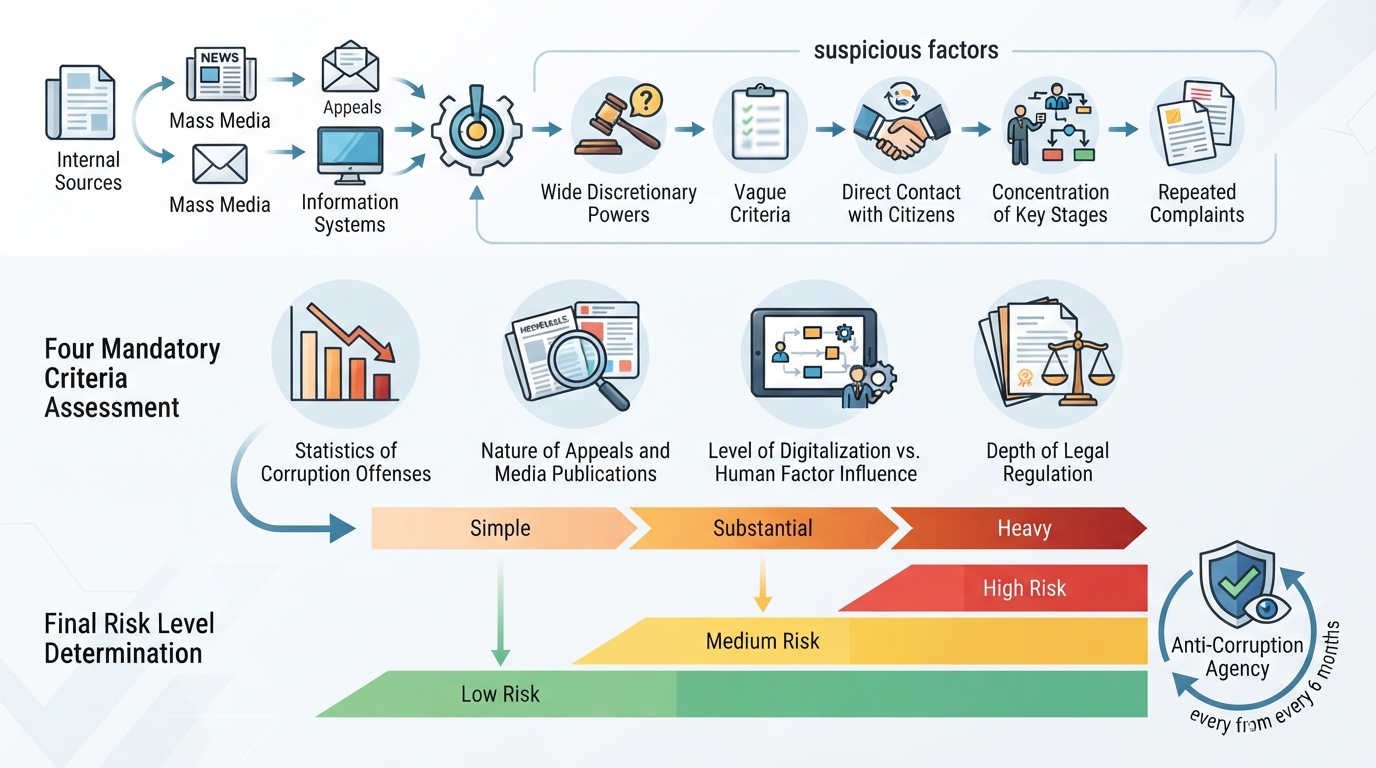
As part of the corruption risk assessment in state bodies, a procedure has been established for analyzing internal and external information sources, as well as 9 types of suspicious factors, including broad discretionary powers, vague criteria, direct contact with citizens, concentration of key stages of a process with a single individual, and repeated complaints.
The assessment is conducted according to 4 mandatory criteria: statistics of corruption offenses, the nature of appeals and publications in the mass media, the level of process digitalization with the degree of human factor influence, and the depth of legal regulation of procedures. Risk indicators are divided into low, medium, and high categories, with each classification required to be strictly substantiated by statistics, internal investigations, internal audit results, or information system data.
The final corruption risk level is determined across three tiers: low is assigned if only low-category indicators are present, medium is set if there is one medium-category indicator without any high-category ones, and high is recorded upon detecting at least one high-category factor or 2 or more medium-category indicators. The Anti-Corruption Agency monitors the implementation of action programs to reduce and eliminate identified threats at least once every six months.