

The power's shamelessness knows no bounds
In the autumn of 2016, few could have anticipated how rapidly, over the following decade, utility bills would transform into one of the constantly operating mechanisms for increasing the financial burden on the population.
The Shamelessness of the Authorities Knows No Bounds
In the autumn of 2016, few could have imagined how quickly over the next decade utility bills would turn into one of the permanent mechanisms for increasing the financial burden on the population.
Yes, over ten years, the country's economy, the cost of energy resources, and the condition of the utility infrastructure—which had been deteriorating for decades without sufficient investment—have all changed. No one argues that tariffs should remain unchanged regardless of inflation, production costs, and the need to repair pipes, boiler houses, and power grids. But there is a fundamental difference between an economically justified price adjustment and the systematic shifting of the consequences of managerial miscalculations onto the shoulders of consumers. And it is precisely this difference that the authorities prefer not to notice when yet another increase is accompanied by the usual explanations about cost, modernization, and the need to abandon state subsidies.
The public utilities sector has gradually entered a period of tariff revisions. Already in 2017, prices for electricity, gas, water supply, heating, and hot water were changing. In subsequent years, energy tariffs were revised repeatedly, with three adjustments in 2018–2019 collectively leading to a doubling of weighted average tariffs for electricity and gas. Then came a pause associated with the pandemic, but it did not mean an abandonment of the previous course.
In 2024, another large-scale revision of electricity and gas prices took place, and in May 2025, tariffs were raised again. A social consumption norm for electricity was introduced in 2024, and starting in 2025, new tariff tiers came into effect, under which exceeding established volumes began to cost the consumer more. In June 2026, electricity and gas prices rose again. Thus, over the past decade, not only the tariffs themselves have changed, but also the calculation principles that allow the bill to increase depending on the volume of consumption.
Heat supply is moving along the same trajectory. In Tashkent, the heating tariff was 142 sums per square meter per day during the heating period from the 2020–2021 season, then it was consistently raised and reached 241.44 sums by November 2025, almost doubling. Now it is proposed to increase it to 314 sums, which is another 30 percent. A cubic meter of hot water with a meter may rise in price from 8,928.67 to 11,607 sums. And this is not the final change, as the authorities are already considering the possibility of annual indexation of centralized heat supply tariffs starting in 2028, adjusted for inflation and capped at ten percent per year.
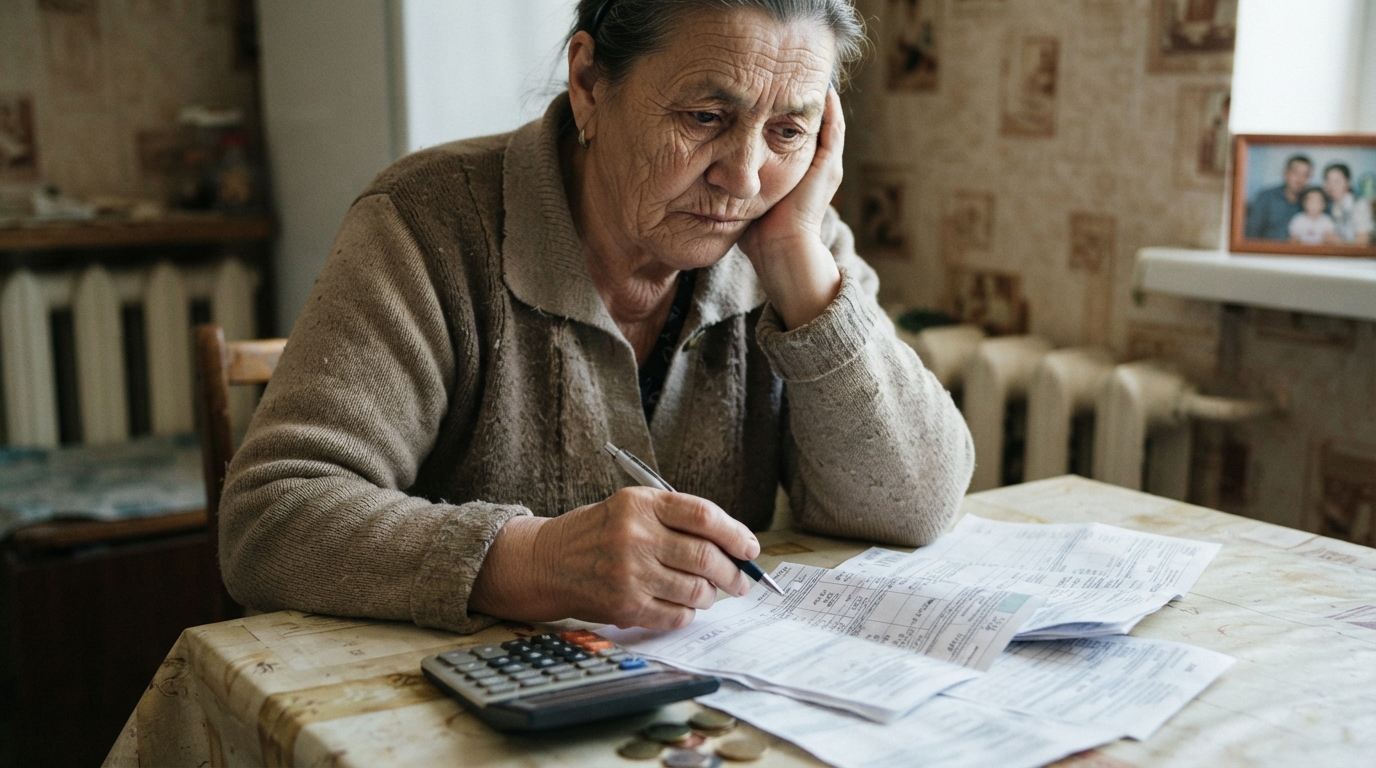
Behind the dry figures lie very concrete consequences for the family budget. Heating cannot be canceled at will like a subscription to an unnecessary service, and the need for hot water does not depend on how successfully officials cope with their duties. A person can refuse to buy clothes, postpone apartment renovations, or reduce food expenses, but in winter they will still have to pay for heat. Therefore, utility tariffs belong to those payments whose systematic growth is particularly sensitive for pensioners, families with children, and citizens with low incomes. A formally identical price increase for everyone turns out to be a completely different burden: a wealthy consumer may hardly notice it, whereas for a person living on a pension or a modest salary, the next bill becomes a reason to contemplate suicide. Overly categorical? We admit it. But such a scenario cannot be ruled out.
However, the point is not even the next thirty percent that is only just being proposed to be added to the capital's heat and hot water tariffs. The fundamental question is why the state so persistently demands that citizens pay the actual cost of public utilities, but significantly less often demonstrates comparable demands on those who produce, supply, and distribute these services. If enterprise expenses grow due to worn-out networks, energy losses, inefficient management, and delayed modernization, why is the primary solution to raise consumer fees rather than to achieve a proven reduction in expenses themselves?
Remarkably, the current draft includes measures to reduce the cost of thermal energy by 15 percent, cut losses in networks by 25 percent based on the results of 2027, conduct a technical audit, and improve corporate governance. All of this is undoubtedly necessary, but an awkward question arises: if such savings reserves exist, why is another increase proposed to the population before society can see the results of these transformations? Why should a citizen pay today for the promise of future efficiency, while responsibility for past inefficiency remains mostly inside departmental offices?
This is where another structure convenient for the authorities appears—public discussion. The Ministry publishes a draft resolution, announces that the document has been submitted for discussion, and thereby creates the impression that the upcoming increase is undergoing the necessary verification by public interests. However, the publication of the draft in itself is not proof that the opinion of the population actually influences the decisions being made. For this, it is not enough to open a web page and provide an opportunity to leave a comment. It is necessary to show how many proposals were received, which of them were substantive, which were rejected and why, which comments were accepted, and how they changed the original document.
Over the past ten years, it has been impossible to find public reports that would allow tracing such a sequence in relation to systematic utility tariff increases: from a substantive discussion with citizens to documented consideration of their proposals when making a final decision. As a result, the suspicion arises that the procedure is needed primarily to give the decision the appearance of public consent. Precisely the appearance, and nothing else.
In a society where open disagreement with government decisions is perceived as a potential source of trouble, the absence of mass protests cannot automatically be taken as approval. People fear the consequences, do not believe in the effectiveness of appeals, do not count on an independent review of their grievances, and often prefer to pay even if they consider the billed amount unfair. Silence in such circumstances does not mean consent, and submissiveness does not turn an unpopular decision into a publicly approved one.
The situation is aggravated by the lack of real parliamentarism in the sense in which society needs it: a representative body should not simply formalize decisions of the executive branch, but also express the interests of citizens, demand justification for unpopular measures, verify the efficiency of spending, and achieve the protection of the most vulnerable groups. If deputies do not become an independent channel of public oversight over tariff policy, the population is effectively deprived of the opportunity to influence decisions that directly determine their standard of living. Then the executive branch turns out to be simultaneously the author of the increase, the main explainer of its necessity, and the authority assessing the fairness of its own actions.
This is how a vicious circle arises: the executive branch raises tariffs, citing economic necessity, citizens are invited to submit comments as part of a formal procedure, and the absence of public resistance is used as indirect confirmation of the legitimacy of the chosen course.
No one demands that utility infrastructure be maintained solely at state expense regardless of economic circumstances. The demand is much simpler and fairer: before issuing a new bill to the population, the government must provide convincing calculations, prove the necessity of the increase, show the results of reducing losses, and explain how citizens who do not fall into the affluent category will be protected.
For now, one gets the impression that the state is much better at calculating additional revenue from the population than at explaining why years of utility sector reforms do not relieve it of the need to reach into the consumer's wallet again and again. The shamelessness of the authorities truly knows no bounds when the obligation of citizens to pay is declared unconditional, while the obligation of officials to account to society turns into an optional formality.
And perhaps the most alarming thing in this story is that over ten years, the increase in utility tariffs has come to be perceived almost like the changing of the seasons: unpleasant, but inevitable. Meanwhile, inevitability is not an economic category, but often the result of a complete absence of public control. A sort of developed feudalism under the guise of democracy.