

The OSCE helps strengthen the management system for female labor migration in Uzbekistan.
Women returning from labor migration bring home much more than financial support for their families. They return with new knowledge, professional skills, valuable experience, and a fresh perspective, capable of making a significant contribution to Uzbekistan's development. However, creating the conditions that will help them successfully realize their potential upon their return home remains a crucial task.
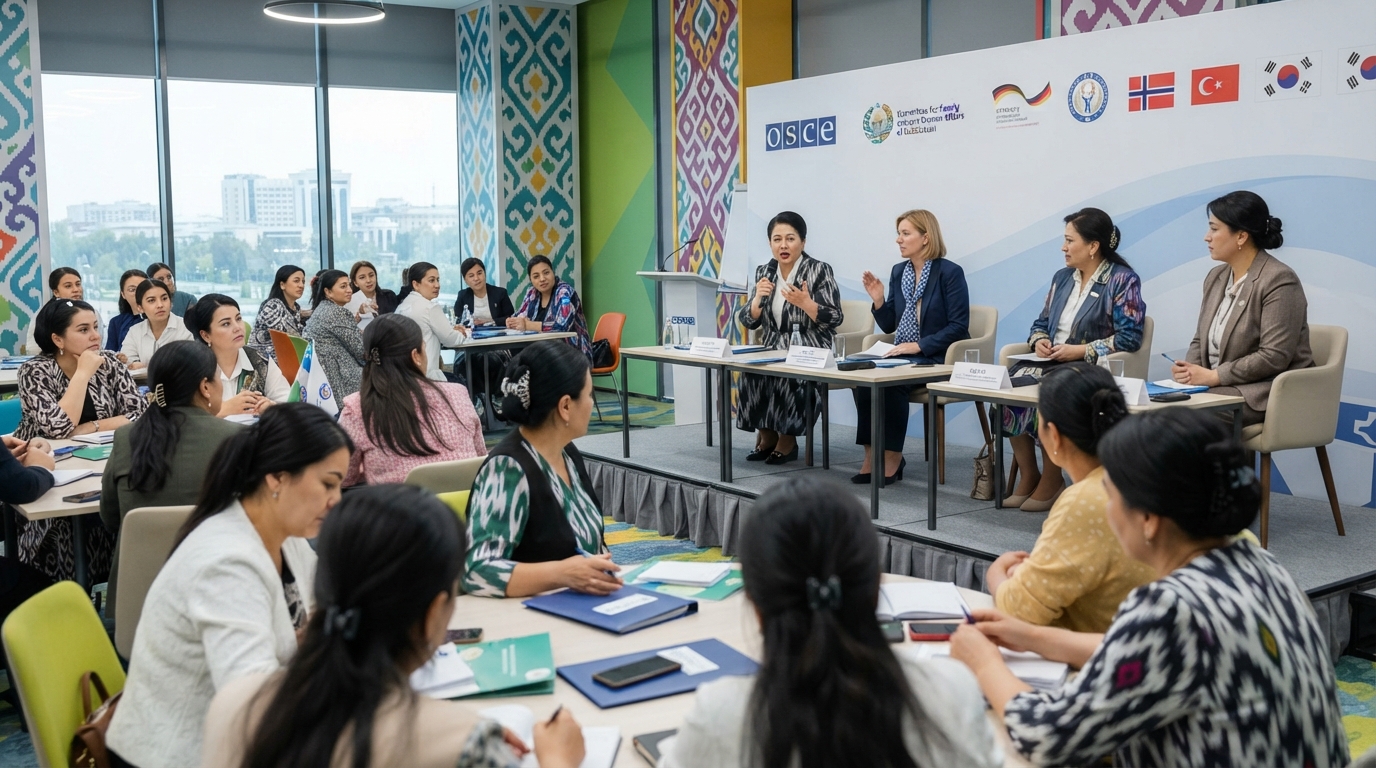
The OSCE is helping improve the management of female labor migration in Uzbekistan.
Tashkent, Uzbekistan (UzDaily.uz) —
Women returning from labor migration bring with them not only financial support for their families but also new knowledge, professional skills, valuable experience, and a fresh perspective that can significantly contribute to Uzbekistan's development. However, creating the conditions for their successful realization upon their return home remains a key challenge.
These issues were the focus of a seminar organized by the OSCE Project Coordinator in Uzbekistan jointly with the Committee on Family and Women's Affairs of the Republic of Uzbekistan and national partners in the field of labor migration management. During the event, participants discussed the practical experiences of female migrants, existing challenges, and mechanisms for their effective economic reintegration.
While labor migration opens new opportunities, women often face a number of specific challenges—from adapting to the domestic labor market to finding financial resources and starting their own businesses upon their return. The seminar participants reviewed the results of ongoing projects and the practical experience of government agencies and international organizations supporting women both before they leave the country and after their return to Uzbekistan.
"Uzbekistan is systematically supporting the families of labor migrants and providing them with comprehensive assistance. Together with the OSCE Project Coordinator in Uzbekistan, we are implementing a cascade training program aimed at the economic reintegration of women returning from labor migration. Trainers will be trained to help them master in-demand professions, gain IT skills, and improve their financial literacy," noted Umida Abdullaeva, First Deputy Chair of the Committee on Family and Women's Affairs of the Republic of Uzbekistan.
The seminar served as an effective platform for exchanging experiences between government agencies and international organizations. Participants discussed current issues of improving labor migration management, strengthening institutional cooperation, and implementing practical, gender-sensitive approaches to supporting women's economic reintegration.
"Effective and gender-sensitive management of labor migration means creating conditions in which women can confidently return home, apply the knowledge and skills they acquired abroad, and fully contribute to the economic and social development of Uzbekistan," emphasized OSCE Project Coordinator in Uzbekistan, Ambassador Antti Karttunen.
The event also included a high-level panel discussion with representatives of the OSCE Project Coordinator in Uzbekistan, the Committee on Family and Women's Affairs, the Agency for External Labor Migration, the Ministry of Employment and Poverty Reduction, and the International Organization for Migration. Participants discussed strengthening interagency cooperation and improving the quality of services provided to female migrants at all stages of the migration cycle.
The seminar was organized as part of the two-year OSCE Project Coordinator in Uzbekistan project "Supporting Effective Governance of Female Labor Migration and Empowering Women Returning from Labor Migration."
The project aims to develop a gender-sensitive migration management system, strengthen institutional cooperation, and create conditions for the sustainable economic reintegration of women. The initiative is being implemented with financial support from Germany, Norway, Turkey, and the Republic of Korea.