

The Law on General Product Safety has passed the Senate. The requirements will also apply to foreign marketplaces.
Uzbek senators approved the law "On General Product Safety," which requires risk assessment throughout a product's entire life cycle. It introduces uniform regulations for non-food products and responsibilities for manufacturers, importers, and sellers, including foreign marketplaces.
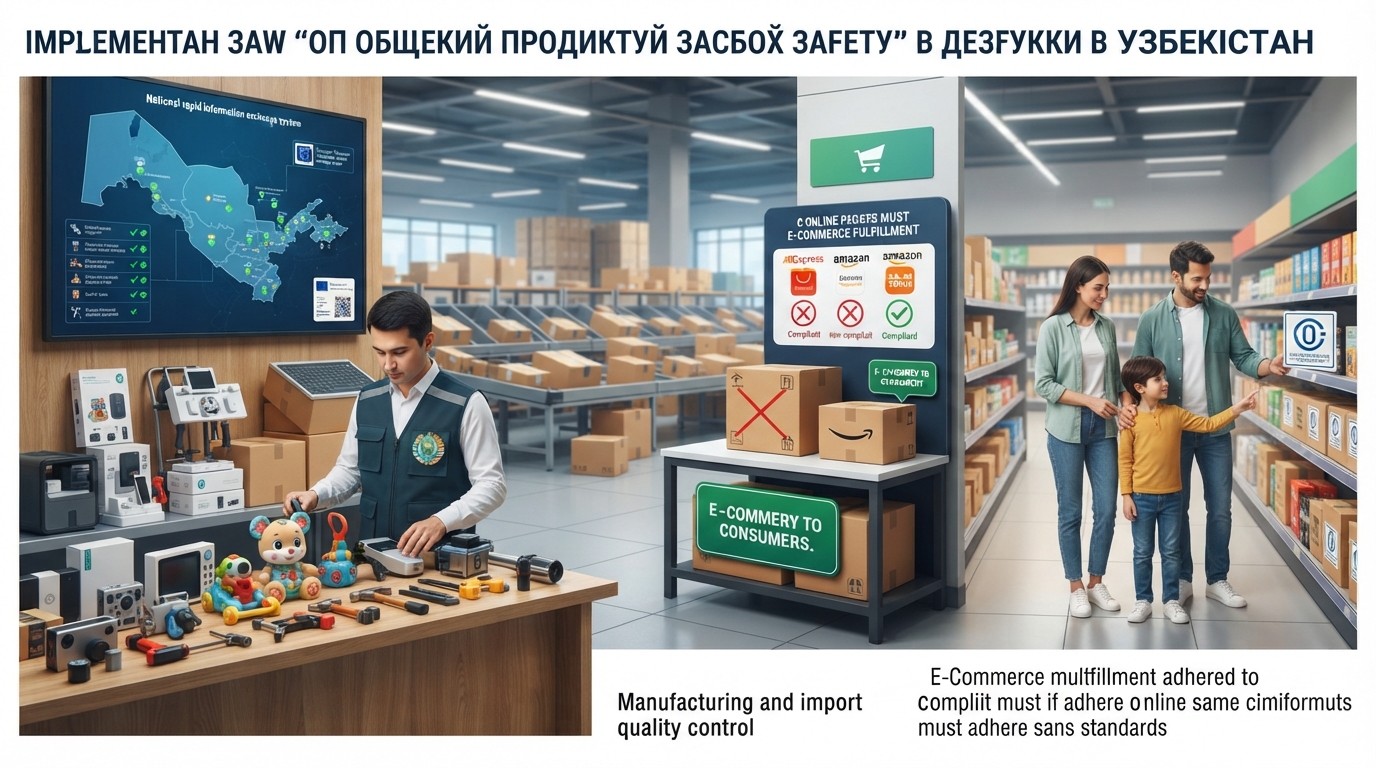
On August 7, the Senate of the Oliy Majlis approved the Law "On General Product Safety," which introduces uniform safety standards for non-food products and amends the existing approach to quality control.
According to the new law, manufacturers and importers will be required to assess risks before introducing products to the market and recall them if a hazard is detected.
Anvar Tuychiev, Chairman of the Senate Committee on Agriculture, Water Management, and Ecology, noted that of the more than 13,000 commodity items traded in Uzbekistan's foreign trade, general safety requirements have not yet been established for over 7,000. This has led to a lack of clarity regarding the obligations and responsibilities of manufacturers and importers.
The law was developed by the Agency for Technical Regulation in pursuance of the presidential decree of April 18, 2025, aimed at stimulating production, exports, and entrepreneurship, as well as improving the effectiveness of trade and industrial policy. One of the key goals is to align Uzbekistan's technical regulation system with the requirements of the World Trade Organization.
Anvar Tuychiev emphasized that the current control system is primarily focused on the pre-market stage, including mandatory certification and assessment of compliance with technical regulations. However, this approach does not allow for the timely identification and mitigation of risks after a product enters circulation.
"Global practice shows that ensuring product safety is no longer limited to certification processes prior to market entry," the senator stated.
The new model provides for risk assessment throughout the entire product lifecycle: from design and production to import, storage, transportation, sale, and consumer use. It also includes product traceability, prompt recall of hazardous products, and consumer notification.
The law establishes general safety requirements for all non-food products. For products posing an increased risk to life and health, additional specific requirements will be defined in technical regulations.
In connection with the transition to the new system, the current Law "On Technical Regulation" (ZRU-819) is deemed no longer in effect.
The law introduces the concept of economic operators, which includes the manufacturer, importer, distributor, and authorized representative. All of them will be responsible for the safety of the product, regardless of how it is sold, including online sales.
A separate set of responsibilities is established for the manufacturer before launching a product:
* conduct a risk assessment;
* ensure product compliance with established requirements;
* prepare technical documentation;
* apply labeling;
* store documentation for 10 years.
Anvar Tuychiev called this a new legal mechanism that was absent from the previous system.
"The main goal is not to punish entrepreneurs, but to ensure the early detection of dangerous products, assess the degree of risk, promptly warn consumers, and remove dangerous products from circulation," he noted, referring to the risk-based surveillance system.
For products that pose a serious risk, a rapid information exchange system—a national analogue of the European Safety Gate—is proposed. It should enable the prompt dissemination of information about dangerous products and their removal from circulation throughout the country.
A separate discussion at the meeting was devoted to e-commerce.
Senator Malika Kadirkhanova raised the issue of the safety of products purchased by Uzbek residents through foreign marketplaces such as AliExpress, Amazon, Alibaba, and Temu, and the application of market oversight in such cases.
Lazizbek Saidoripov, First Deputy Director of the Agency for Technical Regulation, stated that e-commerce regulations are stipulated, in particular, by Articles 18 and 19 of the law.
Electronic platforms will be required to remove prohibited or restricted products, transmit information to authorized government agencies, review customer complaints, and retain information and reviews about the products they sell. They will also be required to cooperate with market oversight authorities if dangerous products are identified.
"Even if a foreign e-platform does not have a legal entity in Uzbekistan, it will have the same rights and obligations when selling products to our consumers," explained the agency representative.
He added that after the laws come into force, such platforms will be subject to market oversight measures, including test purchases. The goal is to establish uniform rules for consumer protection in both traditional and e-commerce.
The agency representative emphasized that the Law on General Product Safety and the Law on Market Supervision, which it reviewed before it, are directly linked and complement each other. The concept of an economic operator should apply to both traditional trade and e-commerce platforms.