

The IAEA noted Uzbekistan's progress in nuclear infrastructure but pointed to unfinished business.
Uzbekistan has made significant progress in preparing its nuclear energy infrastructure, the IAEA mission concluded. However, the country still needs to complete feasibility studies and strengthen its nuclear regulatory system.
Uzbekistan has made significant progress in developing its nuclear energy infrastructure, but it still needs to complete feasibility studies and strengthen its nuclear regulatory authority. This is the conclusion of an International Atomic Energy Agency (IAEA) mission that visited the country from June 22 to 26, 2026.
On September 2, during a presentation to President Shavkat Mirziyoyev, the government announced that the June IAEA mission "rated Uzbekistan's level of national nuclear infrastructure development highly."
This is a follow-up Integrated Nuclear Infrastructure Review (INIR), which assessed Uzbekistan's implementation of the recommendations and proposals issued following the main Phase II mission in 2021. The objective of this review is to assess the readiness of the national infrastructure for the implementation of a nuclear energy program and help the country identify gaps.
The IAEA reported that during this time, Uzbekistan acceded to relevant international legal instruments, revised its national nuclear energy legislation, developed licensing and oversight regulations and management systems, conducted necessary studies of the energy system, and prepared plans for its strengthening.
"Uzbekistan has demonstrated its commitment to developing a safe, secure, and sustainable nuclear energy program. The country has actively worked to implement the recommendations and proposals of the 2021 mission and to create a reliable infrastructure for the program's implementation phase," stated mission leader John Haddad.
The team of experts also specifically noted that further work is necessary to complete measures to strengthen the national nuclear regulator and feasibility studies for the project.
Following the INIR Phase II mission in 2021, Uzbekistan received eight recommendations and 16 proposals.
Key requirements included completing the feasibility study for the NPP project, strengthening the nuclear regulator's competencies and resources, finalizing the licensing and oversight framework, and conducting studies on the energy system's readiness for nuclear generation.
The 2021 report explicitly recommended that Uzatom complete the feasibility study "as soon as possible." As of June 2026, according to the IAEA press release, this issue had not been fully resolved: the agency again emphasized the need to complete the relevant studies.
A similar situation persists with the regulator. In 2021, the IAEA recommended strengthening its competencies, staffing, and funding. In 2026, the agency again noted the need to complete measures to strengthen the regulatory body.
Uzatom Deputy Director Shahzod Alirizayev and Mission Leader John Haddad from the IAEA's Division of Nuclear Infrastructure Development. At the same time, some of the 2021 recommendations, based on publicly available data, have been significantly advanced.
For example, the IAEA noted that Uzbekistan has acceded to the necessary international legal instruments, revised its nuclear legislation, and developed licensing and oversight regulations.
The country has also conducted studies of the power grid and prepared plans for its strengthening. This is in line with a separate 2021 recommendation on the need to determine what changes will be required in the power grid infrastructure to connect the future nuclear power plant.
However, the full report of the 2026 mission has not yet been publicly published, so it is impossible to officially determine which recommendations have been fully implemented based on publicly available data. The preliminary report of the mission was submitted to the government of Uzbekistan upon its completion.
Gazeta sent a request to the Atomic Energy Agency under the Cabinet of Ministers (Uzatom).
Construction is already underway.
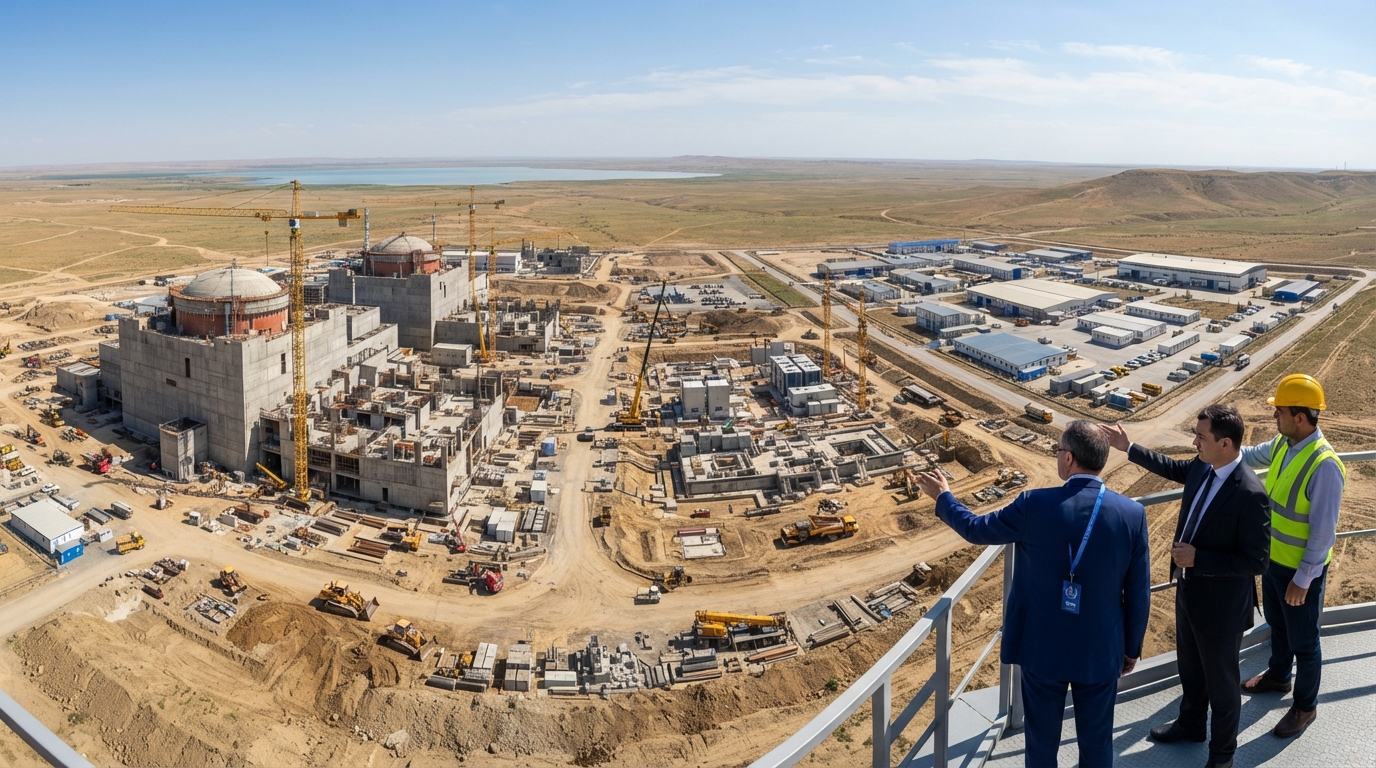
Meanwhile, construction of the integrated nuclear power plant in the Farish district of the Jizzakh region is already in the active phase.
The project includes four power units: two VVER-1000 reactors with a capacity of 1 GW each and two RITM-200N small modular reactors with a capacity of 55 MW each. The plant's total capacity will be 2,110 MW, with an expected annual output of up to 17 billion kWh.
The first small modular reactor is scheduled to launch in October-November 2029, with the second approximately six months later. The first large power unit is expected to be commissioned in 2033, with full completion expected in 2034-2035.
The total cost of the plant is estimated at $9.5 billion.