

The History Museum of Uzbekistan was renovated for its anniversary.
The State Historical Museum of Uzbekistan has been renovated using digital technology after nearly 150 years of operation.
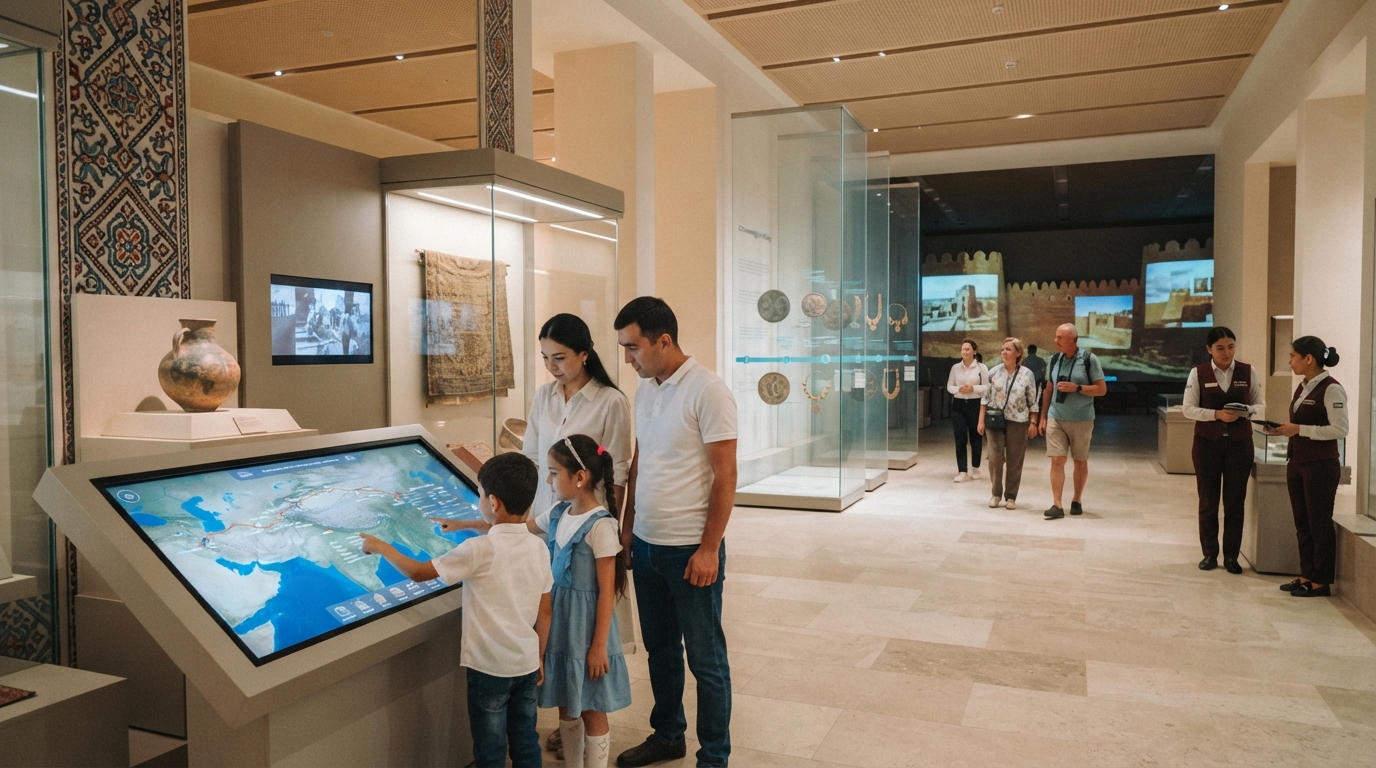
The History Museum of Uzbekistan has been modernized for its anniversary.
Tashkent, Uzbekistan (UzDaily.uz) —
The State History Museum of Uzbekistan, founded in 1876, has undergone a complete modernization with the introduction of cutting-edge exhibition and digital technologies. The project was implemented by Outdoor Factory, a Turkish company specializing in visitor interaction concepts, according to the Turkish news agency Anadolu.
The renovation included upgrades to the exhibition halls, visitor interaction systems, and the museum's digital infrastructure. The exhibition, which contains approximately 250,000 exhibits, now includes digital storytelling systems, multimedia applications, interactive zones, and modern exhibition solutions.
The history of Uzbekistan is presented chronologically. The development of the new concept focused on maintaining the central role of historical exhibits, while using digital technologies to complement them.
The project also included changes to visitor routes, digital materials, and educational areas. According to Anadolu, the goal of the renovations was to create a modern museum space where visitors can actively interact with exhibits from various historical eras.
Outdoor Factory Chairman of the Board, Toygar Yedigoz, stated that in renovating the museum, the company sought to combine historical heritage with modern approaches to museum work.
Director of the State History Museum of Uzbekistan, Jennet Ismailova, expressed gratitude to Outdoor Factory for its work, noting that the project brought the museum closer to modern museum standards. She noted that digital technologies and interactive applications have expanded the museum's functions as a cultural and educational center.
The Anadolu article also emphasizes that Turkish companies have been actively participating in international projects in the fields of digital museology, visitor experience design, and cultural heritage preservation in recent years.
However, the assertion that the State Historical Museum of Uzbekistan received separate international status or was included on the UNESCO World Heritage List is not directly confirmed by the cited material: the source links the museum to the inclusion of "Modernist Architecture of Tashkent" on the World Heritage List, but does not cite a separate UNESCO decision regarding the museum's inclusion. Therefore, this fact is not confirmed in the article.