

The Timurid legacy will receive a digital dimension: 50 historical artifacts will be digitized in foreign museums.
A scientific project is being implemented in Uzbekistan to create 3D models and animated images of Timurid-era artifacts housed in museums in Russia, the UK, and Turkey.
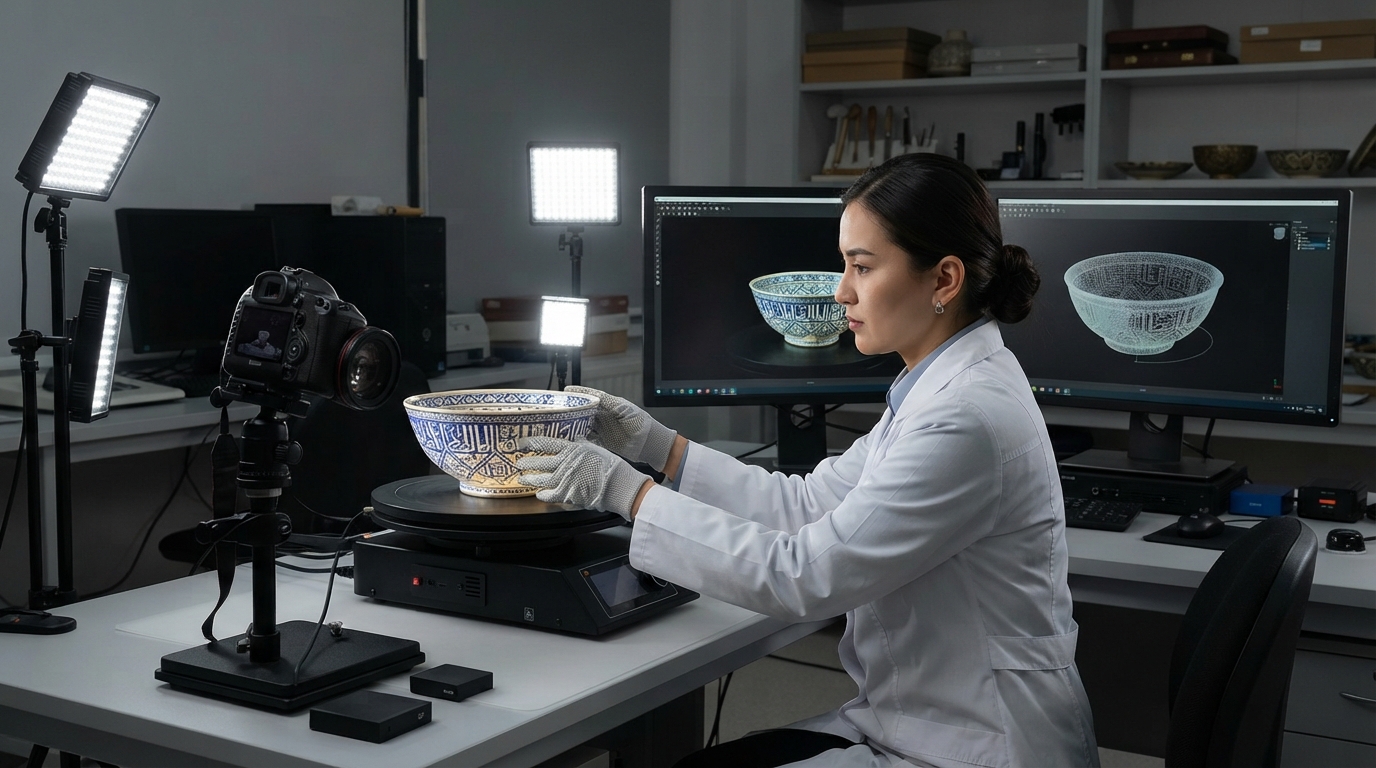
The Timurid Legacy will be digitized: 50 historical artifacts from foreign museums will receive digital copies.
Tashkent, Uzbekistan (UzDaily.uz) —
The Timurid era occupies a unique place in the history of world civilization, marked by significant developments in science, education, architecture, literature, and fine and applied arts. A significant portion of the material and cultural heritage of this period is currently preserved in foreign museums, libraries, and private collections. This was reported by the press service of the Agency for Innovative Development under the Ministry of Higher Education, Science, and Innovation of the Republic of Uzbekistan.
Modern digital technologies make it possible not only to study these historical treasures but also to create digital copies of them, significantly expanding access to cultural heritage. A special scientific project aimed at creating 3D models and animated images of Timurid-era artifacts is being implemented in Uzbekistan. The project, titled "Creating 3D Models and Animated Images of Timurid-Era Artifacts Held in Foreign Museums," is being funded by the Agency for Innovative Development as part of the "Olima Ayollar" (Women Scientists) competition.
50 artifacts will be digitized.
The project's main goal is to identify historical objects from the Timurid era located outside of Uzbekistan, provide a scientific description of them, and create high-precision 3D models and animations.
The research covers museum collections in Russia, the United Kingdom, and Turkey. During field trips, specialists have already collected high-quality photographs of 50 historical artifacts. Based on this data, digital 3D models will be developed.
"To date, during field trips to museums in Russia, the United Kingdom, and Turkey, a large number of high-quality photographs of 50 historical artifacts have been collected. Based on these photographs, digital 3D models will be created.
Furthermore, the surviving historical images will be converted into animations and videos. "A scientific description and annotation in Uzbek will be prepared for each artifact," noted project manager Dilafruz Kurbanova.
A separate area of work is related to the visualization of historical images. These are planned to be adapted into animation and used to create modern video materials about the Timurid heritage.
Individual collections will be integrated into a single digital space.
An important outcome of the project will be the creation of a unified digital and scientific information space that will systematize information about the Timurid heritage stored in various countries.
The created 3D models will be used by museums, educational institutions, scientific researchers, and the general public. The new visual and scientific content is also planned to be posted on the website of the State Museum of Timurid History.
The digitalization of artifacts opens up additional opportunities for the virtual presentation of historical objects physically housed in international collections. This will allow researchers, teachers, students, and museum visitors to explore them regardless of geographical distance. Furthermore, digital copies can be used in the preparation of virtual exhibitions, educational projects, scientific publications, and multimedia materials.
Digitalization as a tool for heritage preservation.
The project is particularly important in the context of preserving historical memory. The creation of digital models allows for the visual characteristics of artifacts to be captured and used as an additional resource for their study and popularization.
The expansion of digital content also creates new opportunities for promoting Uzbekistan's historical and cultural heritage and increasing interest in the country among international researchers and tourists.
In the future, the digital products created within the project are planned to be protected as intellectual property. They are also expected to form the basis for new scientific and cultural projects between museums in Uzbekistan and international institutions.
Thus, the initiative unites historical scholarship, museology, and modern digital technologies.
Digitizing artifacts from the Timurid era will enable the preservation of cultural heritage information in a modern format, expand access to it, and present the history of Uzbekistan to a global audience through innovative tools.