

The giant liner that became an Atlantic record holder will be turned into an artificial reef
Plans are underway to sink the historic SS United States liner off the coast of the US state of Florida to create the world's largest artificial reef. According to the Okaloosa County administration, weather permitting, the work will be carried out in the second week of November.
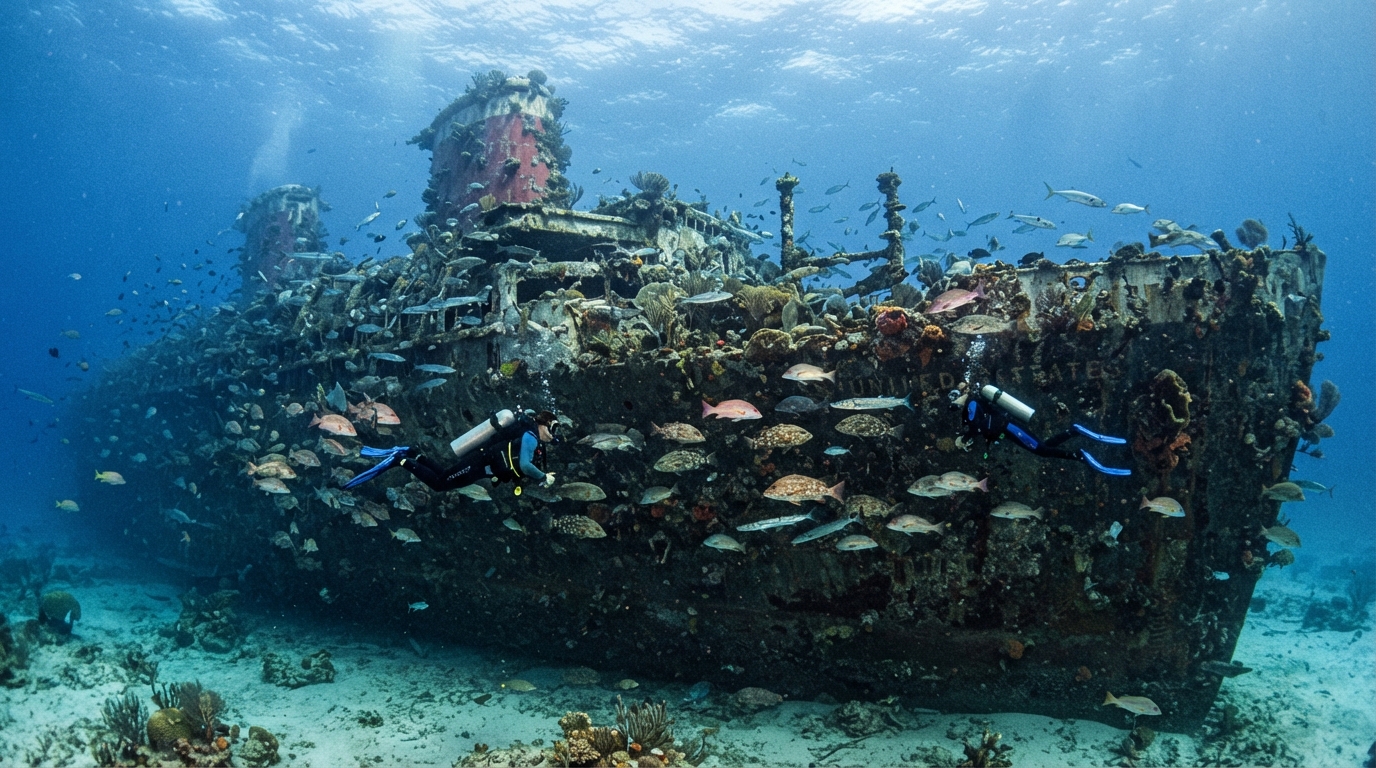
Giant liner that set the Atlantic record to be turned into an artificial reef
The ship, nearly 302 meters long, will be sunk to the seabed approximately 40 kilometers southwest of the city of Destin. The project's initiators hope that the liner will become a new habitat for marine life and a major tourist attraction for divers.
According to local authority estimates, this could generate millions of dollars in annual revenue for dive gear shops, charter fishing companies, and hotels.
The SS United States set a speed record on its maiden voyage in 1952, crossing the Atlantic Ocean in three days, 10 hours, and 40 minutes. It improved upon the previous record held by the liner Queen Mary by about 10 hours.
In doing so, the ship won the "Blue Riband of the Atlantic" award, presented for the fastest transatlantic crossing by a passenger liner.
However, over time, passenger transportation preferences changed, and demand for the liner declined. In 1969, after 17 years of service, it was decommissioned. In the following decades, the ship changed hands several times and gradually fell into disrepair.
Heritage preservationists spent many years trying to save and restore the liner. However, the costs of repairing and maintaining it proved to be immense.
A dispute over rent with the owner of the Philadelphia pier forced the SS United States Conservancy, the organization engaged in preserving the ship, to sell it.
The liner was purchased by Okaloosa County. On February 19, 2025, it was towed out of Philadelphia and set sail for the city of Mobile, Alabama.
Some environmental organizations and scientists have expressed concern that the primer coating containing zinc chromate applied to the ship's hull could pollute the waters of the Gulf of Mexico.
However, the Okaloosa County administration stated that the project complies with the requirements of the US Environmental Protection Agency (EPA). In August 2025, a federal court dismissed a lawsuit filed to prevent the sinking of the liner.