

The doctor said that sleeping too much on weekends is harmful to health
Many people try to make up for the lack of sleep during the workweek on Saturdays and Sundays. However, an expert stated that the habit of sleeping until noon disrupts the biological clock and leaves a person feeling even more tired.
Doctor says sleeping too much on weekends is harmful to health
Many people try to make up for sleep missed during workdays on weekends. According to somnologist Ilya Smirnov, this way of sleeping negatively affects health. He explained what to avoid on Saturdays and Sundays.
According to the expert, the habit of sleeping until noon on weekends disrupts the circadian rhythm (a person's internal biological clock). As a result, a person feels lethargic and tired, and falling asleep on Sunday night becomes difficult.
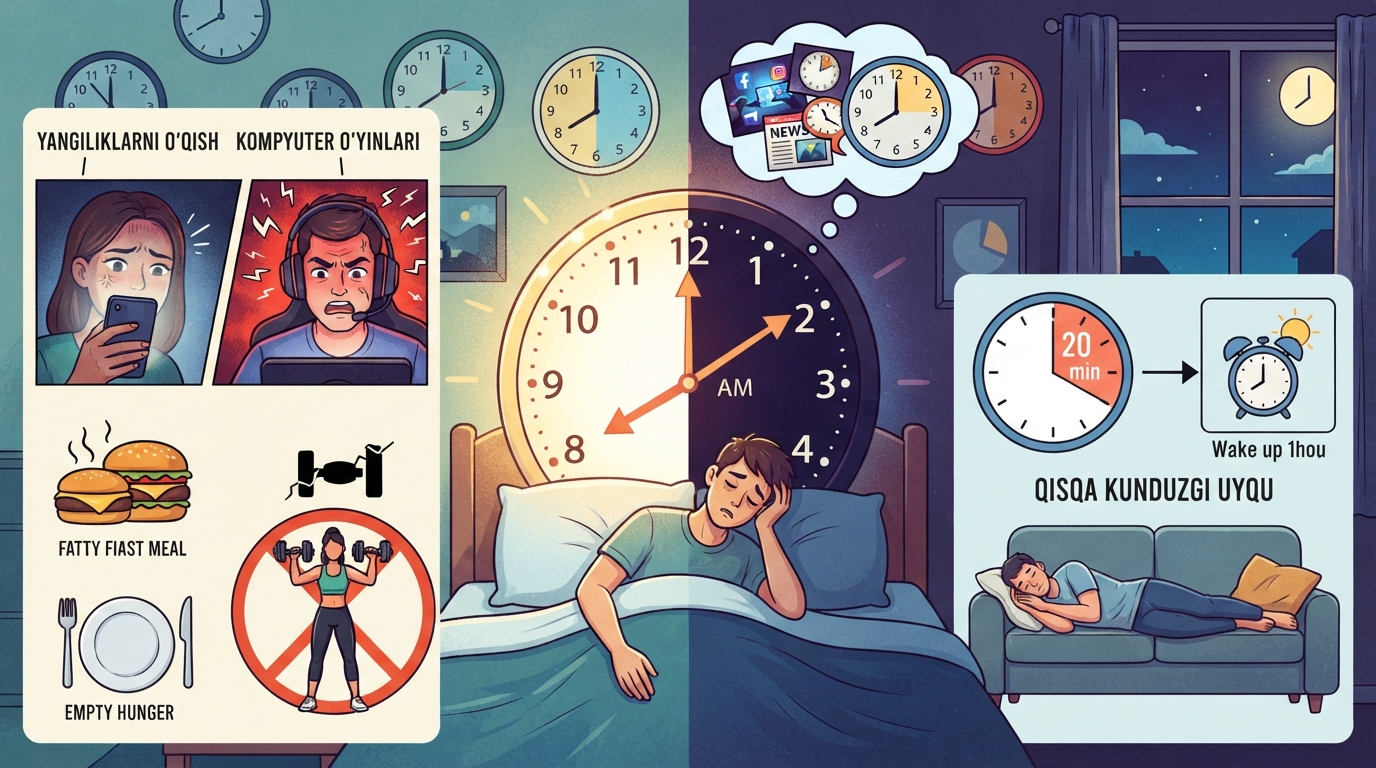
To prevent such consequences, the doctor recommends waking up at most one hour later than usual on weekends.
If the workweek was very hard, the lost rest can be compensated for with a short daytime nap. Smirnov emphasized that a daytime nap should not exceed 20 minutes. It is also advisable to rest before 3:00 PM or 4:00 PM.
The somnologist also noted another common mistake: delaying bedtime to watch TV series, work, or spend time on social media. If one needs to wake up at the same time every morning, the habit of going to bed late gradually leads to chronic sleep deprivation.
The expert also advised against playing computer games, reading anxiety-inducing news, and resolving contentious issues before going to sleep. Such actions keep the brain in an active state and prevent it from calming down.
In addition, consuming a lot of fatty foods in the evening, feeling intense hunger, and heavy physical exercise in the evening also negatively affect sleep quality.
According to psychologist Sofia Kasimova, difficulties in falling asleep are in most cases associated with over-excitation of the nervous system and wrong pre-bedtime habits.