

“The consequences of war know no borders.” Israel faces water scarcity itself after destroying Gaza’s sewage system
“The consequences of war know no borders.” Israel faces water shortages itself due to destroying Gaza's sewage system
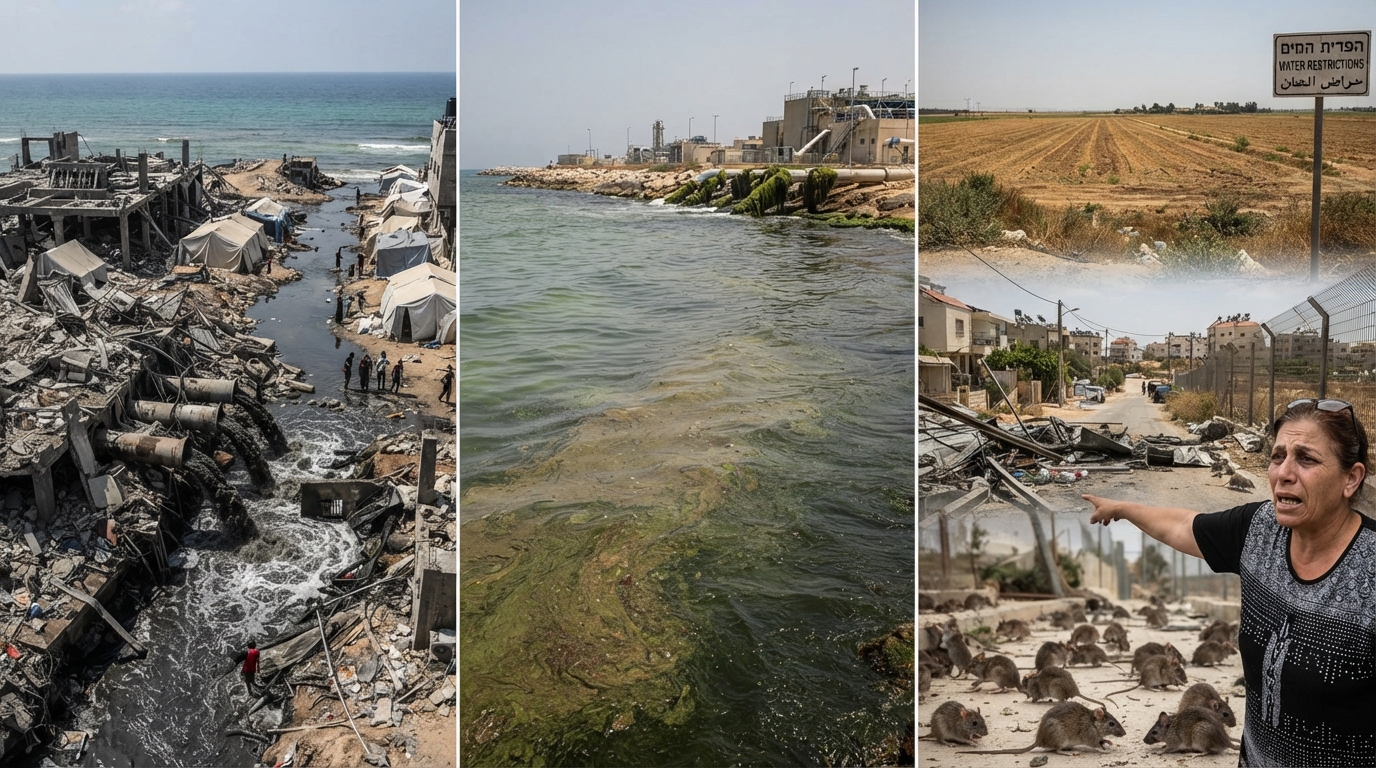
Due to the destruction of the wastewater infrastructure in the Gaza Strip, untreated sewage is flowing into the sea. As a result, microalgae have multiplied rapidly, disrupting the operations of desalination plants in Israel. Consequently, the country is facing a water shortage.
“The consequences of war know no borders,” said Nada Majdalani, director of the Palestinian environmental organization EcoPeace Middle East.
Experts say that substances in the untreated water from Gaza's sewage have nourished the algae, causing them to multiply.
The marine algae have clogged filters at five of Israel's six main desalination plants. Because of this, the facilities were out of service for several days and are currently operating at limited capacity.
Jack Gilron, a professor at Ben-Gurion University, said this situation has shown how serious the threats to Israel's drinking water sources are. Authorities are advising the public to conserve water, and farmers have been banned from watering crops. This could lead to an increase in food prices.
According to international organizations, Israeli attacks since October 7, 2023, have destroyed 90 percent of Gaza's water and sanitation infrastructure. Wells, water pipes, and treatment facilities have been put out of service.
Omar Shatat, a water utility official in Gaza, said all 5 wastewater treatment plants in the territory have stopped. As a result, 45,000 cubic meters of untreated sewage flow into the Mediterranean Sea every day, while another 15,000 cubic meters mix with groundwater.
The breakdown of the water and sewage system has caused the spread of gastrointestinal and skin diseases, as well as hepatitis A in Gaza. The population is forced to live surrounded by sewage flowing in tents and streets.
In addition, rats have also multiplied in Gaza. This problem has also spread to Israel's border areas, with rodents invading residential homes. Experts from the EcoPeace Middle East organization warn that this situation could turn into a major environmental and medical tragedy for the entire region.