

Algae bloom that crippled Israel's desalination plants raises water security concerns
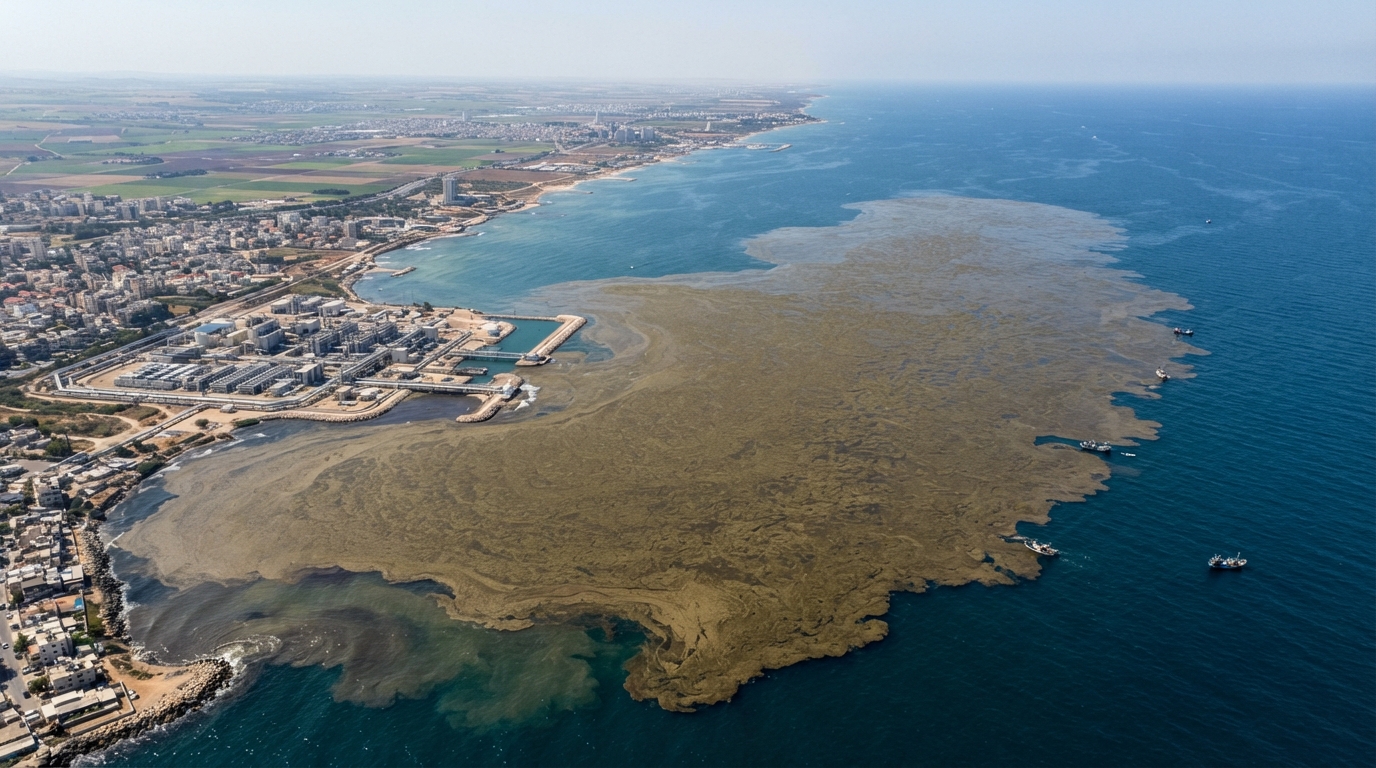
The "carpet" of microalgae stopped five of Israel's six desalination plants from working.
**Algae bloom that crippled Israel's desalination plants raises water security concerns**
Israel's Water Authority used tankers to distribute water in Jerusalem at the end of August
A recent shutdown of nearly all of Israel's major desalination plants has raised worries about the country's future water security, with experts saying the war in Gaza is worsening the problem.
A huge bloom of microalgae in the Mediterranean Sea, which reached 100km (62 miles) in length and 7km in width at its peak, clogged the filters of five of the six major plants that turn seawater into drinking water.
Although the plants are now operating again, albeit at only up to 50% capacity, the microalgae is still present nearly three weeks later, and there is genuine concern that a similar incident could happen again.
The microalgae is believed to have come from the Nile Delta, with experts citing a northerly current in the coastal eastern Mediterranean that carried it toward Gaza and Israel. Feeding on sunlight and nutrients in the water, it has spread quickly, helped by Mediterranean Sea temperatures that are higher than normal.
Some academics have argued that Israel's destruction of Gaza's sewage treatment plants during the war with Hamas is partly responsible.
"It's early days, but we know that sewage is a nutrient and algae blooms at great rates when there's lots of nutrients in its vicinity," says Gidon Bromberg of the EcoPeace Middle East environmental group.
Bromberg says that even before the war, Israel's restrictions on what could enter Gaza meant the territory's sewage plants were outdated.
"One of the reasons why modern sewer stream plants weren't completed in Gaza was because in order to build and run [them] you needed equipment that the Israeli military has defined as dual use - that could be used by Hamas as a weapon," he says, citing cement as an example.
Edo Bar-Zeev, a professor at the Zuckerberg Institute for Water Research at Ben-Gurion University, described the situation as an "unexpected mega event".
"I've been in the field of sampling ocean water for around 20 years or so and it's definitely unusual," he said. "In most cases it comes and goes in a few days, maybe a week... and here it's held on for a while."
The six plants, which produce more than 60% of Israel's drinking water, were affected by what Lior Gutman, spokesman for Mekorot, Israel's national water company, called a "huge carpet of microorganisms".
Some farmers were impacted, though most of those using recycled water for irrigation did not experience shortages. Gutman said neither did 99% of households.
About 40,000 cubic metres of sewage enters the sea each day from Gaza, where most wastewater infrastructure has been destroyed
The fact that the water crisis was barely noticed by Israelis stands in sharp contrast to the daily reality of Gazans, who face difficulties obtaining clean water after Israeli bombardment destroyed 90% of the Strip's water and sanitation infrastructure, according to a report by aid organisation Doctors Without Borders.
Israel has become a global leader in desalination plants, which convert seawater into drinking water. Climate change and a rising population have pushed Israel to depend increasingly on these plants, which are mainly located along the country's coastline.
The incident has left experts concerned about how Israel's desalination plants could be brought to a standstill by something like microalgae. Israel is also a major exporter of desalination technology, with Israeli companies designing and constructing plants worldwide.
"I think this is a wake-up call for everyone in the water sector and certainly everyone here in the Middle East where desalination has been a major development to help advance a level of water security," said Gidon Bromberg.