

Toxic algae blooms in the Baltic Sea due to abnormally warm temperatures
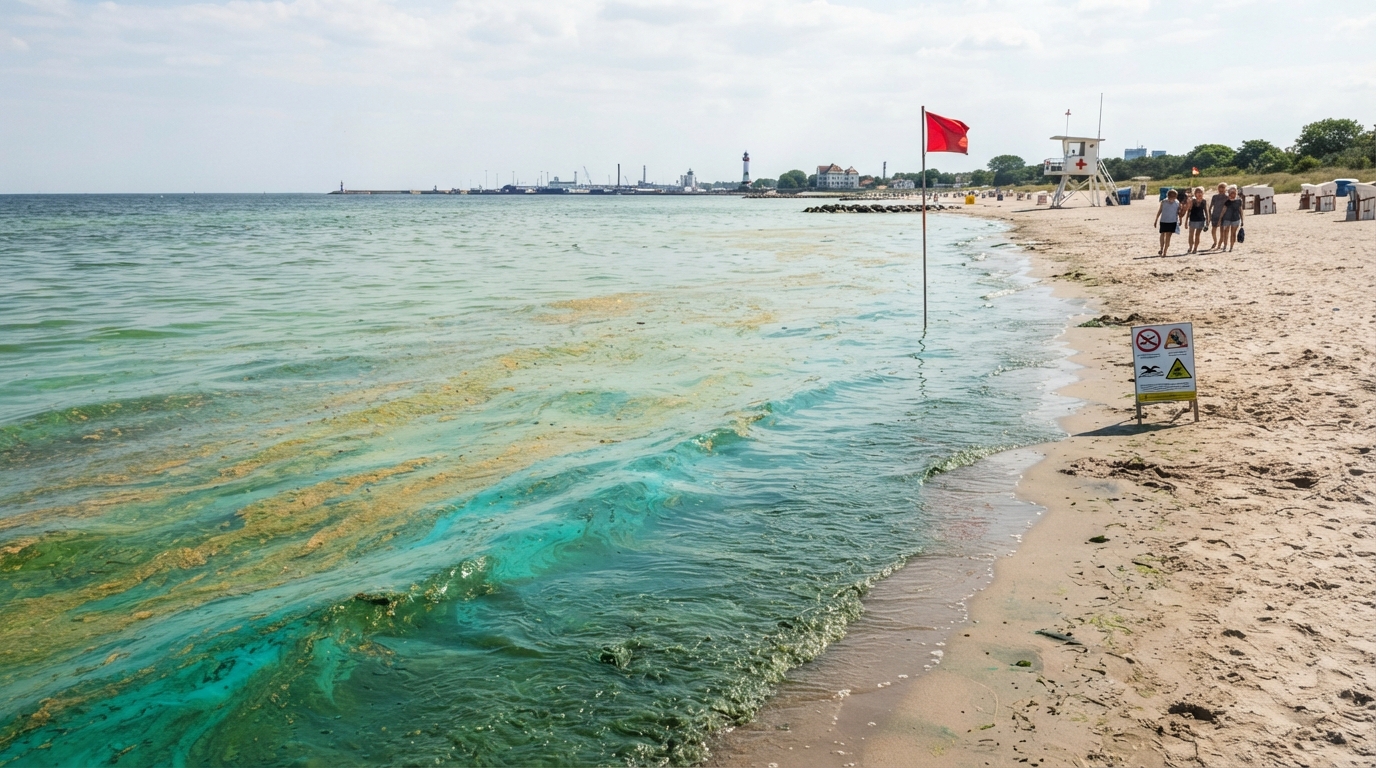
The Baltic Sea is experiencing a toxic bloom due to abnormal heat.
Toxic blue-green algae have spread widely along the coast of the Baltic Sea due to abnormal heat. Therefore, health experts are urging residents to avoid swimming at some beaches. This algae can cause skin irritation and gastrointestinal problems. This was reported by Euronews.
The abundance of sunlight and rising water temperatures create favorable conditions for the growth of algae. The city of Rostock is warning that bathing at some beaches in the Baltic Sea is dangerous. The Rostock Fire, Rescue and Disaster Management Department confirmed on August 15 that the algae are cyanobacteria, which produce toxins.
It is noted that the blue-green algae can cause swelling, itching or allergic reactions when it comes into contact with the skin. In severe cases, it can cause nausea and gastrointestinal problems. The health department recommends that children and dogs be especially careful. Dogs are strictly prohibited from drinking the water.
There is no complete ban on bathing. The warning applies to the area from zone 30 to zone 36 on the Warnemünde coast. However, Rostock city officials emphasize that the spread of the algae cannot be predicted with certainty, as it depends on wind and weather conditions. Therefore, large parts of the coast could be at risk.
**What kind of algae is this?**
To be more precise, blue-green algae are not long green plants, but bacteria. They often float in the water and form a blue-green slime layer on the surface. In a statement, Rostock city officials explained that the algae are multiplying rapidly in warm, sunny weather and nutrient-rich water. Winds and currents can quickly carry the clumps to another location.
According to the Leibniz Institute for Baltic Sea Research in Warnemünde, the algae produce a toxin that is dangerous to health. Usually, this toxin is not harmful to healthy people in small amounts. Moreover, not all blue-green algae produce the toxin.
However, the toxin can build up in these rapidly forming layers. It irritates the skin and, if ingested, causes nausea and vomiting. The Leibniz Institute notes that there have been many deaths in the past among animals such as cattle, dogs and ducks that have drunk contaminated water. It was previously reported that a Polish man had swum across the Baltic Sea non-stop for 55 hours.