

Tax breaks on dividends and bonds in Uzbekistan are to be extended until 2038.
Uzbekistan plans to extend tax breaks on shares, bonds, and new instruments, including sukuk, from 2028 to 2038. The National Agency for Precious Metals and Entrepreneurs (NAPP) hopes that the longer tax breaks will improve predictability for investors and help boost investment in the stock market.
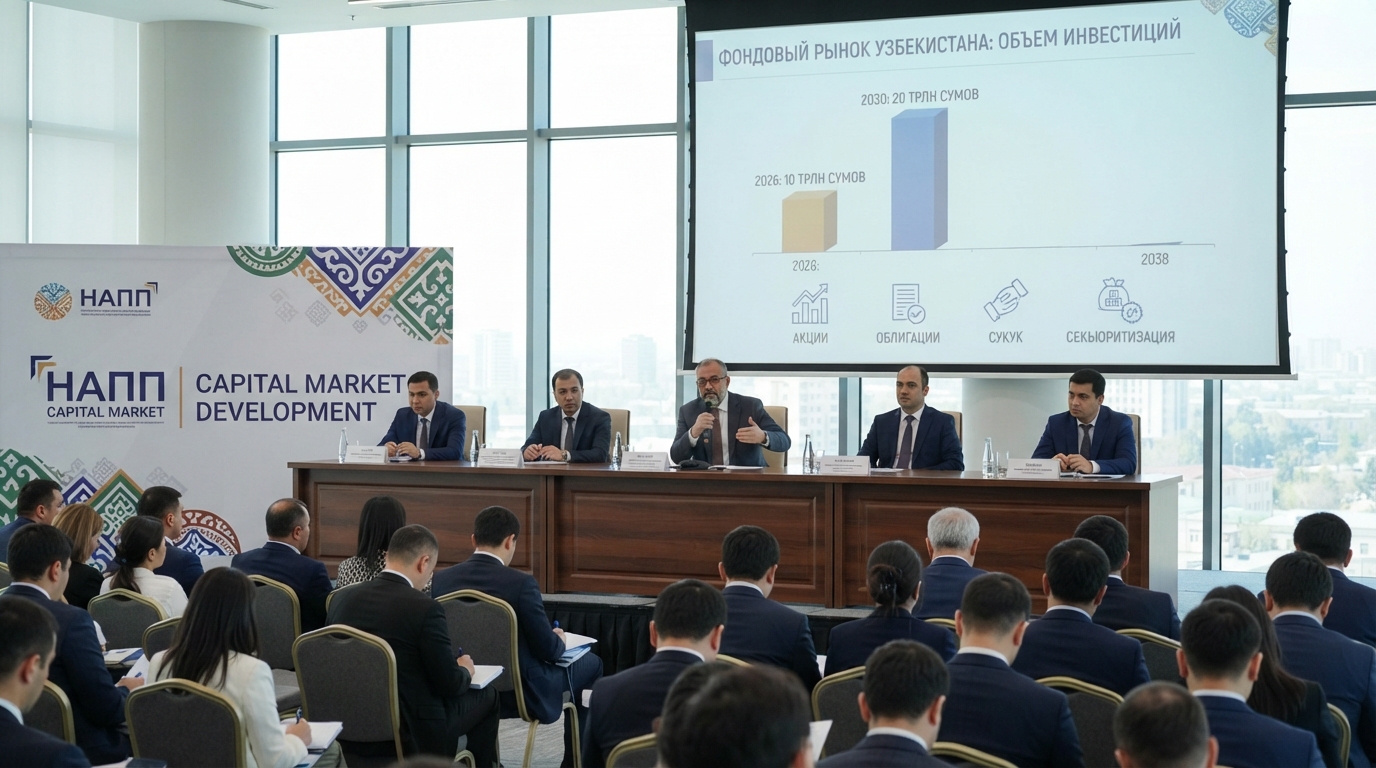
Uzbekistan is considering extending tax breaks for investors receiving income from stocks and bonds until 2038. Saulat Toreshov, head of the department at the National Agency for Prospective Projects (NAPP), announced this at a press conference on August 12, as reported by Kursiv Uzbekistan.
According to Toreshov, the proposed tax incentives will apply to both traditional financial instruments, such as stocks and bonds, and new securities, including sukuk and securitized bonds.
The NAPP representative recalled that the current tax breaks are valid until 2028. The agency proposes extending them for an additional ten-year period.
Specifically, it proposes exempting individuals and legal entities, both residents and non-residents of Uzbekistan, from personal income tax (PIT) and profit tax on interest income and positive exchange rate differences on corporate bonds, including those denominated in foreign currency, until 2038. A similar tax break will apply to income from sukuk securities.
It is also proposed to extend the current exemption for individuals (residents and non-residents) from personal income tax on share dividends until the end of 2038. This break is currently valid until December 31, 2028.
For non-resident legal entities, it is planned to maintain the preferential 5% tax rate on profits from share dividends for the same period, which is in line with the rate applied to local companies.
The NAPP views long-term tax incentives as a key tool for attracting institutional and private investors to the stock market.
"Looking at global practice, international experience shows that tax incentives are recognized as one of the most effective tools for capital market development, and it is precisely thanks to this approach that many countries have been able to significantly develop their stock markets in a short period of time," noted Saulat Toreshov.
According to him, securing the incentives until 2038 should increase the attractiveness of capital market instruments and ensure greater stability in investment decisions.
**Goal: Doubling Stock Market Investments by 2030**
According to the NAPP presentation, the proposed measures are intended to promote investment growth in Uzbekistan's stock market. This figure is projected to reach 10 trillion soums by 2026, and is expected to increase to 20 trillion soums by 2030.
The project also includes a number of other tax incentives for capital market participants. Specifically, it proposes exempting investment funds from dividend tax, and exempting transactions involving covering assets between the issuing bank and the special purpose vehicle (SPV).
For transactions by non-residents through omnibus accounts, no tax liability should arise if the beneficial owner of the securities remains unchanged.
Furthermore, for Islamic securities issues, it is proposed to completely exempt sukuk and SPV originators from VAT on the transfer of property, goods, and services in such transactions.
The NAPP expects that a combination of tax incentives and new financial instruments will expand the circle of investors and increase the volume of long-term financing through the capital market.