

Tashkent Metro explores Siemens and CICT technologies
A Tashkent Metro delegation in China studied security, communications, signaling systems, and training simulators for specialists.
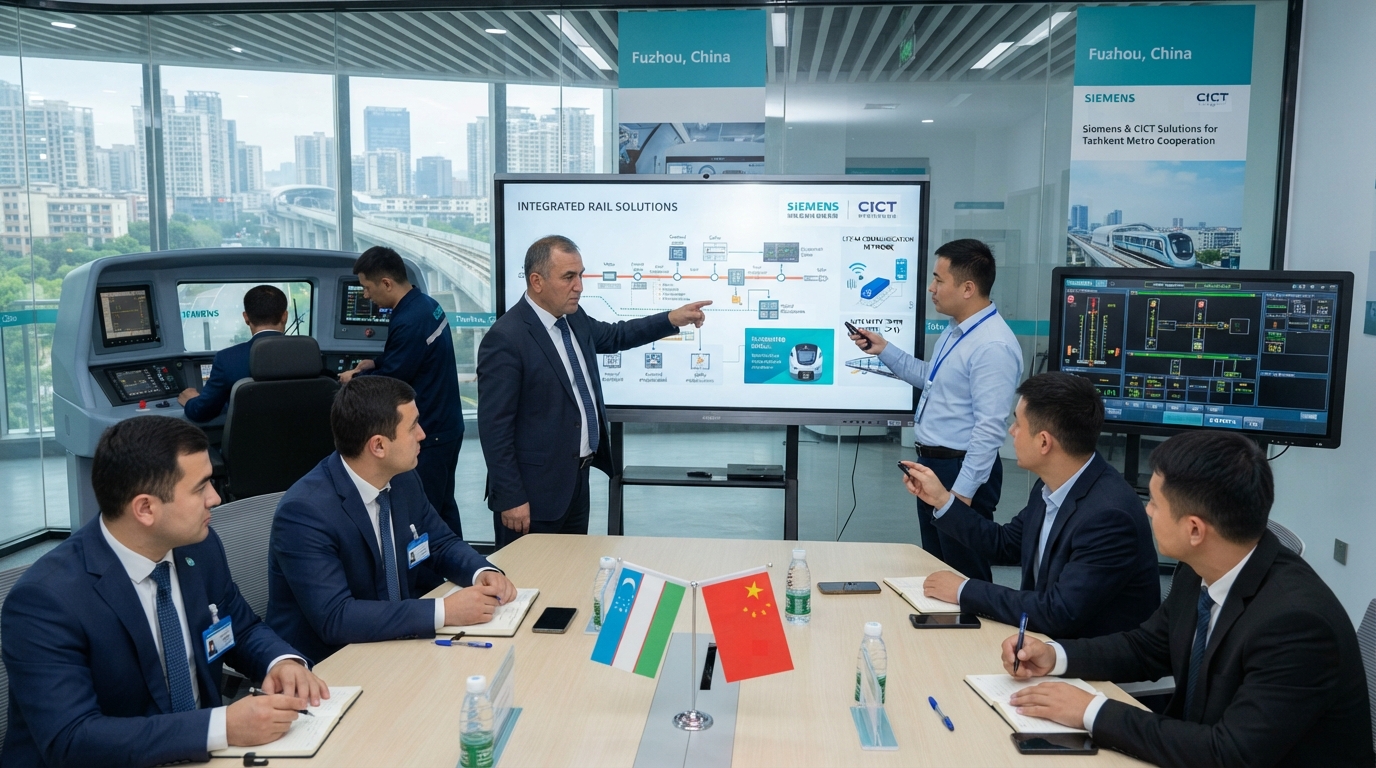
Tashkent Metro Examines Advanced Technologies from Siemens and CICT
Tashkent, Uzbekistan (UzDaily.uz) —
During a working visit to China, a delegation from the Tashkent Metro learned about innovative developments from Siemens and CICT. The purpose of the visit was to explore solutions aimed at improving traffic safety, enhancing communications systems, and enhancing personnel training, according to the Tashkent Metro State Unitary Enterprise.
The chief engineer of the Tashkent Metro State Unitary Enterprise, along with other members of the delegation, visited Fuzhou, China, where they met with representatives from Siemens and CICT.
During talks with Siemens, the delegation received detailed information about the technologies used in metro and rail transport. Specifically, they were presented with signaling and communications systems, automatic door opening and closing mechanisms, and integrated solutions for ensuring traffic safety.
Particular attention was paid to safety systems designed for rail tracks and metro sections. Methods for preventing emergency situations, monitoring the safe movement of rolling stock, and automating control processes were discussed.
Siemens representatives also demonstrated simulators developed for practical training of train drivers and other metro specialists. The parties discussed the potential of these systems for simulating work processes and training personnel in emergency and non-standard situations.
During the next stage of the visit, the delegation met with representatives of CICT. Participants were presented with the company's modern telecommunications solutions, including LTE-M technology, and its potential for ensuring stable and uninterrupted communications within the metro infrastructure.
Following the visit, representatives of the Tashkent Metro and both companies discussed the metro's development prospects, ways to improve traffic safety, the implementation of modern signaling and communication systems, the use of simulators for training specialists, and future areas of cooperation.